
Warfarin and Caffeine: What You Need to Know About the Interaction
When you're taking warfarin, a blood thinner used to prevent dangerous clots in people with atrial fibrillation, deep vein thrombosis, or after heart valve replacement, even small changes in your daily habits can matter. One of those habits? Drinking coffee. caffeine, a stimulant found in coffee, tea, energy drinks, and some medications, doesn’t just wake you up—it can quietly change how your body processes warfarin. This isn’t just theory. Studies show that sudden increases in caffeine intake can slow down how fast warfarin breaks down in your liver, leading to higher levels in your blood and a greater risk of bleeding. The opposite can happen too—if you cut out caffeine suddenly, your warfarin levels might drop, raising your risk of clots.
The connection between warfarin and caffeine isn’t about quantity alone—it’s about consistency. If you drink two cups of coffee every day, your body adjusts. But if you switch to five cups, or quit cold turkey, your INR (the test that measures how long it takes your blood to clot) can swing unpredictably. That’s why doctors stress routine. The same goes for other drug-food interactions like eating large amounts of leafy greens (which are high in vitamin K) or drinking grapefruit juice. These aren’t random rules—they’re safeguards built on real patient data. Many people on warfarin also take other meds, and caffeine can interact with those too, especially if they affect liver enzymes like CYP1A2. That’s why sudden changes in your caffeine habits should always be discussed with your provider, not just assumed to be harmless.
You don’t have to give up coffee entirely, but you do need to treat it like part of your treatment plan. Track your intake. If you start drinking more espresso or energy drinks, tell your doctor. If you quit caffeine because you’re trying to sleep better, mention it at your next INR check. Small shifts matter more than you think. The posts below cover real-life situations like this—how to spot hidden interactions, what to ask your pharmacist, and how to manage your meds without guesswork. Whether you’re worried about caffeine, other stimulants, or how your diet affects your blood thinner, you’ll find practical, no-fluff advice here.
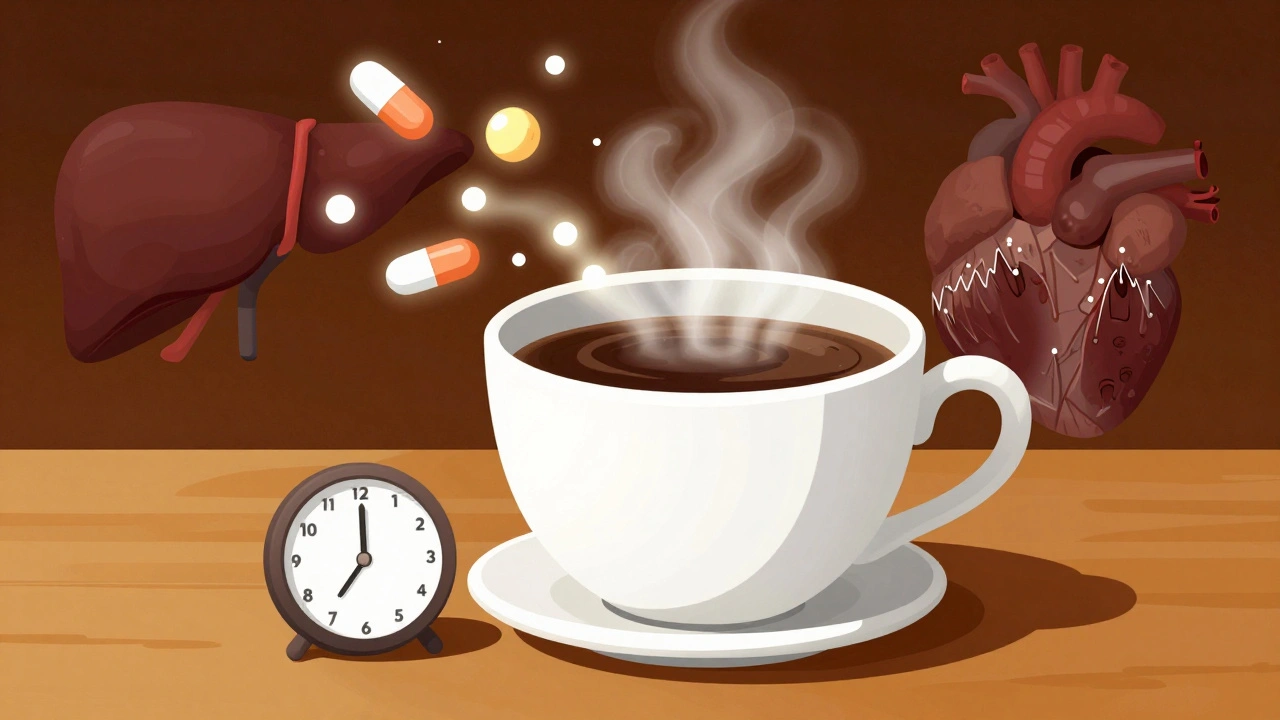
Caffeine and Medication Safety: What You Need to Know About Dangerous Interactions
Caffeine can interfere with common medications like blood thinners, thyroid drugs, and antidepressants, reducing effectiveness or increasing side effects. Learn which interactions are dangerous and how to stay safe.
Read more