
Potassium-Sparing Diuretics: What They Are, How They Work, and When They're Used
When your body holds onto too much fluid, it can raise blood pressure, swell your legs, or make breathing harder. That’s where potassium-sparing diuretics, a class of medications that help your kidneys remove excess water without lowering potassium levels. Also known as potassium-sparing agents, they’re often used when other diuretics leave you feeling weak or crampy from low potassium. Unlike loop or thiazide diuretics that flush out potassium along with water, these drugs let you pee out the extra fluid while keeping your potassium where it needs to be.
This matters because low potassium can trigger irregular heartbeats, muscle cramps, or even dangerous heart rhythms. That’s why doctors turn to potassium-sparing diuretics—especially for people with heart failure, a condition where the heart can’t pump blood efficiently, leading to fluid buildup—or those already taking ACE inhibitors, medications that naturally raise potassium levels. They’re also common in patients with high blood pressure who can’t tolerate the side effects of stronger diuretics. These drugs don’t work as fast or as powerfully as furosemide or hydrochlorothiazide, but they’re safer for long-term use when potassium balance is critical.
You’ll find them paired with other diuretics in combo pills—like spironolactone with hydrochlorothiazide—to get the best of both worlds: strong fluid removal without the potassium crash. They’re also used in conditions like primary hyperaldosteronism, where your body makes too much of a hormone that causes sodium retention and potassium loss. But they’re not for everyone. If you have kidney disease or are already on meds that raise potassium, these can push your levels too high, which is just as risky as having too little.
The posts below cover real-world uses, side effects, and how these drugs stack up against alternatives. You’ll find guides on how they interact with other heart meds, what to watch for if you’re on them long-term, and why some patients switch away from them. Whether you’re managing high blood pressure, heart failure, or just trying to understand why your doctor picked this specific pill, you’ll find clear, no-fluff answers here.
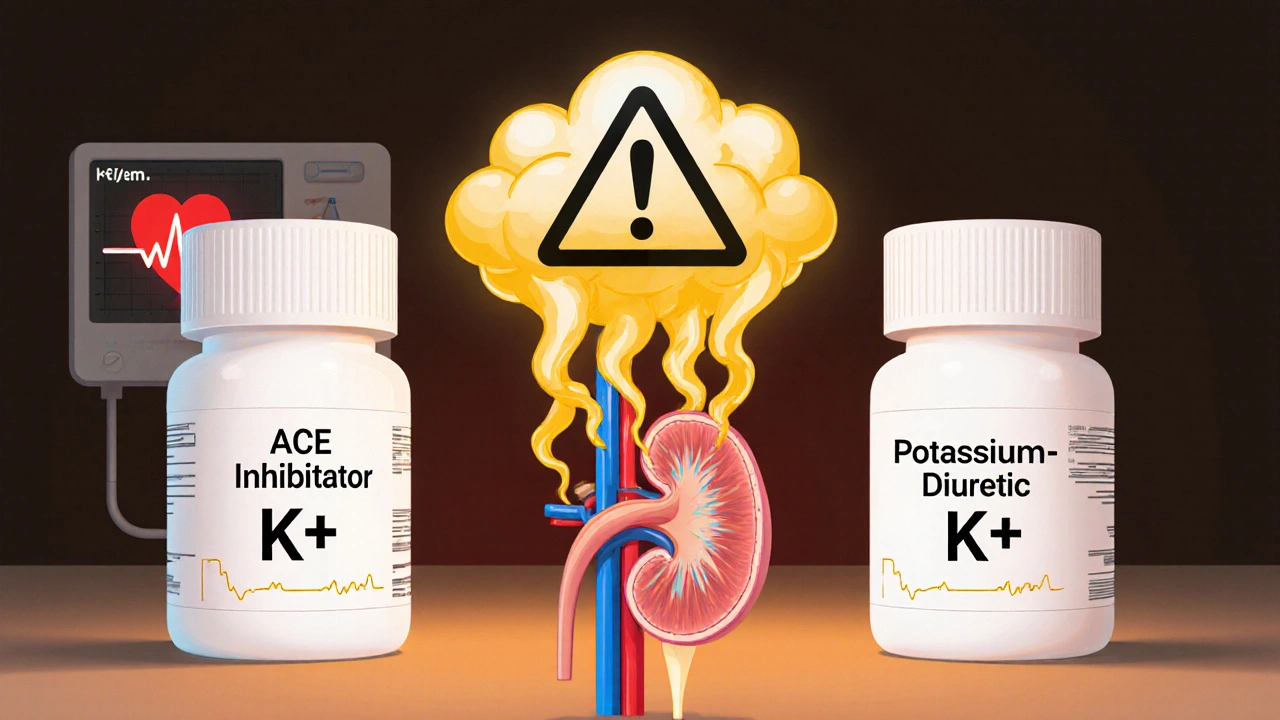
ACE Inhibitors and Potassium-Sparing Diuretics: Understanding the Hyperkalemia Risk
Combining ACE inhibitors and potassium-sparing diuretics can raise potassium to dangerous levels, increasing the risk of heart rhythm problems. Learn how to monitor, manage, and reduce this common but preventable drug interaction.
Read more