
Pediatric Medication Overdose: Risks, Signs, and How to Prevent It
When a child takes too much medicine—whether by accident, mistake, or curiosity—it’s called a pediatric medication overdose, an unintended or accidental ingestion of a drug in amounts that can harm a child’s body. Also known as child drug overdose, it’s one of the most common reasons kids end up in the emergency room. This isn’t just about pills left within reach; it’s about how medications are stored, prescribed, and understood in homes where children live.
Many overdoses happen because adults don’t realize how small the dangerous dose is for a child. A single adult tablet of acetaminophen or ibuprofen can be deadly for a toddler. Even liquid medicines, which seem safer, can cause serious harm if the wrong measuring tool is used. A kitchen spoon isn’t accurate—only a dosing syringe or cup marked in milliliters should be trusted. And it’s not just painkillers. Antidepressants like citalopram, heart meds like digoxin, and even allergy drugs can cause life-threatening reactions in kids if taken in excess. The risk isn’t just about the drug itself—it’s about how it interacts with a child’s smaller body, slower metabolism, and developing organs.
Some kids get exposed because multiple caregivers are giving medicine without knowing what’s already been given. One parent gives Tylenol at 2 p.m., another gives it again at 6 p.m. thinking it wasn’t done. Or a grandparent gives a cough syrup that already contains acetaminophen, not realizing the cold medicine the child took earlier has the same ingredient. This is where medication safety for kids, a system of checks, labels, and communication to prevent accidental harm from drugs in households. Also known as child medication management, it’s not optional—it’s essential. It’s also why keeping a written log of every dose, time, and drug given helps avoid double-dosing. And it’s why you should never assume another adult knows what’s been given.
Another hidden risk? Storing medicines where kids can reach them—even if it’s "up high" on a shelf that’s not locked. Toddlers climb. Older kids explore. A bottle in a purse, on a nightstand, or in a bathroom cabinet with a loose lid can be an easy target. Emergency kits with insulin, epinephrine, or chemo drugs need extra care. Even topical creams like hydroquinone or retinoids can be dangerous if ingested. And don’t forget supplements—vitamins with iron or gummy vitamins that look like candy are common culprits.
Signs of a pediatric medication overdose aren’t always obvious. A child might seem sleepy, dizzy, or unusually quiet. Or they could be hyperactive, vomiting, or having trouble breathing. Sometimes, the first sign is a seizure or a sudden drop in heart rate. If you suspect an overdose, don’t wait. Call poison control immediately. Don’t try to make the child vomit. Don’t give milk or food unless instructed. Time matters more than anything.
This collection of articles doesn’t just talk about what happens after an overdose—it shows you how to stop it before it starts. You’ll find real-world advice on safe storage, how to read labels correctly, why some drugs are riskier than others, and how to talk to multiple doctors without creating dangerous overlaps. Whether you’re a parent, grandparent, babysitter, or caregiver, these guides give you the tools to protect the kids in your care—not with fear, but with clear, simple steps that actually work.
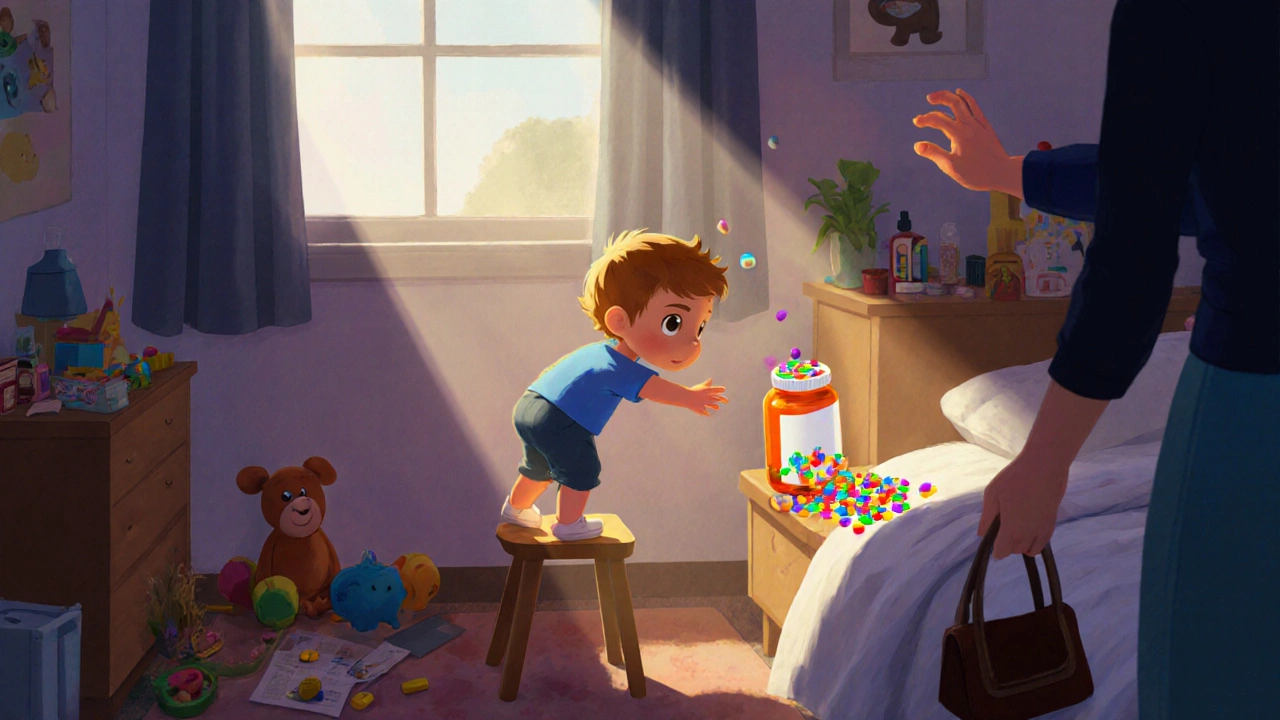
Accidental Pediatric Medication Overdose: How to Prevent It and What to Do If It Happens
Accidental pediatric medication overdoses are common but preventable. Learn how to store medicines safely, avoid dosing errors, and respond quickly if your child gets into medication - with proven strategies from the CDC's PROTECT Initiative.
Read more