
Obesity Pathophysiology: How Fat Changes Your Body and What It Means for Treatment
When we talk about obesity pathophysiology, the biological process behind how excess body fat develops and harms health. It's not just about eating too much or moving too little—it's a complex system where fat tissue becomes a dysfunctional organ that sends out harmful signals. This isn't a simple energy balance problem. It's a breakdown in how your body talks to itself—between fat, liver, brain, and pancreas—and that’s why diets alone often fail.
insulin resistance, a condition where cells stop responding properly to insulin, making blood sugar harder to control is one of the first big changes. Fat cells, especially around the belly, release chemicals that block insulin’s job. That forces your pancreas to pump out more insulin, which then tells your body to store even more fat. It’s a loop. And as this goes on, leptin resistance, when the brain stops listening to the fullness signal from fat cells kicks in. You feel hungry even when you have plenty of stored energy. Your brain thinks you’re starving. Meanwhile, adipose tissue, the body’s fat storage system that turns into an inflammatory factory in obesity starts leaking inflammatory molecules into your bloodstream. That’s why obesity links to heart disease, arthritis, and even some cancers—it’s not just weight, it’s chronic low-grade inflammation.
What you see on the scale isn’t the full story. The real damage happens at the cellular level: fat cells grow too big, get stressed, die, and trigger immune responses. Your liver starts storing fat instead of processing it. Your muscles stop taking in glucose efficiently. Your gut bacteria shift in ways that make hunger worse. All of this happens silently, often for years before anyone calls it a disease. That’s why treating obesity as a behavior problem doesn’t work long-term. You need to fix the biology first.
The posts below show how this science connects to real treatments—like why some diabetes drugs help with weight loss, how certain medications affect fat storage, and what drug interactions can make obesity harder to manage. You’ll find practical insights into how medications interact with these underlying processes, not just quick fixes. This isn’t about willpower. It’s about understanding the system you’re working with.
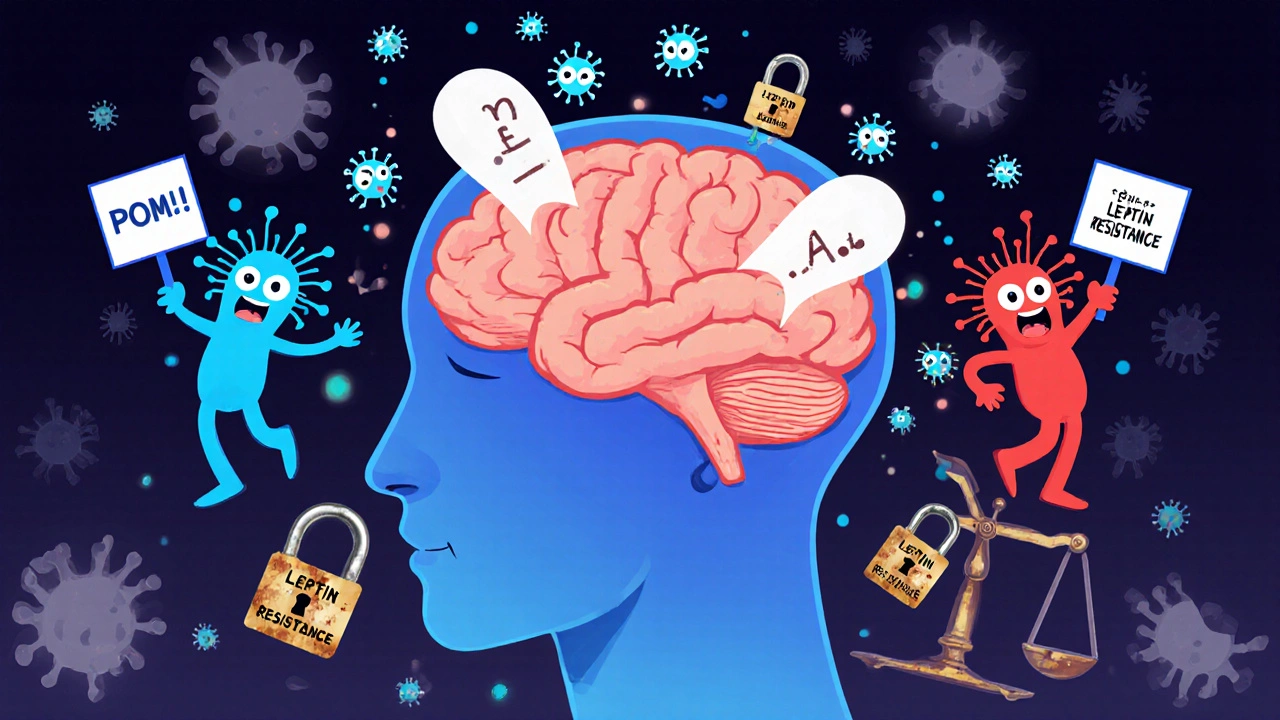
Obesity Pathophysiology: How Appetite Regulation and Metabolic Dysfunction Drive Weight Gain
Obesity is not just about overeating-it's a medical condition driven by broken hunger signals and metabolic dysfunction. Learn how leptin resistance, brain circuits, and hormones like ghrelin and insulin keep weight off despite efforts to lose it.
Read more