
Medicine Safety: Protect Yourself from Overdoses, Interactions, and Errors
When we talk about medicine safety, the practice of using medications correctly to avoid harm, injury, or death. Also known as medication safety, it’s not just about following the label—it’s about understanding how your body reacts, what else you’re taking, and how to keep pills out of reach of kids and thieves. Every year, thousands end up in emergency rooms because of simple mistakes: taking too much, mixing drugs with caffeine or alcohol, storing pills where children can grab them, or not knowing a drug interacts with a food they eat every day.
Medication overdose, a dangerous buildup of a drug in the body that can shut down breathing or heart function isn’t always intentional. It can happen when someone takes an extra pill because they don’t feel better, or when a child finds a bottle left on the counter. Sedatives, sleep aids, and even common painkillers can cause fatal overdoses if used incorrectly. And it’s not just about pills—drug interactions, when two or more medications (or foods) change how each other works in your body can be just as deadly. Caffeine with blood thinners, tyramine-rich foods with antibiotics like linezolid, or mixing ACE inhibitors with potassium-sparing diuretics can send potassium levels soaring or trigger irregular heartbeats. These aren’t rare edge cases. They’re everyday risks hidden in plain sight.
Then there’s the quiet side of prescription safety, the systems and habits that keep your meds from harming you before, during, and after use. How you store your emergency kit matters—heat and humidity can ruin insulin or epinephrine. How you dispose of chemo drugs at home can poison your family or the water supply. Even removing your name from pill bottles isn’t just about privacy—it’s a step against identity theft. And when your insurer pushes you to switch from a brand drug to a generic, medicine safety means knowing when that switch could hurt you, not help.
You’ll find real stories here: how to recognize the blue lips and slow breathing of a sedative overdose, why penicillin desensitization saves lives for allergic patients, how to talk to your doctor without sounding demanding, and what foods to avoid with linezolid. We cover what the CDC says about childproofing medicine cabinets, how to spot dangerous QT prolongation on antidepressants, and why mixing coffee with thyroid meds can make your treatment useless. This isn’t theory. It’s what people actually need to survive—and stay healthy—while taking the meds they rely on.
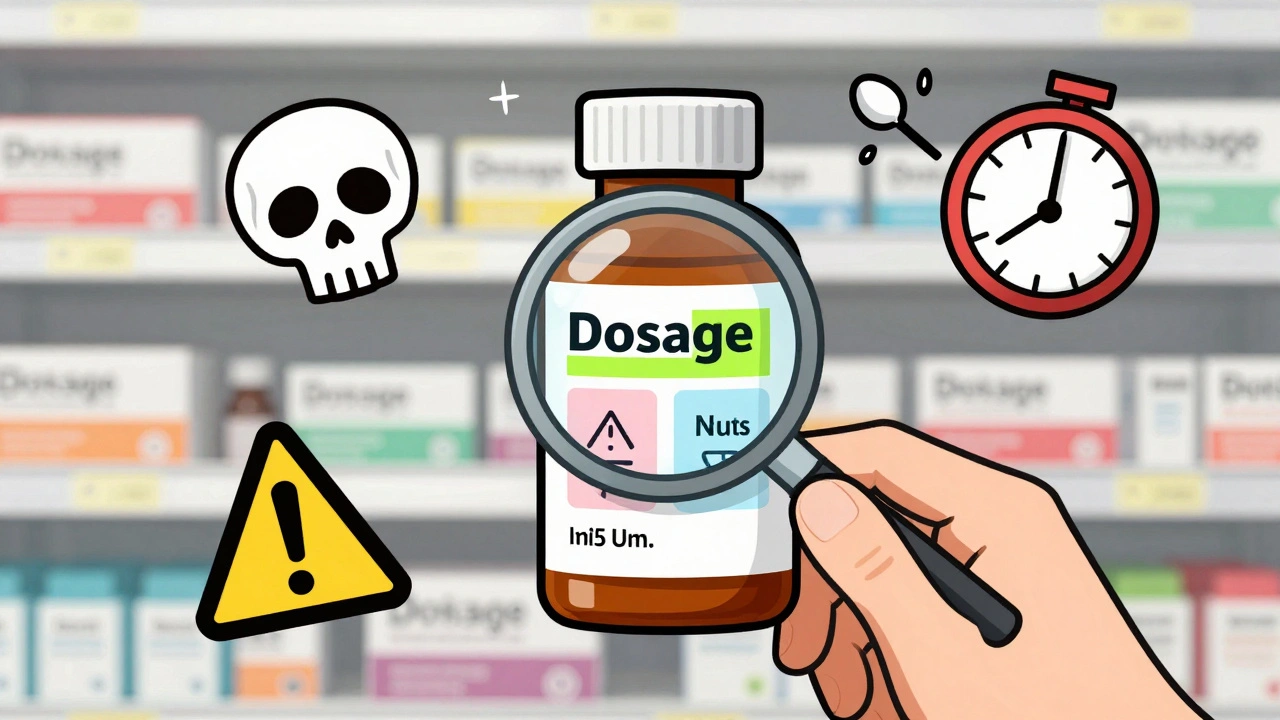
How to Read Medication Labels: Dosage, Directions, and Safety Tips
Learn how to read medication labels correctly to avoid dangerous mistakes. Understand dosage, directions, warnings, and expiration dates for safer medicine use.
Read more