
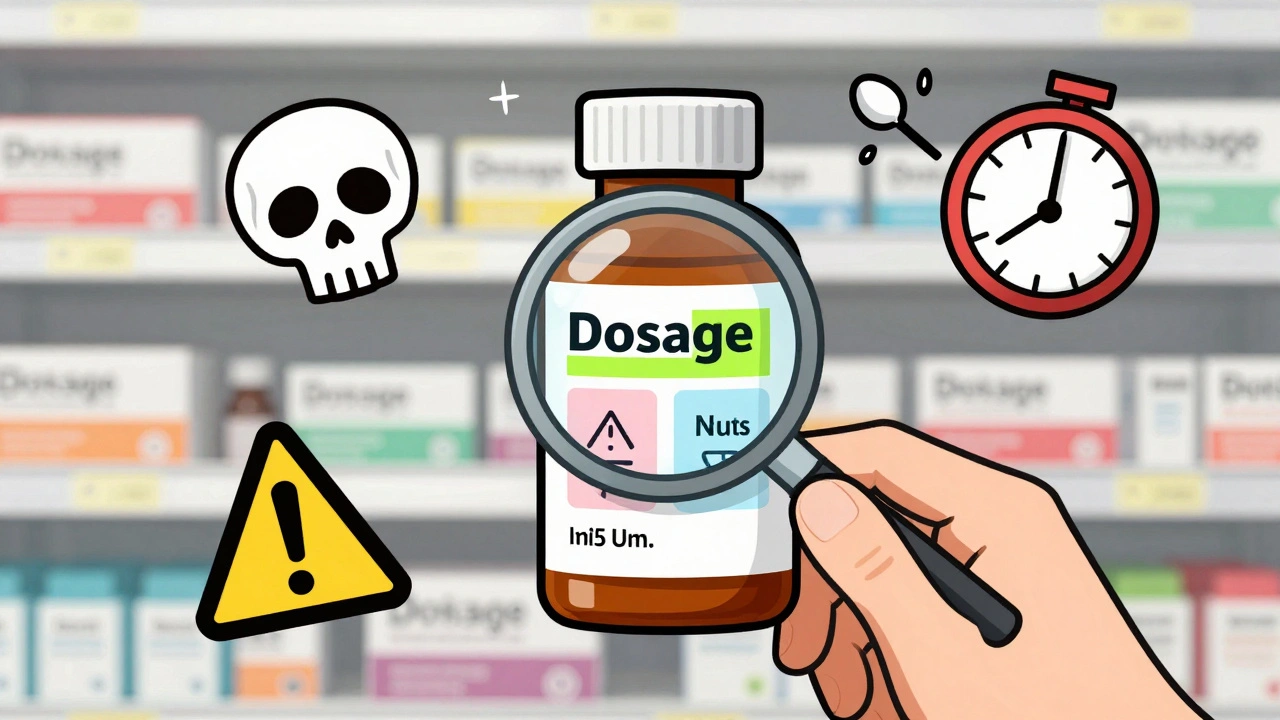
Every time you pick up a bottle of medicine-whether it’s from a pharmacy or the shelf at the store-you’re holding a safety guide. But most people don’t treat it like one. They glance at the name, check the expiration date, and pop a pill. That’s risky. Misreading a label can lead to overdose, dangerous interactions, or treatment that doesn’t work. In the UK, an estimated 237,000 avoidable hospital admissions each year are linked to medication errors. And a big chunk of those? People just didn’t understand what the label said.
What’s on the label-and why it matters
Medication labels aren’t just random text. They’re tightly regulated. In the US, the FDA sets strict rules for both prescription and over-the-counter (OTC) drugs. Even though you’re in the UK, many of these standards are mirrored here by the MHRA. The goal? Make sure you know exactly what you’re taking, how much, and when.For prescription meds, the label includes your name, the doctor’s name, the pharmacy’s details, the drug name, strength, and quantity. But the most critical part? The directions. These tell you how many pills to take, how often, and whether to take them with food or on an empty stomach. Missing this can turn a safe treatment into a dangerous one.
For OTC medicines-like painkillers, cold meds, or antacids-you’ll see the Drug Facts panel. It’s standardized: Active Ingredients, Uses, Warnings, Directions, Other Information, and Inactive Ingredients. Each section has a job. The Directions section isn’t a suggestion. It’s a rule. If it says “take one tablet every 6 hours,” taking two because you’re in more pain? That’s not bravery. That’s a trip to A&E.
Understanding dosage: It’s not just about pills
People think dosage means “how many pills.” But it’s more than that. For liquids, it’s about concentration.Look at this: “250 mg per 5 mL”. That doesn’t mean the whole bottle is one dose. It means every 5 millilitres (one teaspoon) contains 250 mg of the drug. If your doctor says you need 500 mg, you need two teaspoons-not one, not the whole bottle. A 2022 study found 68% of parents misread this kind of label when giving medicine to kids. That’s terrifying.
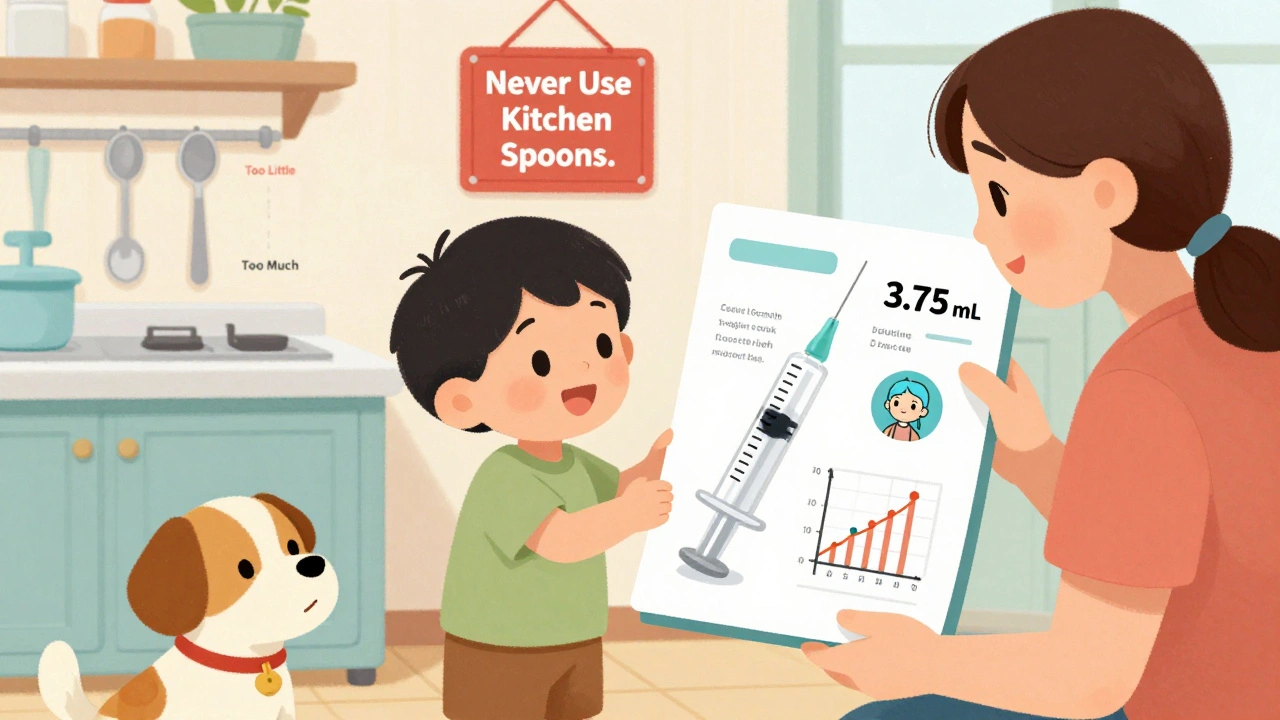
And don’t use kitchen spoons. A teaspoon from your cupboard could hold anywhere from 2.5 mL to 7.3 mL. That’s a 200% difference. Always use the measuring tool that comes with the medicine: a syringe, a dosing cup, or a dropper. If it’s missing? Ask the pharmacist for one. They’ll give it to you free.
For children, dosage is often based on weight. If your child weighs 15 kg, and the label says “5 mg per kg,” that’s 75 mg total. If the liquid is 100 mg per 5 mL, you’d give 3.75 mL-not 4, not 3. Use a syringe. Measure exactly.
Directions: When, how, and what to avoid
Directions aren’t just about timing. They’re about safety.“Take with food” isn’t a suggestion. Some drugs irritate your stomach. Others won’t absorb properly without fat. Take ibuprofen on an empty stomach? You risk ulcers. Take antibiotics without food when you’re supposed to? They might not work.
“Take every 8 hours” means every 8 hours-yes, even at night. Skipping doses because you’re asleep? That’s how infections come back stronger. Set phone alarms if you need to.
“Do not exceed 4 doses in 24 hours.” That’s the law. People think, “I’m still in pain, I’ll take another.” But acetaminophen (paracetamol) overdose is the #1 cause of acute liver failure in the UK. And it’s often from stacking meds. You take a cold tablet with paracetamol. Then you take a painkiller with paracetamol. Then you take another. Suddenly, you’ve hit 4,000 mg-double the safe limit.
Warnings: The section everyone skips
The “Warnings” section is the most important part of the label-and the most ignored.It tells you what to avoid: alcohol, driving, other drugs, pregnancy, certain health conditions. If it says “May cause drowsiness,” and you’re a truck driver? Don’t take it. If it says “Avoid grapefruit,” and you eat it every morning? You could end up in hospital. Grapefruit can make blood pressure meds or statins dangerously strong.
One of the most common mistakes? Taking two medicines with the same active ingredient. Cold medicine + headache pill = double paracetamol. Antihistamine + sleep aid = double diphenhydramine. The Cleveland Clinic found 27% of ER visits for medication errors were from this exact mistake.
Expiration dates: Are they really that important?
Yes. Expired meds don’t just lose strength-they can break down into harmful chemicals. The FDA says most OTC drugs are safe for 1-2 years past the printed date, but that’s not a guarantee. Prescription meds? The pharmacy’s expiration date is what matters. It’s usually one year from when it was filled. Why? Because once you open it, moisture, heat, and light degrade it.Don’t keep old antibiotics “just in case.” They won’t work on a new infection. Worse-they could make bacteria resistant. If you have leftover pills, take them to your pharmacy for safe disposal. Don’t flush them. Don’t toss them in the bin.
What to do if you’re confused
If you don’t understand the label, don’t guess. Don’t ask a friend. Don’t Google it and hope for the best.Call your pharmacist. They’re trained to explain this stuff. They can show you how to measure liquid doses. They can check for interactions with your other meds. They can even give you a printed copy with simplified instructions.
Ask for a Medication Guide. For high-risk drugs like opioids, blood thinners, or chemotherapy, the law requires the pharmacy to give you a separate leaflet with plain-language safety info. If they don’t offer it? Ask for it.
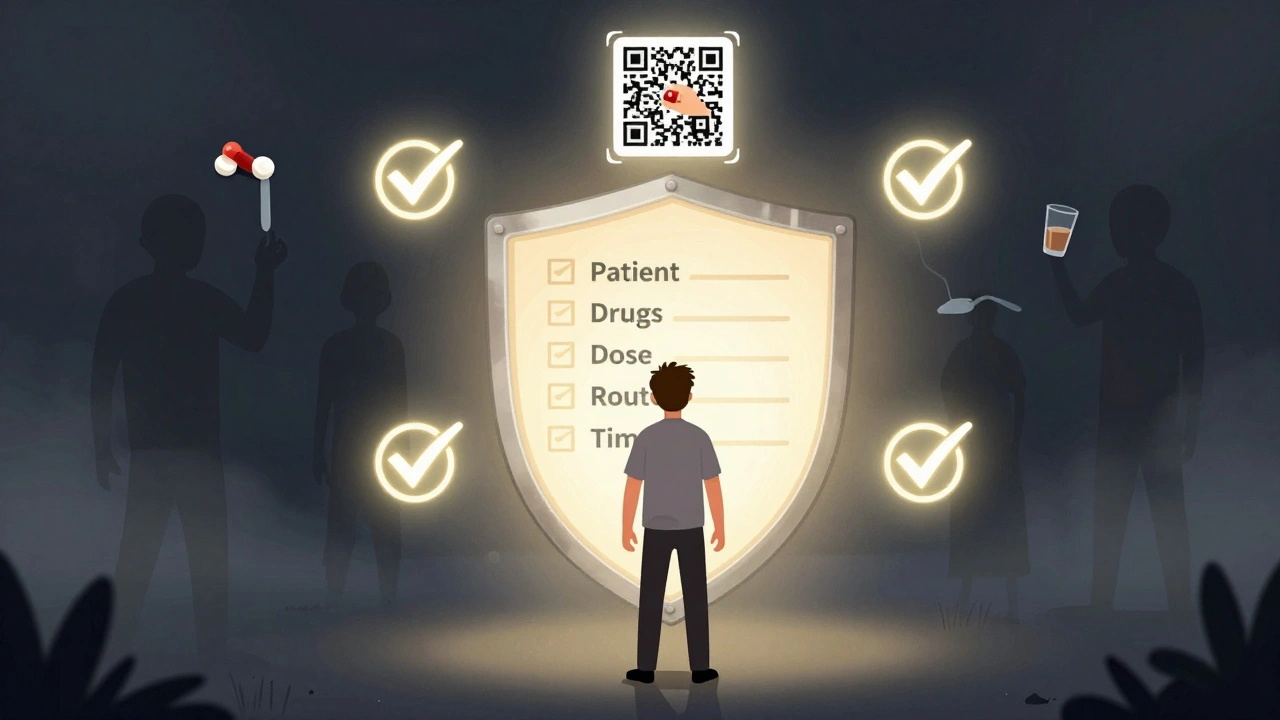
Use the “Five Rights” rule every time you take a pill:
- Right patient-Is this medicine really yours?
- Right drug-Does the name match your prescription?
- Right dose-Is the amount correct?
- Right route-Is it meant to be swallowed, injected, or applied to skin?
- Right time-Are you taking it when you’re supposed to?
The future of medication labels
Change is coming. The FDA and MHRA are pushing for simpler language, bigger fonts, and visual icons-like a skull for “dangerous interaction” or a clock for “take at bedtime.”Some pharmacies in the UK are already testing QR codes on bottles. Scan it, and you get a short video showing how to measure the dose. One pilot saw a 37% drop in dosing errors. By 2027, we may see colour-coded caps: red for high-risk drugs, yellow for ones that need extra care.
But none of that matters if you don’t read the label. Technology helps. But your eyes and your brain are still the most important tools.
Final checklist: Before you take any medicine
- Is this medicine mine? (Check your name on the label.)
- Does the drug name match what your doctor prescribed?
- What’s the strength? (e.g., 500 mg, not just “500”)
- For liquids: What’s the concentration? (mg per mL or per 5 mL)
- What are the directions? How many times a day? With or without food?
- What are the warnings? Alcohol? Driving? Other meds?
- Is it expired?
- Did I use the right measuring tool? (Not a spoon.)
If you can answer all those, you’re ahead of most people. And you’re keeping yourself safe.
Andrew Frazier
December 7, 2025 AT 08:22Karen Mitchell
December 7, 2025 AT 21:20Geraldine Trainer-Cooper
December 9, 2025 AT 09:17Nava Jothy
December 10, 2025 AT 05:11olive ashley
December 11, 2025 AT 20:51Ibrahim Yakubu
December 13, 2025 AT 10:25Mansi Bansal
December 13, 2025 AT 22:47pallavi khushwani
December 14, 2025 AT 05:22Akash Takyar
December 14, 2025 AT 05:59