
Medication Shelf Life: How Long Your Pills Really Last and What Happens When They Expire
When you pick up a prescription or buy over-the-counter medicine, the medication shelf life, the period during which a drug remains safe and effective under proper storage conditions. Also known as drug expiration date, it’s not just a random number printed on the label—it’s based on real testing by manufacturers to ensure the active ingredient doesn’t break down too much. Most pills, capsules, and liquids are designed to stay stable for 1 to 5 years after being made, but that doesn’t mean they turn dangerous the day after that date. The real question isn’t just ‘when does it expire?’ but ‘does it still work, and is it still safe to take?’
Storage conditions, how and where you keep your medicine, directly impact how long it lasts. Also known as pharmaceutical stability, it’s why you shouldn’t store pills in the bathroom or leave them in a hot car. Heat, moisture, and light can cause chemicals to degrade faster, making the drug less effective—or in rare cases, create harmful byproducts. That’s why the FDA and other health agencies test drugs under controlled environments before approving their shelf life. If you keep your insulin in the fridge, your antibiotics in a cool drawer, and your inhalers away from direct sunlight, you’re already doing more than most to protect their potency. And while many people toss out expired meds out of caution, studies from the U.S. Military and FDA show that most solid medications retain at least 90% of their strength for years past the printed date—if stored right. But liquids, eye drops, and insulin? Those are different. Once opened, they often have much shorter windows of use, sometimes just 28 days, because bacteria can grow in them.
Expired medication, drugs past their labeled expiration date. Also known as out-of-date pills, isn’t always a crisis—but it’s not always safe either. Taking an expired antibiotic might mean your infection doesn’t clear, leading to worse illness or antibiotic resistance. An expired EpiPen could fail during a life-threatening reaction. On the other hand, an expired painkiller might just not work as well. The key is knowing what’s worth keeping and what’s not. Never take expired nitroglycerin, epinephrine, or insulin. For other meds, check the appearance: if it’s changed color, cracked, smells funny, or looks sticky, throw it out. If it looks and smells normal and you’re not sure, ask a pharmacist. They’ve seen it all.
What you’ll find below are real, practical guides on how different drugs behave over time—from how chemotherapy must be handled at home to why some generics last longer than others, how storage tricks can extend your medicine’s life, and what happens when you mix old pills with new ones. These aren’t theory pieces. They’re based on clinical experience, real patient cases, and manufacturer data. Whether you’re managing multiple prescriptions, caring for an elderly parent, or just trying to avoid wasting money on useless pills, this collection gives you the facts you need to make smart, safe choices.
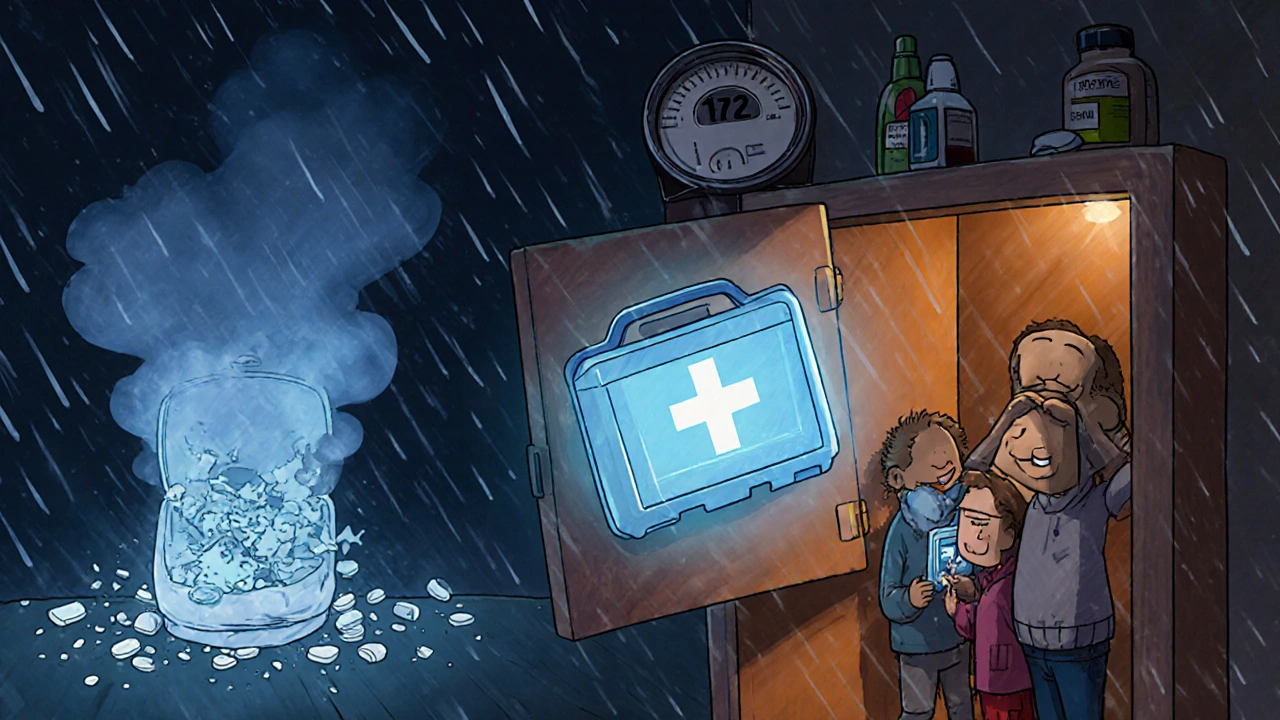
How to Store Emergency Kits to Maximize Medication Shelf Life
Learn how to store emergency medications properly so they stay effective during power outages and disasters. Avoid common mistakes that ruin pills, insulin, and epinephrine - and keep your kit ready for real emergencies.
Read more