
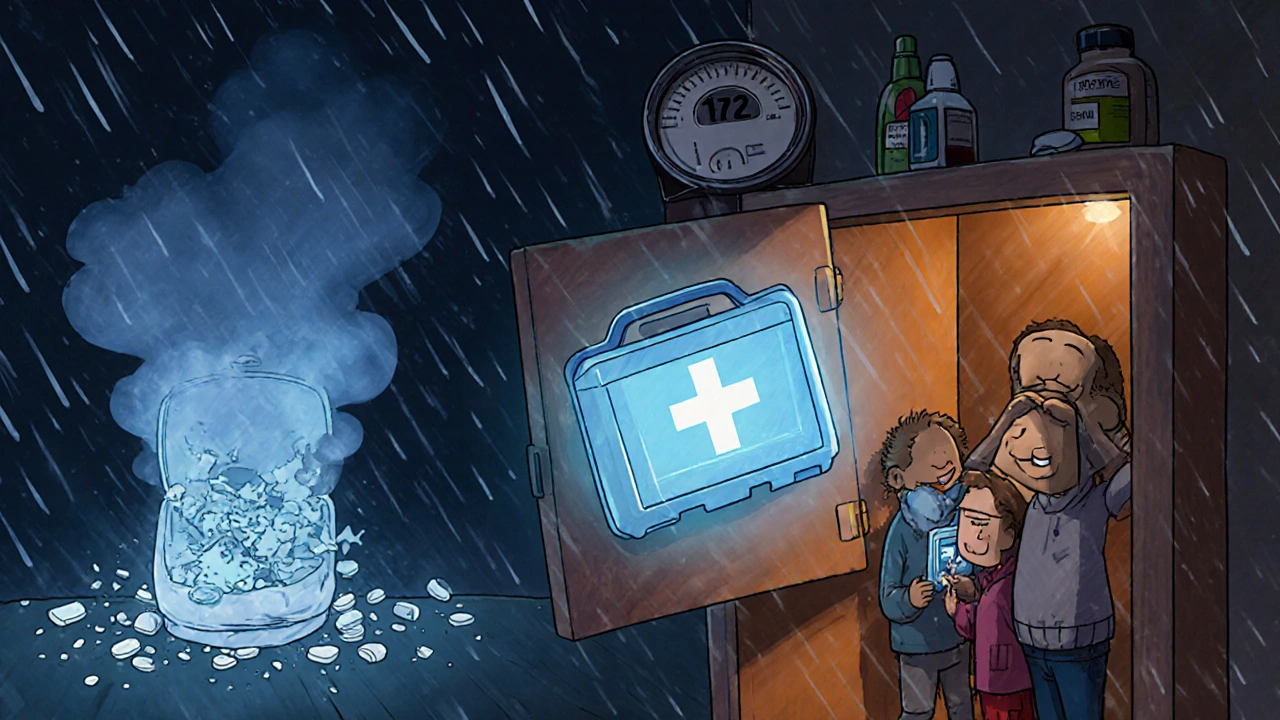
Why Your Emergency Medications Might Be Useless When You Need Them Most
Most people think stocking up on pills is enough. You grab your prescriptions, toss them into a box, and call it done. But if that box sits in a humid bathroom or a hot garage, your life-saving meds could be half-dead by the time a storm hits. In 2022, a winter storm left over 200,000 Texans without power for days. People with diabetes, heart conditions, and severe allergies found their epinephrine, insulin, and blood pressure pills didn’t work - not because they were expired, but because they were stored wrong.
The CDC reports that 78% of emergency medication failures are due to temperature and humidity damage, not expiration dates. That means your 2026 expiration label is meaningless if your pills got cooked in the sun or soaked in steam. The good news? You can fix this. With the right storage, most medications can last years beyond their printed date - even during long power outages.
What Temperature and Humidity Really Do to Your Pills
Medications aren’t like canned food. They’re complex chemical formulas. Heat, moisture, and light break them down fast. Here’s what happens when you ignore the basics:
- Heat above 77°F (25°C): Insulin loses 15% potency after just 12 hours. Epinephrine auto-injectors drop 37% effectiveness in 72 hours. Even aspirin can degrade.
- Humidity over 60%: Tablets absorb moisture. Acetaminophen loses 28% of its ability to dissolve in your body after 30 days in a damp bathroom. That means it won’t get into your bloodstream like it should.
- Direct sunlight: Amoxicillin capsules exposed to sunlight for 48 hours lost 42% of their active ingredient. Light doesn’t just fade the label - it ruins the drug.
The FDA says most pills should stay between 59-77°F (15-25°C). Refrigerated meds like insulin, some antibiotics, and eye drops need 36-46°F (2-8°C). And humidity? Keep it under 60%. A kitchen cabinet away from the stove is better than a bathroom, even if it’s not perfect.
Storage Methods That Actually Work (And the Ones That Don’t)
Not all containers are created equal. Here’s what works - and what’s a waste of space.
- Original bottles with labels: This isn’t optional. The FDA found that transferring pills to plastic bags or pill organizers cuts shelf life by 33%. Labels have the NDC code, dosage, and expiration - critical if you’re in an emergency and someone else has to give you the meds.
- Vacuum-sealed containers: For solid pills (antibiotics, blood pressure meds, painkillers), vacuum sealing adds 1-2 years to shelf life. Research from Intermountain Healthcare shows 95% potency after 24 months beyond expiration. One Reddit user, u/SurvivalMedic99, used vacuum-sealed amoxicillin from 2019 during a 2022 flood - it worked fine.
- Temperature-monitored kits: Buy a kit with a digital thermometer that logs temps every 15 minutes. Amazon reviews show products with this feature get 4.6/5 stars. Those without? 3.2/5. The top complaint? “It got too hot during the blackout.”
- Refrigerated coolers for insulin: Use a battery-powered medical cooler that lasts 72+ hours. The toilet tank trick? It cools for 8-12 hours, but that’s not enough for a multi-day outage. A $120 cooler is cheaper than a hospital visit.
- Bathroom storage: Don’t. The American College of Emergency Physicians found bathroom-stored meds degrade 40% faster than those in kitchen cabinets. Steam from showers and sinks is the enemy.

What to Keep in Your Emergency Medication Kit
You don’t need a pharmacy. You need the essentials. Based on CDC and FDA guidelines, here’s what to include:
- 30-day supply of all chronic meds: Blood pressure, diabetes, thyroid, asthma inhalers, seizure meds. The American Pharmacists Association says three days is the bare minimum. Thirty days is real preparedness.
- Epinephrine auto-injectors: Replace them every 12-18 months, even if they haven’t expired. They lose 15% potency per year, even in perfect storage.
- Insulin: If you use it, keep 48 hours’ worth in a battery-powered cooler. Also pack backup insulin pens in the main kit - even if they’re less ideal, they’re better than nothing.
- Over-the-counter basics: Pain relievers (acetaminophen, ibuprofen), antihistamines, antacids, electrolyte packets, and anti-diarrheal meds.
- Medical documentation: A printed list of all meds, dosages, allergies, and doctor contacts. In an emergency, you might not have your phone.
Pro tip: Store your kit in a waterproof, hard-shell container. Not a plastic bin from Target. Look for one rated for water and impact resistance - the kind used for camping or firearms.
How to Maintain Your Kit - Monthly Checks That Save Lives
Setting it and forgetting it is how people end up with useless meds. Here’s your simple maintenance routine:
- Monthly: Check expiration dates. Move the oldest meds to the front. Use the “first in, first out” rule.
- Monthly: Look for changes. Pills that are cracked, discolored, or smell odd? Toss them. Liquid meds that look cloudy or have particles? Done.
- Monthly: Test your thermometer. Put it in the fridge for an hour. Does it read between 36-46°F? If not, replace the batteries or the device.
- Every 6 months: Replace epinephrine auto-injectors. Even if they’re not expired, their potency drops too fast.
- Every year: Reassess your supply. Did your doctor change your dose? Did you stop taking a med? Update your list.
Set a calendar reminder. Fifteen minutes a month is all it takes. The Veterans Administration found this simple system reduced waste by 65% and kept meds usable during real disasters.
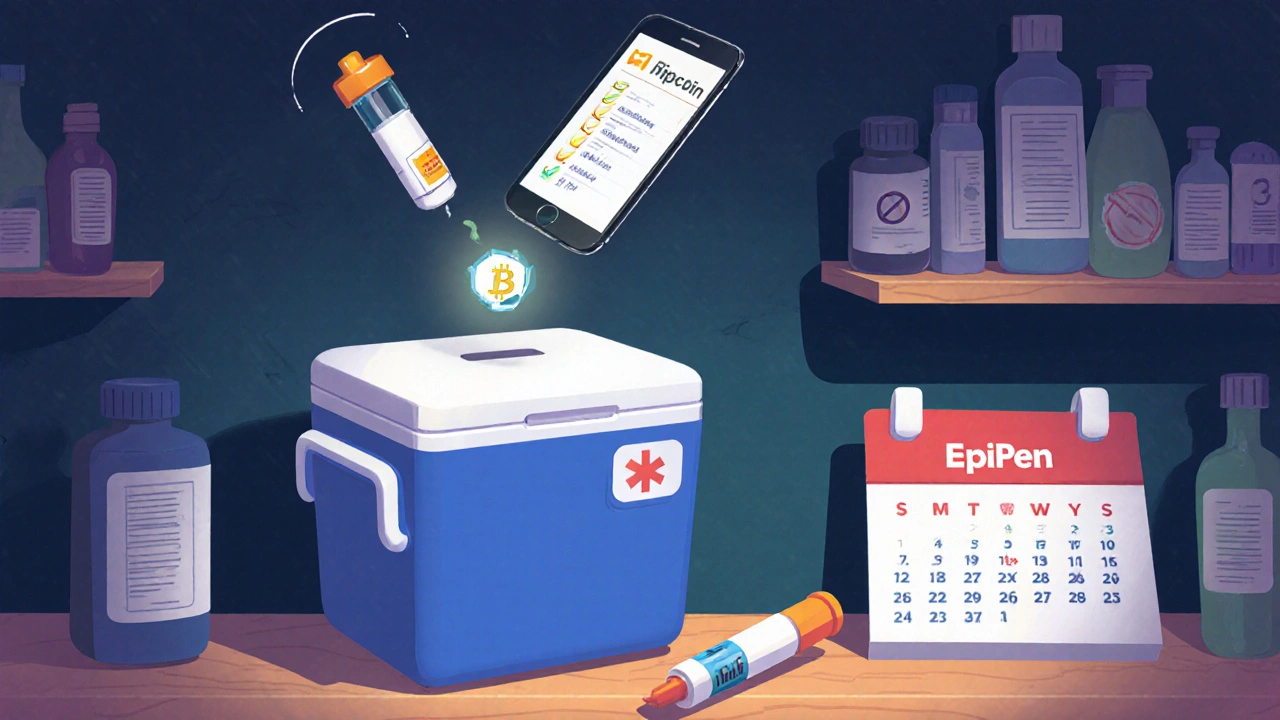
New Tech That’s Changing Emergency Storage (2025 Update)
Things are improving fast. In January 2023, the FDA approved the first insulin - Tresiba® - that stays stable at 86°F for 56 days. That’s a game-changer for people without refrigeration. Novo Nordisk’s clinical data shows it’s a 400% improvement over older versions.
Meridian Medical Technologies released a new epinephrine auto-injector in 2022 that lasts 18 months at room temperature. No more carrying ice packs for your EpiPen.
And now? The FDA is testing blockchain tracking for medication storage. Imagine a tiny sensor in your pill bottle that sends a text if it gets too hot. If this rolls out nationwide, it could cut emergency medication waste by 30%.
These aren’t sci-fi. They’re here. And if you’re still using a shoebox and hoping for the best, you’re falling behind.
What Happens If Your Meds Expire?
Expiration dates aren’t “use-by” dates. They’re the last day the manufacturer guarantees full potency - under ideal conditions. Many pills remain safe and effective years past that date. A 2012 FDA study found 90% of expired meds were still potent 15 years later.
But here’s the catch: If they were stored wrong, they’re not. A pill that’s been in 90°F heat and 70% humidity? Don’t risk it. Epinephrine, insulin, and antibiotics are not worth gambling with.
When in doubt, replace it. A $30 EpiPen is cheaper than an ambulance ride. A $50 insulin cooler is cheaper than a diabetic coma.
Final Checklist: Your Emergency Medication Kit in 5 Steps
- Choose the right container: Hard-shell, waterproof, with a seal. Not a plastic bag.
- Keep everything in original bottles: No transfers. Labels must be readable.
- Store in a cool, dry place: Kitchen cabinet, closet, basement - away from windows and heat sources.
- Add a thermometer: One that logs temps. No excuse not to have one.
- Set monthly reminders: Check dates, look for damage, replace epinephrine every 12-18 months.
If you do these five things, your emergency meds will work when you need them. Not because you got lucky. Because you planned.
Pallab Dasgupta
November 25, 2025 AT 12:58Josh Gonzales
November 27, 2025 AT 02:53katia dagenais
November 27, 2025 AT 11:06Valérie Siébert
November 28, 2025 AT 22:11Shivam Goel
November 29, 2025 AT 17:49fiona collins
November 30, 2025 AT 04:13Jack Riley
November 30, 2025 AT 15:47Caroline Marchetta
December 1, 2025 AT 06:40Leisha Haynes
December 2, 2025 AT 17:11Jacqueline Aslet
December 4, 2025 AT 16:43giselle kate
December 6, 2025 AT 02:40