
Medication Schedule Travel: How to Stay on Track with Your Pills on the Go
When you're medication schedule travel, the practice of managing your daily drug routine while away from home, it’s not just about packing your pills. It’s about outsmarting time zones, airport security, lost luggage, and your own tired brain. Missing a dose or taking the wrong one can throw off your whole treatment—whether you’re on blood pressure meds, insulin, antidepressants, or something more complex. The good news? With a few smart moves, you can keep your routine steady no matter where you are.
Pill organizer, a simple tool that separates doses by day and time is your best friend. Don’t just toss pills into a ziplock. Use one with AM/PM or even 4-times-a-day slots. Label it clearly. If you’re flying, keep it in your carry-on—never in checked baggage. TSA doesn’t require you to declare meds, but having them in a labeled container saves time and stress. And if you’re crossing time zones, don’t just guess. Plan ahead: if you take a pill at 8 AM your time, and you’re flying east, you might need to take it earlier the next day. Use a phone alarm set to your home time zone, or a free app like Medisafe or MyTherapy. These tools remind you even when you’re on a different schedule.
Jet lag and meds, how disrupted sleep cycles affect how your body processes drugs, is real. Some meds—like thyroid pills or blood thinners—need consistent timing to work right. If you’re switching time zones, talk to your doctor. They might suggest adjusting your schedule gradually before you leave, or keeping your original timing no matter where you are. For example, if you take a daily pill at 7 AM EST, keep taking it at 7 AM EST even if you’re in London. That’s often safer than trying to match local time.
Don’t forget about storage. Heat and humidity can ruin insulin, epinephrine, or even antibiotics. Carry a small insulated pouch with a cold pack if you’re going somewhere hot. Keep your meds away from the car dashboard or the bathroom—both are too damp or too hot. And if you’re traveling internationally, check if your meds are legal there. Some countries treat common U.S. prescriptions as controlled substances. Bring a copy of your prescription and a letter from your doctor explaining why you need them. It’s not bureaucracy—it’s insurance.
You’ll also want to plan for emergencies. What if your bag gets lost? Always pack at least a three-day extra supply in your carry-on. And if you’re on something like warfarin or digoxin, keep a list of your meds, doses, and why you take them printed out. You never know when you’ll need to explain it to a doctor in a foreign country.
Below, you’ll find real, practical advice from people who’ve been there—how to compare new prescriptions before you leave, how to dispose of meds safely if you don’t use them, how to handle multiple pharmacies while traveling, and what to do if you accidentally take a double dose. These aren’t theory pieces. They’re fixes for real problems you’ll face on the road, in the air, or across borders. Whether you’re going for a weekend or a year, these tips help you stay in control—so your health doesn’t become another thing to worry about.
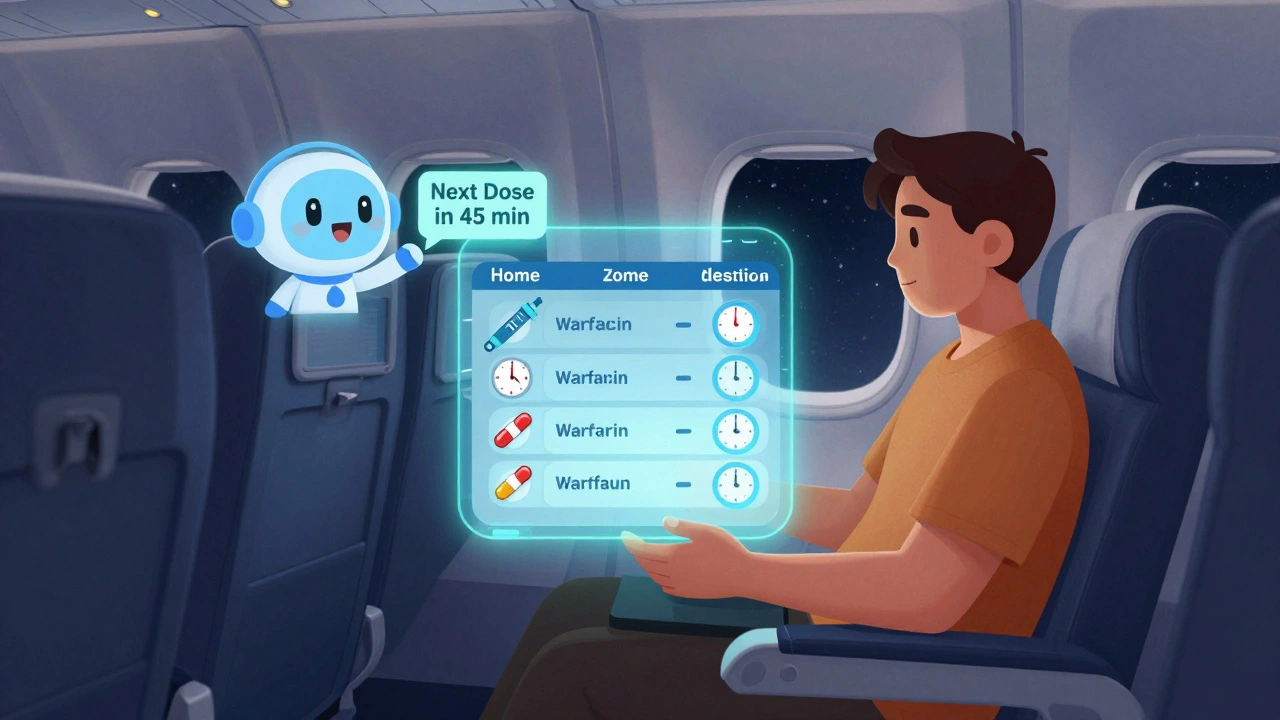
How to Keep Time-Sensitive Medications on Schedule When Flying
Learn how to manage time-sensitive medications like insulin, warfarin, and anti-seizure drugs when flying across time zones. Avoid dangerous dosing errors with expert tips, tools, and real-world strategies.
Read more