
Medication Labels: What They Mean and Why They Matter
When you pick up a prescription, the medication labels, the printed information on prescription bottles that tell you what the drug is, how to take it, and what risks to watch for. Also known as prescription labels, they’re your first and most important line of defense against mistakes, overdoses, and dangerous interactions. These aren’t just paperwork—they’re lifesaving instructions written in plain language that you need to understand, not just ignore.
Behind every medication label, the printed information on prescription bottles that tell you what the drug is, how to take it, and what risks to watch for. Also known as prescription labels, they’re your first and most important line of defense against mistakes, overdoses, and dangerous interactions. are real risks. A misread dosage can lead to an overdose, especially with sedatives or sleep meds. A forgotten warning about caffeine can mess with your blood thinner. And if you don’t know how to properly dispose of a chemo drug or remove your personal info from a pill bottle, you’re putting yourself and your family at risk for identity theft or environmental harm. These aren’t hypotheticals—they’re documented problems covered in posts about pediatric overdoses, chemotherapy disposal, and identity theft prevention.
Medication labels also tie into bigger systems. If you’re on Medicare Part B, the coding on those labels affects whether your biosimilar gets paid for. If you’re trying to stay on a brand drug because generics don’t work for you, the label helps you prove why. If you’re pregnant, the label tells you whether a cream is safe. If you’re elderly and juggling three pharmacies, the label is your anchor in a sea of confusion. The labels on your bottles connect to everything from heart safety (QT prolongation risks with antidepressants) to dental health (dry mouth from diabetes meds) to cultural trust in generics.
You don’t need a pharmacy degree to read a label—but you do need to slow down. Look at the name, the dose, the frequency, the expiration date. Check for black box warnings. Note if it says "take with food" or "avoid alcohol." These aren’t suggestions—they’re rules written because someone got hurt by ignoring them. The CDC’s PROTECT Initiative, for example, found that most pediatric overdoses happen because labels weren’t followed. And when it comes to storing emergency meds, the label tells you if insulin needs refrigeration or if epinephrine can survive a heatwave.
There’s a reason we have posts on penicillin desensitization, linezolid diets, and ACE inhibitor interactions—all of them start with a label. The label says "avoid tyramine" because eating aged cheese with linezolid can spike your blood pressure to deadly levels. The label says "monitor potassium" because mixing two common heart drugs can cause your body to hold onto too much, leading to cardiac arrest. These aren’t rare edge cases. They’re common, preventable tragedies.
And if you’re ever unsure? The label should tell you who to call. If it doesn’t, that’s a red flag. You’re not just reading a sticker—you’re reading your safety plan. The posts below cover every angle: how to remove your info from bottles to stop identity theft, how to store pills so they don’t expire in a power outage, how to talk to your doctor when a label says "generic substitution allowed" but your body says no. These aren’t just tips—they’re survival skills. And you’re about to get them all, one label at a time.
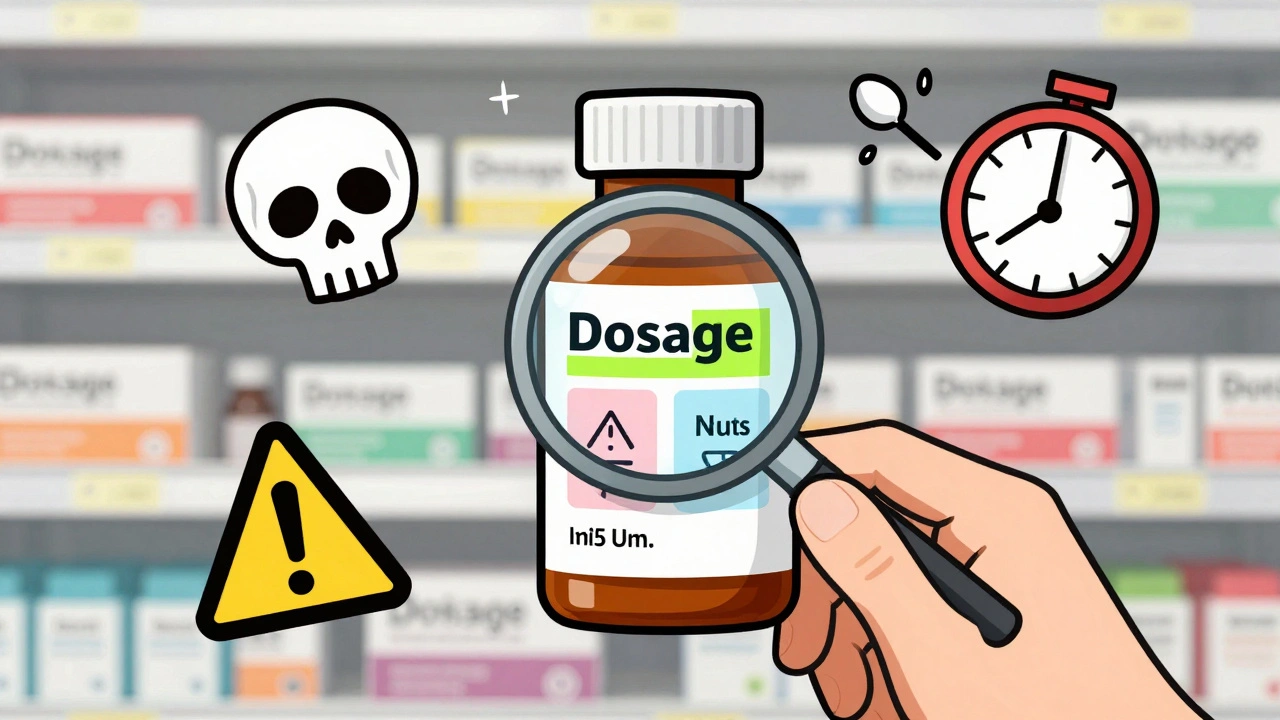
How to Read Medication Labels: Dosage, Directions, and Safety Tips
Learn how to read medication labels correctly to avoid dangerous mistakes. Understand dosage, directions, warnings, and expiration dates for safer medicine use.
Read more