
Levothyroxine and Coffee: What You Need to Know About This Common Interaction
When you take levothyroxine, a synthetic thyroid hormone used to treat hypothyroidism, timing matters more than you might think. Many people grab their morning coffee right after swallowing their pill—thinking it’s harmless. But that habit could be quietly sabotaging your treatment. Research shows that coffee, especially hot brew, can reduce how much levothyroxine your body absorbs by up to 30%. That means your thyroid levels stay off, your energy stays low, and your doctor keeps adjusting your dose—when the real fix is as simple as waiting an hour.
This isn’t just about coffee. Other drinks and foods interfere too—like soy milk, calcium supplements, and iron pills. But coffee is the most common offender because it’s part of so many daily routines. The problem isn’t caffeine itself—it’s the compounds in coffee that bind to levothyroxine in your gut, stopping it from entering your bloodstream. Even if you wait 30 minutes, studies show absorption is still lower than if you took it on an empty stomach with water. The American Thyroid Association recommends waiting at least 60 minutes after taking levothyroxine before drinking coffee. Some doctors even suggest taking it at bedtime instead, if your sleep schedule allows it, to avoid morning food and drink conflicts entirely.
And it’s not just about coffee. If you’re on levothyroxine, a synthetic thyroid hormone used to treat hypothyroidism, you’re also likely managing other things: cholesterol, blood pressure, maybe even diabetes. That means you might be popping pills for drug interactions, when two or more medications affect each other’s effectiveness all day long. Calcium supplements? Take them four hours apart. Antacids? Wait at least two hours. Even fiber-rich breakfasts can slow absorption. The key isn’t perfection—it’s consistency. Pick one reliable time each day—ideally first thing in the morning, before eating or drinking anything else—and stick to it. That’s how you keep your thyroid levels stable.
You don’t need to quit coffee. You just need to reorganize your morning. Try taking your pill right after you wake up, before brushing your teeth or making coffee. Drink water. Wait. Then enjoy your cup. Or if mornings are chaotic, consider switching to nighttime dosing—many patients find this easier to manage, as long as they don’t eat within two hours of taking it. The goal isn’t to make life harder. It’s to make your medication work.
Below, you’ll find real advice from people who’ve been there—how to talk to your doctor about sticking with your brand, how to avoid hidden interactions, and what to do when your symptoms don’t improve even with the right dose. This isn’t theoretical. It’s about making sure your treatment actually works.
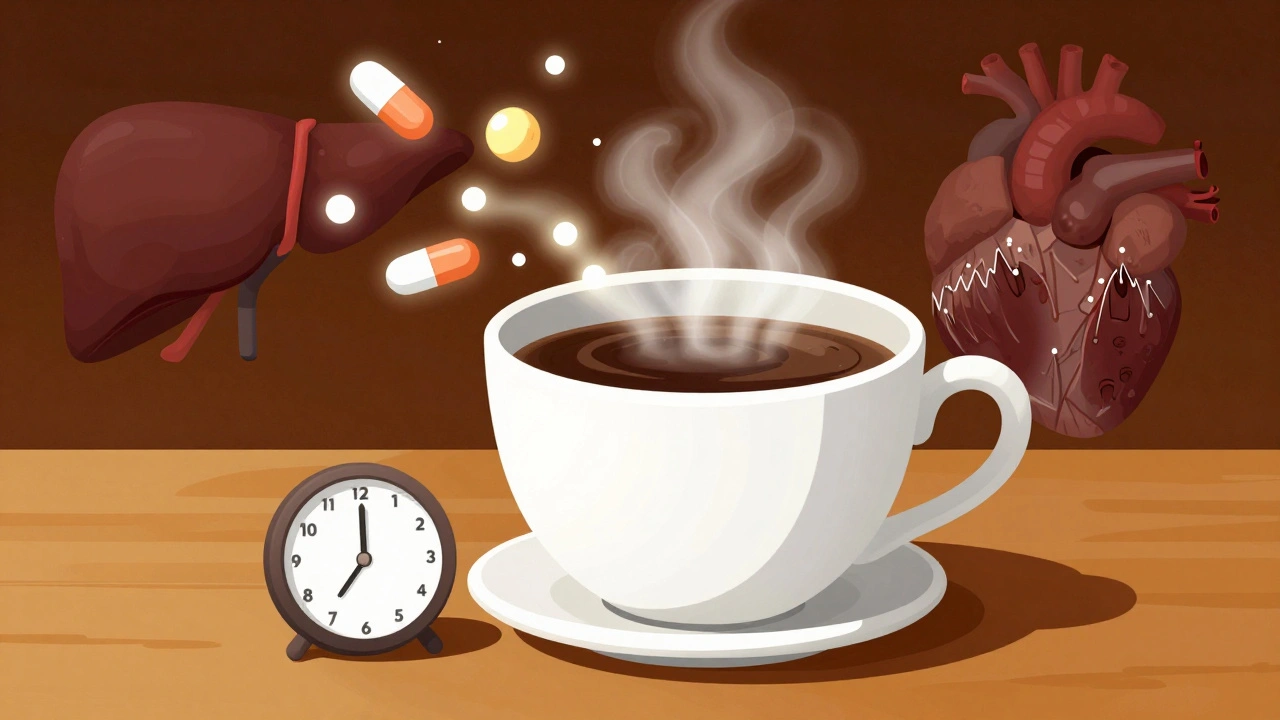
Caffeine and Medication Safety: What You Need to Know About Dangerous Interactions
Caffeine can interfere with common medications like blood thinners, thyroid drugs, and antidepressants, reducing effectiveness or increasing side effects. Learn which interactions are dangerous and how to stay safe.
Read more