
Leptin Resistance: What It Is, Why It Matters, and How to Fix It
When your body stops listening to leptin, a hormone produced by fat cells that tells your brain when you’re full. Also known as satiety hormone resistance, it’s one of the main reasons people struggle to lose weight even when they cut calories. You might eat less, exercise more, and still feel hungry all the time. That’s not laziness—it’s biology. Leptin resistance means your brain doesn’t get the message that you’ve had enough to eat, so it keeps pushing you to eat more, even when you have plenty of stored fat.
This problem doesn’t happen alone. It’s closely tied to insulin resistance, a condition where your cells stop responding properly to insulin, leading to higher blood sugar and fat storage. High insulin levels block leptin from reaching your brain, making the signal even weaker. Over time, chronic inflammation from poor diet, lack of sleep, or stress makes it worse. You’re not just fighting hunger—you’re fighting a broken feedback loop between your fat cells and your brain.
People with leptin resistance often feel constant cravings, especially for sugary or fatty foods. They might gain weight easily, lose it slowly, or hit plateaus no matter what diet they try. This isn’t about willpower. It’s about a hormonal signal that’s been drowned out by years of overeating, processed foods, and poor sleep habits. The good news? You can reset it. Studies show that reducing sugar intake, getting enough sleep, managing stress, and eating protein-rich meals at breakfast can help restore leptin sensitivity over time.
What you’ll find in the posts below isn’t a list of quick fixes. It’s a collection of real, science-backed insights on how medications, lifestyle changes, and even other health conditions like diabetes and heart disease connect to leptin resistance. You’ll see how drugs used for other purposes—like those for blood pressure, cholesterol, or even mental health—can indirectly affect your hunger signals. You’ll learn why some weight loss strategies backfire, and what actually works when your body refuses to cooperate. This isn’t about another diet. It’s about fixing the system that’s broken.
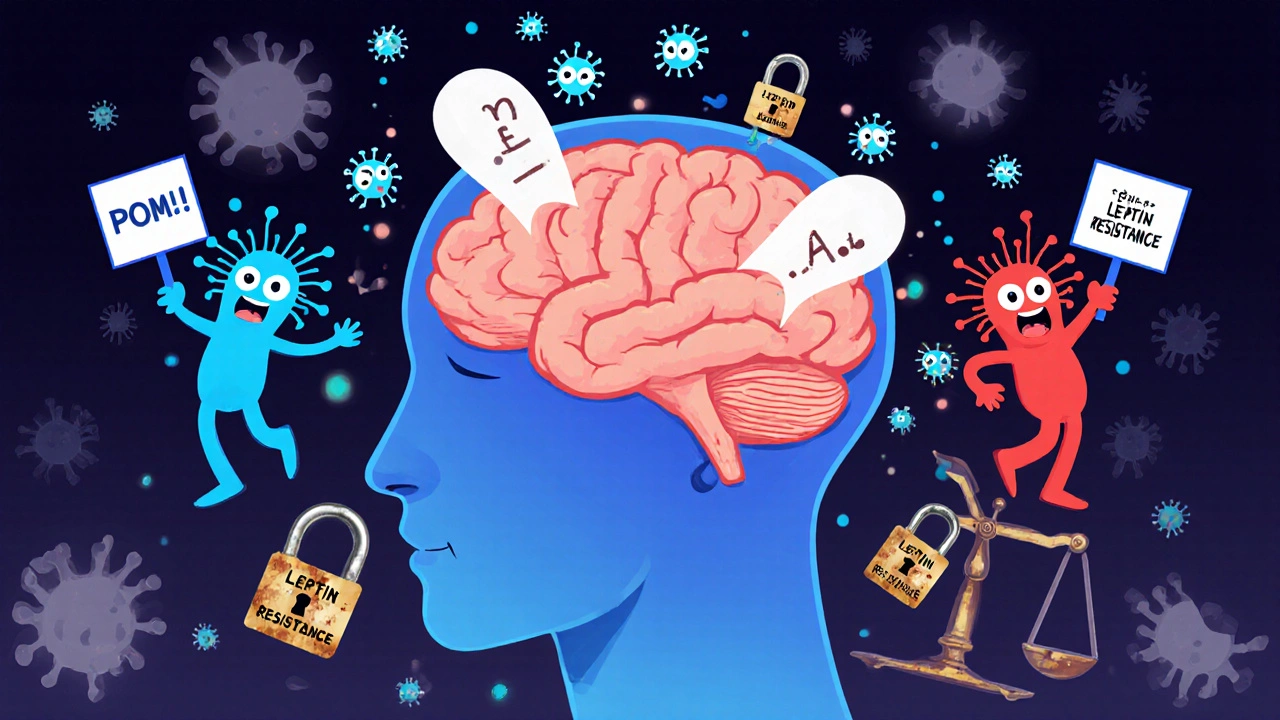
Obesity Pathophysiology: How Appetite Regulation and Metabolic Dysfunction Drive Weight Gain
Obesity is not just about overeating-it's a medical condition driven by broken hunger signals and metabolic dysfunction. Learn how leptin resistance, brain circuits, and hormones like ghrelin and insulin keep weight off despite efforts to lose it.
Read more