
Kidney Disease Prevention: Simple Steps to Protect Your Kidneys
When we talk about kidney disease prevention, the proactive steps taken to avoid damage to the kidneys that can lead to long-term failure. Also known as chronic kidney disease prevention, it’s not about waiting for symptoms—it’s about stopping damage before it starts. Your kidneys filter waste, balance fluids, and control blood pressure. But they don’t scream when they’re in trouble. By the time you feel tired, swollen, or off, the damage may already be advanced. The good news? Most kidney disease is preventable—if you know what to watch for.
High blood pressure, a condition where force against artery walls is too high, forcing the kidneys to work harder is the number one cause of kidney damage. It doesn’t always come with headaches or dizziness, which is why checking it regularly matters. Same with diabetes, a disease where the body can’t manage blood sugar properly, leading to sugar damage in tiny kidney filters. Over half of all kidney failure cases link back to these two. You don’t need fancy tests to protect yourself. Just keep your numbers in range: under 130/80 for blood pressure, and HbA1c under 7% if you have diabetes. That’s it.
Drinking enough water sounds basic, but it’s one of the most effective tools you have. Dehydration stresses your kidneys, especially if you’re active, live in a hot climate, or take certain meds. Salt? Cut back. Processed foods, canned soups, and fast food are loaded with sodium—each gram adds pressure to your kidneys. And don’t ignore over-the-counter painkillers. Taking ibuprofen or naproxen every day for headaches or back pain? That’s a silent risk. These drugs reduce blood flow to the kidneys. One or two a week? Fine. Daily? Not worth it.
What you eat matters too. Too much red meat? Too many sugary drinks? These habits don’t just pack on weight—they overload your kidneys. Swap soda for water. Choose whole grains over white bread. Load up on vegetables. You’re not just eating for your waistline—you’re feeding your kidneys. And don’t forget sleep and stress. Poor sleep raises blood pressure. Chronic stress spikes cortisol, which messes with fluid balance. Your kidneys don’t just need clean water—they need calm.
There’s no magic pill for kidney health. No supplement will replace a good diet, regular checkups, and staying active. But small changes add up. Walk 30 minutes a day. Skip the salt shaker. Get your blood pressure checked once a year—even if you feel fine. These aren’t just "healthy habits." They’re your first line of defense.
The posts below give you real, practical ways to protect your kidneys—from understanding how common drugs like ACE inhibitors affect kidney function, to spotting early signs of trouble before it’s too late. You’ll find clear advice on what to avoid, what to do, and how to make smart choices without feeling overwhelmed.
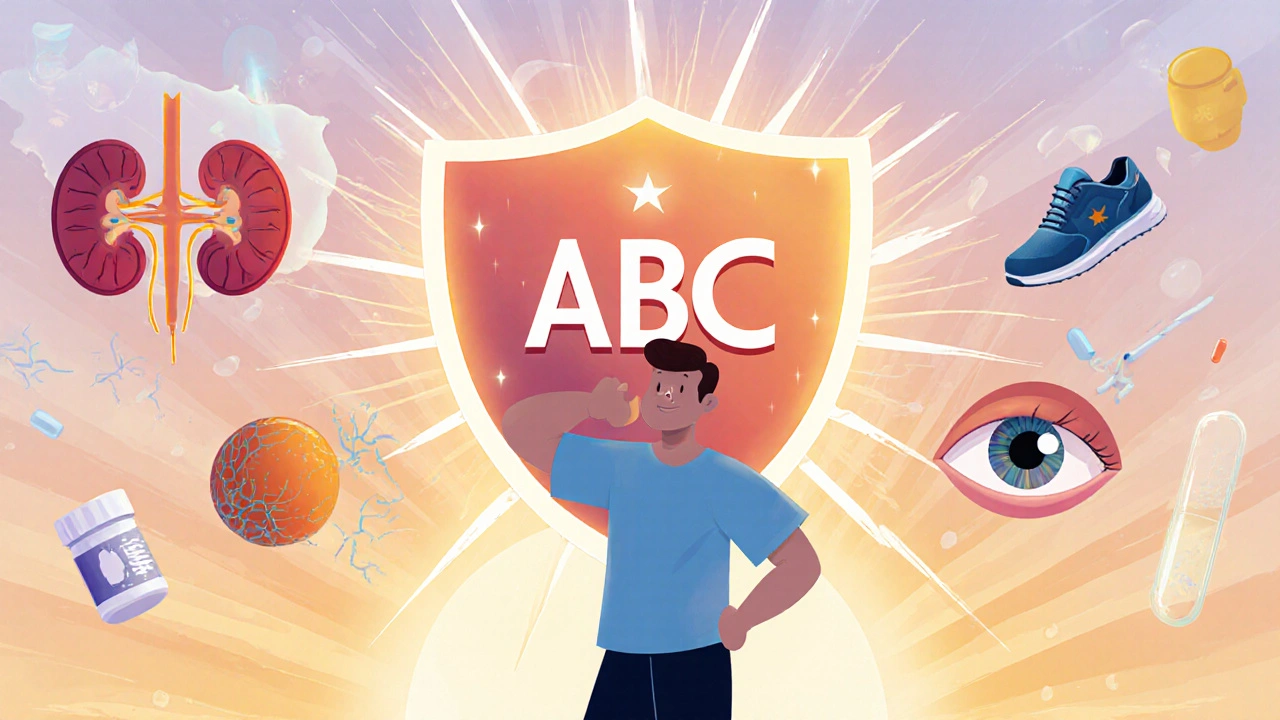
How to Prevent Diabetic Kidney Disease, Neuropathy, and Eye Damage
Learn how to prevent diabetic kidney disease, neuropathy, and eye damage through proven strategies: control your ABCs, use new medications, check your feet daily, and get annual eye exams. Prevention works-even after years with diabetes.
Read more