
Hypothalamic Signaling: How Your Brain Controls Hunger, Stress, and Hormones
When you feel hungry, stressed, or tired, it’s not just your stomach or mind talking—it’s your hypothalamic signaling, a complex network of neural and hormonal pathways that links the brain to the body’s endocrine system. Also known as neuroendocrine regulation, it’s the silent conductor behind your metabolism, sleep cycles, and even how you react to daily stress. This small region at the base of your brain doesn’t just respond to signals—it sends out commands that control everything from your thyroid to your adrenal glands.
Think of hypothalamus, the master regulator of homeostasis in the brain. Also known as the brain’s thermostat, it constantly monitors blood sugar, body temperature, and hormone levels. When something’s off, it triggers the pituitary gland to release hormones that tell other organs what to do. For example, if your cortisol is too high, the hypothalamus tells your body to slow down stress signaling. If your leptin levels drop after fasting, it kicks hunger signals into overdrive. This isn’t just theory—it’s why people on long-term steroid treatments gain weight, or why shift workers struggle with appetite control.
And it’s not just about eating and stress. neuroendocrine system, the integrated network of nerves and hormones that maintain internal balance. Also known as the brain-body hormone axis, it links directly to your immune response, reproductive cycle, and even how your body handles pain. That’s why chronic stress can mess with your period, why poor sleep lowers your immunity, and why some antidepressants cause weight gain. These aren’t random side effects—they’re downstream results of disrupted hypothalamic signaling.
What you’ll find in these articles isn’t just drug lists or medical jargon. You’ll see real connections: how a diabetes drug affects appetite through hypothalamic pathways, why certain blood pressure meds cause fatigue by altering stress hormone feedback, and how antibiotics can indirectly mess with your sleep by changing gut signals that reach the hypothalamus. These aren’t isolated side effects—they’re part of a system. And understanding that system helps you ask better questions, spot hidden causes, and make smarter choices about your meds and lifestyle.
Whether you’re managing a chronic condition, dealing with unexplained weight changes, or just wondering why you’re always tired, the answer often starts in the hypothalamus. Below, you’ll find clear, practical guides on how medications, diet, and lifestyle choices interact with this system—no fluff, no jargon, just what matters for your health.
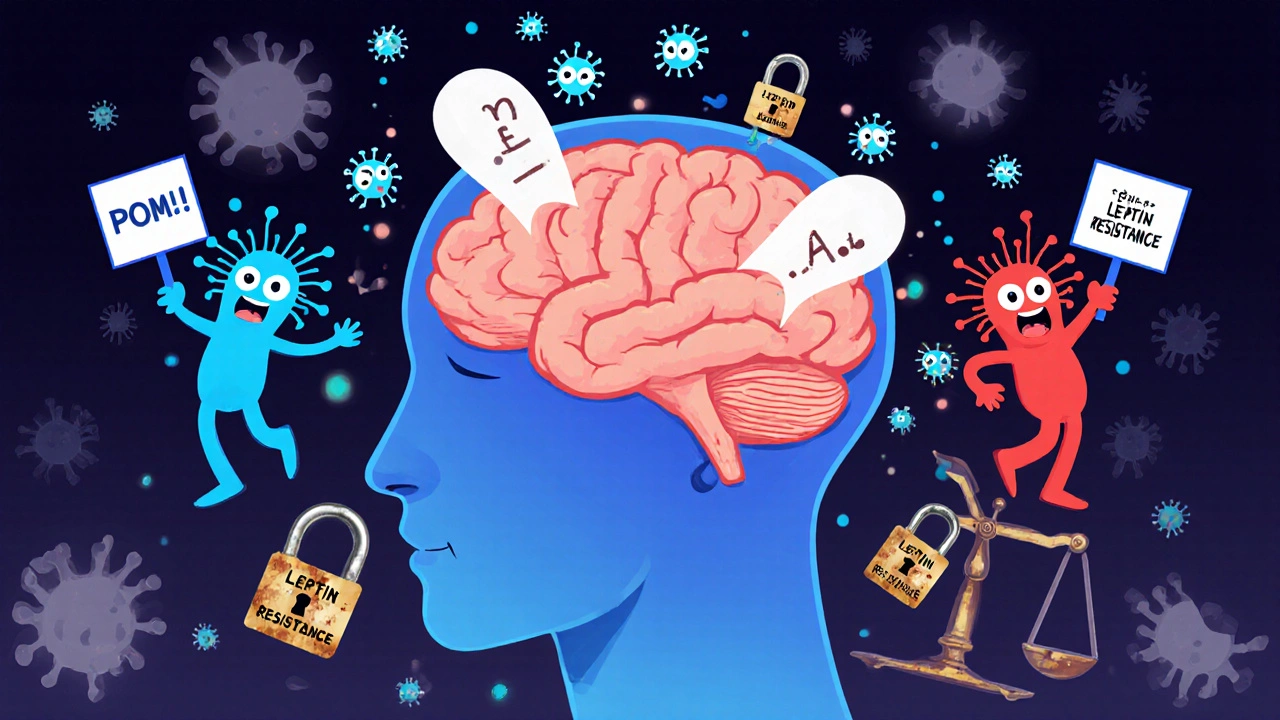
Obesity Pathophysiology: How Appetite Regulation and Metabolic Dysfunction Drive Weight Gain
Obesity is not just about overeating-it's a medical condition driven by broken hunger signals and metabolic dysfunction. Learn how leptin resistance, brain circuits, and hormones like ghrelin and insulin keep weight off despite efforts to lose it.
Read more