
Hyperkalemia: Causes, Risks, and Medications That Affect Potassium Levels
When your blood potassium levels climb too high, you're dealing with hyperkalemia, a condition where excess potassium in the bloodstream disrupts heart and muscle function. Also known as high potassium, it doesn't always cause symptoms—until it nearly stops your heart. This isn't just a lab number; it's a silent threat that can turn deadly in hours, especially if you have kidney disease or take certain medications.
Kidney disease, the most common cause of hyperkalemia means your body can't flush out extra potassium. But even healthy kidneys can be overwhelmed by drugs like ACE inhibitors, ARBs, or potassium-sparing diuretics. Potassium-lowering meds, such as sodium polystyrene sulfonate or patiromer, are used to bring levels down fast—but they’re not a substitute for fixing the root problem. Many people don’t realize their blood pressure pill or heart failure med is quietly pushing potassium into the danger zone.
It’s not just about what you take—it’s what you eat. Bananas, spinach, and salt substitutes can spike levels in people with reduced kidney function. And if you’re on dialysis, missing a session? That’s a recipe for trouble. The real danger? You might feel fine until your heart rhythm goes haywire. No warning. No pain. Just sudden cardiac arrest.
The posts below dig into the medications and conditions that link directly to hyperkalemia. You’ll find clear breakdowns of drugs like digoxin and linezolid that can worsen it, how diuretics like Lasix help manage it, and why some painkillers and diabetes meds require extra monitoring. There’s also practical advice on avoiding hidden potassium sources and recognizing early signs before it’s too late. Whether you’re managing chronic kidney disease, taking heart meds, or just curious why your doctor keeps checking your potassium, this collection gives you the facts you need to stay safe.
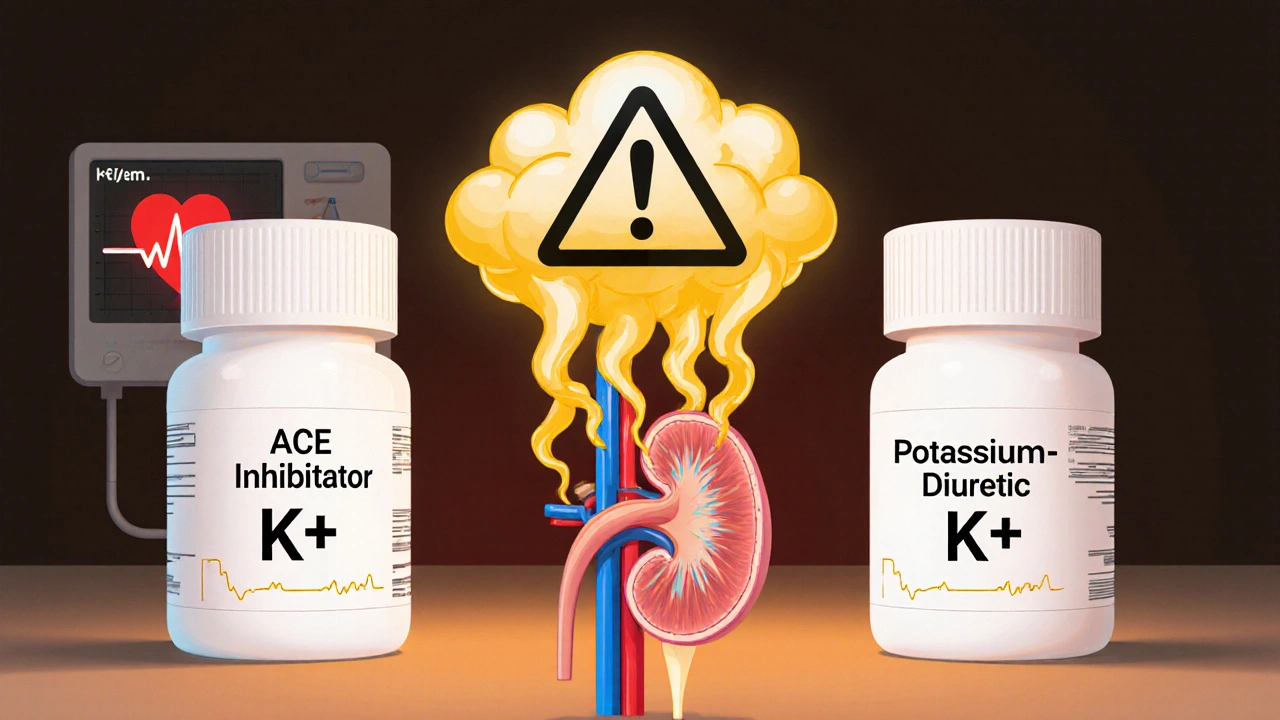
ACE Inhibitors and Potassium-Sparing Diuretics: Understanding the Hyperkalemia Risk
Combining ACE inhibitors and potassium-sparing diuretics can raise potassium to dangerous levels, increasing the risk of heart rhythm problems. Learn how to monitor, manage, and reduce this common but preventable drug interaction.
Read more