
High Potassium: Causes, Risks, and What You Need to Know
When your blood has too much high potassium, a condition called hyperkalemia that disrupts nerve and muscle signals, especially in the heart. Also known as hyperkalemia, it’s not just a lab number—it’s a silent threat that can trigger irregular heartbeats, muscle weakness, or even cardiac arrest if ignored. Most people don’t feel symptoms until it’s serious, which is why it often shows up during routine blood tests—especially for those with kidney issues or on certain medications.
kidney function, the body’s main way of filtering out excess potassium. When kidneys slow down due to chronic disease, diabetes, or aging, potassium builds up fast. potassium-rich foods, like bananas, potatoes, spinach, and avocados. While these are healthy for most, they can become risky if your body can’t process them. Even salt substitutes labeled "low sodium" often pack in potassium chloride, which can spike levels without you realizing it. Medications like ACE inhibitors, ARBs (like Sartel), and certain diuretics also interfere with potassium excretion. That’s why people on blood pressure meds or heart failure drugs need regular checks.
High potassium doesn’t happen overnight. It’s usually the result of a mix of diet, medication, and underlying health problems. Someone with stage 3 kidney disease might eat a sweet potato for dinner and wake up with muscle cramps—not because the potato was bad, but because their kidneys couldn’t clear the extra potassium. The same goes for older adults taking multiple prescriptions. It’s not about fear—it’s about awareness.
You don’t need to cut out all potassium foods. You need to understand your personal risk. If you’re on dialysis, have diabetes, or take meds like lisinopril or spironolactone, your doctor should monitor your levels. If you’ve ever felt a flutter in your chest, unusual fatigue, or tingling in your hands, ask for a simple blood test. It takes five minutes and could prevent a hospital visit.
The posts below cover real cases and connections: how digoxin can worsen high potassium, why certain heart failure drugs need careful balancing, and how medications like Lasix help flush out excess. You’ll find practical advice on what to eat, what to avoid, and how to talk to your provider about your risk. No fluff. Just what you need to stay safe and informed.
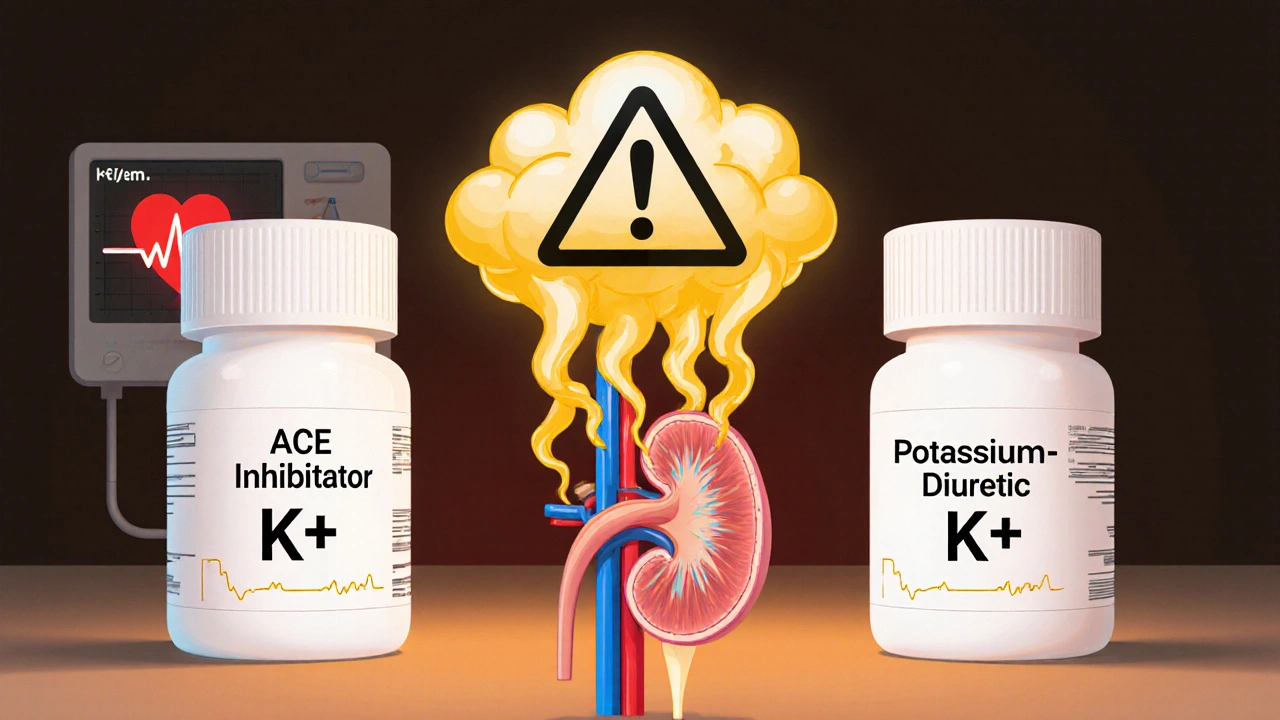
ACE Inhibitors and Potassium-Sparing Diuretics: Understanding the Hyperkalemia Risk
Combining ACE inhibitors and potassium-sparing diuretics can raise potassium to dangerous levels, increasing the risk of heart rhythm problems. Learn how to monitor, manage, and reduce this common but preventable drug interaction.
Read more