
Flying with Medication: What You Need to Know Before You Board
When you're flying with medication, the process of carrying prescription drugs through airports and across borders. Also known as traveling with prescriptions, it's not just about packing bottles—it's about following rules that vary by country, airline, and even airport security team. Many people assume if it's legal at home, it's fine on a plane. That’s not true. The TSA allows prescription meds in carry-ons and checked bags, but they must be clearly labeled. International travel? That’s a whole different game. Some countries treat common U.S. painkillers like controlled substances. Others require a doctor’s letter just to bring insulin.
Related entities matter just as much. TSA medication rules, the guidelines set by the U.S. Transportation Security Administration for carrying drugs through airport screening say you don’t have to remove pills from bottles, but keeping them in original packaging avoids delays. Airplane medication storage, how you keep drugs safe during flight—especially temperature-sensitive ones like insulin or epinephrine is critical. Heat in the cargo hold can ruin pills. Cold packs? Allowed, but not dry ice unless you’re trained to handle it. And don’t forget international drug travel, the legal and logistical challenges of bringing meds into foreign countries. Countries like Japan and the UAE have strict lists of banned substances—even OTC cold medicine can get you arrested if it contains pseudoephedrine.
You’ll find real-world advice in the posts below. Some show you how to compare new prescription labels before you leave, so you don’t end up with the wrong pill on a red-eye. Others explain how to safely remove personal info from bottles to prevent identity theft while traveling. There’s guidance on storing emergency meds for long flights, how to talk to your doctor about staying on brand meds when generics aren’t available abroad, and what to do if your meds get lost. You’ll also learn which common drugs interact with caffeine or alcohol mid-flight—and why that matters when you’re in the air. This isn’t theory. These are the exact steps people took to avoid airport hassles, customs seizures, or worse.
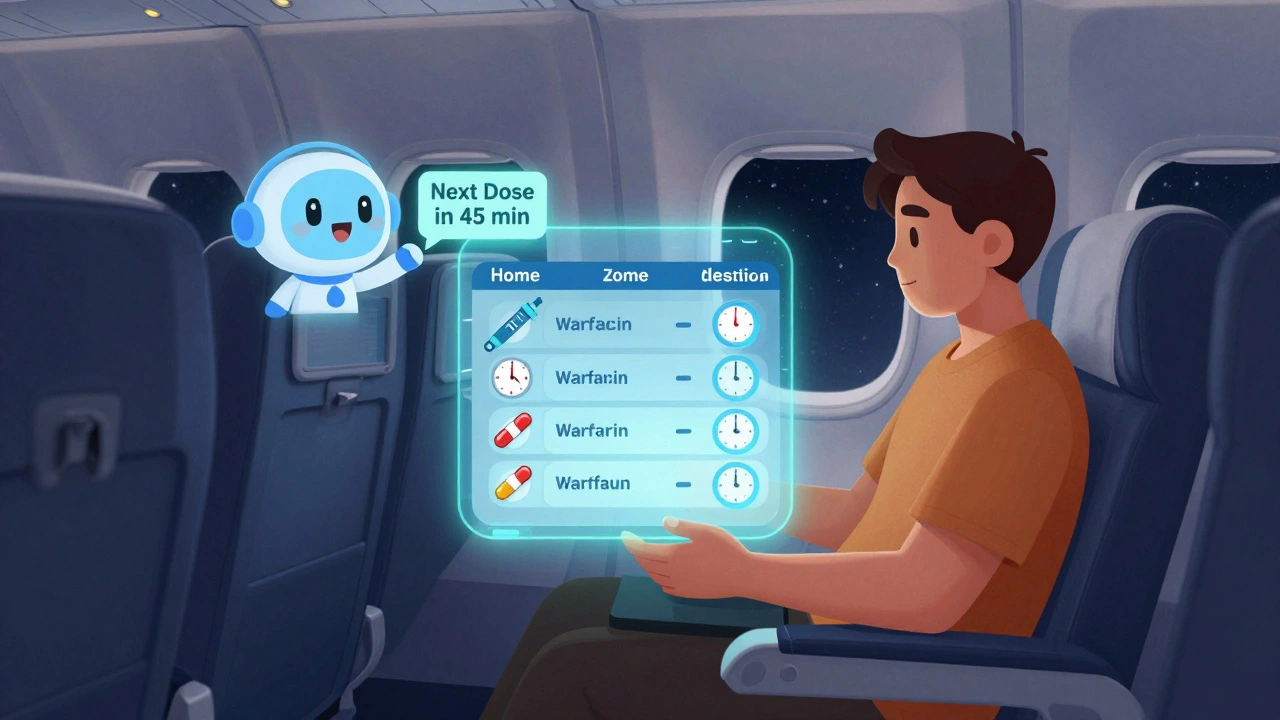
How to Keep Time-Sensitive Medications on Schedule When Flying
Learn how to manage time-sensitive medications like insulin, warfarin, and anti-seizure drugs when flying across time zones. Avoid dangerous dosing errors with expert tips, tools, and real-world strategies.
Read more