
Eye Damage from Diabetes: What It Is, How It Happens, and How to Stop It
When you have diabetes, a chronic condition where the body can't properly regulate blood sugar. Also known as high blood glucose, it doesn't just wear down your nerves or kidneys—it quietly attacks your eyes. Over time, too much sugar in your blood damages the tiny blood vessels in your retina, the light-sensitive layer at the back of your eye. This is called diabetic retinopathy, the most common cause of vision loss in people with diabetes. Left unchecked, it can lead to bleeding, swelling, scarring, and even blindness.
It’s not just one problem. diabetic eye disease, an umbrella term for several vision-threatening conditions linked to high blood sugar includes diabetic macular edema (swelling in the central part of the retina), cataracts (clouding of the lens), and glaucoma (increased eye pressure). These don’t show up overnight. Many people don’t notice changes until vision is already affected. That’s why regular eye exams aren’t optional—they’re your first line of defense. The American Diabetes Association recommends a yearly dilated eye exam for everyone with diabetes, even if your vision feels fine.
What makes this worse? Poorly controlled blood sugar. High glucose levels make blood vessels leaky and weak. High blood pressure and high cholesterol make it even worse. Smoking? That speeds up the damage. And the longer you’ve had diabetes, the higher your risk. But here’s the good news: keeping your blood sugar steady, managing your blood pressure, and quitting smoking can cut your risk of severe eye damage by up to 76%. You don’t need to be perfect—just consistent.
You might not feel anything at first. No pain. No redness. Just a slow blur, floaters, or dark spots in your vision. That’s why waiting for symptoms is like waiting for a fire to spread before calling the fire department. Early detection through professional screening is the only way to catch damage before it’s irreversible. Treatments like laser therapy, injections, or surgery can save your sight—if they’re started in time.
What you’ll find in the posts below isn’t just theory. These are real, practical insights from people who’ve dealt with diabetes and its effects on vision. You’ll learn how to spot early warning signs, what tests actually matter during eye exams, how medications like SGLT2 inhibitors affect your eyes, and how simple habits like hydration and blood sugar control make a measurable difference. No fluff. No scare tactics. Just what works—and what doesn’t.
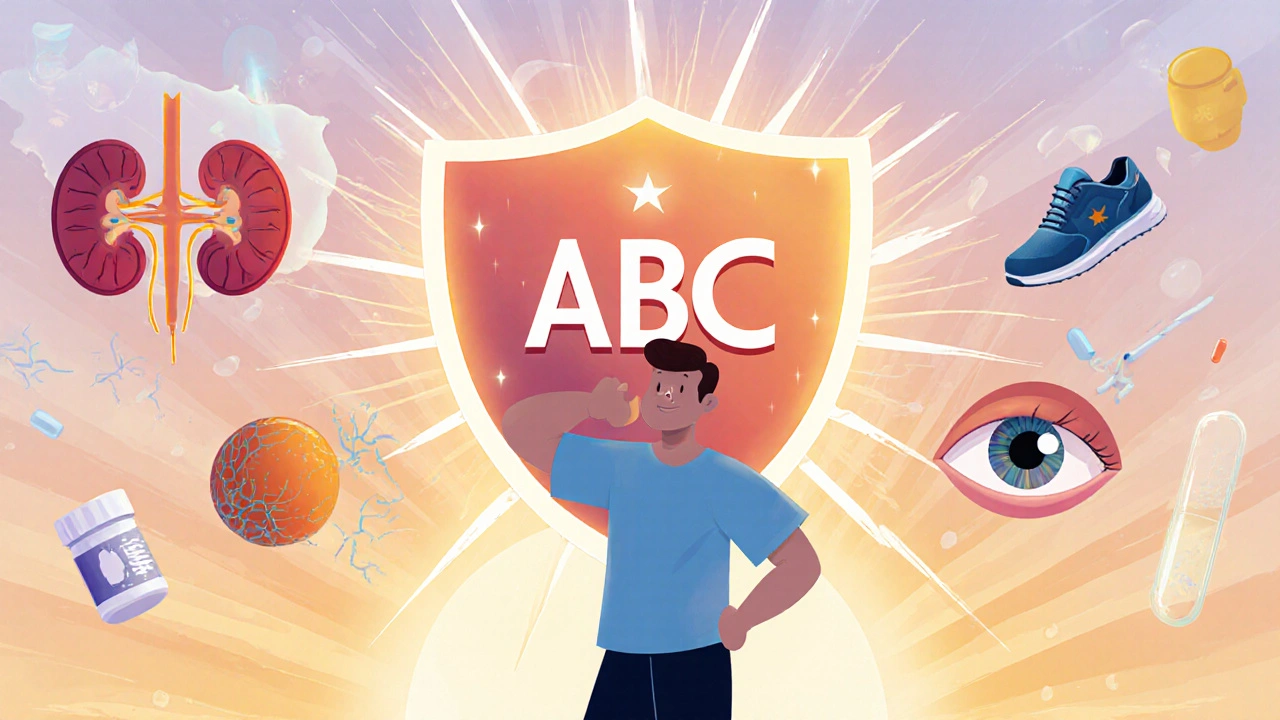
How to Prevent Diabetic Kidney Disease, Neuropathy, and Eye Damage
Learn how to prevent diabetic kidney disease, neuropathy, and eye damage through proven strategies: control your ABCs, use new medications, check your feet daily, and get annual eye exams. Prevention works-even after years with diabetes.
Read more