
Escitalopram Dose Limit: Safe Usage, Risks, and What Doctors Really Recommend
When it comes to escitalopram, a selective serotonin reuptake inhibitor (SSRI) used to treat depression and anxiety. Also known as Lexapro, it works by balancing serotonin in the brain—but only when taken as directed. The escitalopram dose limit isn’t just a number on a prescription label. It’s a safety line. Go past it, and you risk serious side effects, including serotonin syndrome, heart rhythm issues, or even seizures. The maximum approved daily dose for adults is 20 milligrams. Anything higher than that isn’t more effective—it’s riskier.
Some people think more is better, especially if they don’t feel relief right away. But studies show that doses above 20 mg don’t improve outcomes for most patients. Instead, they increase the chance of nausea, dizziness, insomnia, or worse. serotonin syndrome, a life-threatening reaction caused by too much serotonin in the nervous system can happen if you mix escitalopram with other antidepressants, certain pain meds, or even herbal supplements like St. John’s wort. It’s rare, but it’s real. Symptoms include high fever, rapid heartbeat, confusion, and muscle stiffness. If you see these, get help immediately. And don’t assume it’s just "bad side effects." This is an emergency.
Another hidden risk? QT prolongation, a heart rhythm disturbance that can lead to sudden cardiac events. Escitalopram can slightly lengthen the QT interval on an ECG, especially at higher doses or in people with existing heart conditions. That’s why doctors check your heart history before prescribing—and why they won’t just crank up the dose if you’re not feeling better. They’ll look at other options instead: therapy adjustments, switching meds, or adding non-drug treatments. The goal isn’t to hit the highest possible dose. It’s to find the lowest effective one.
What about kids or older adults? The dose limit drops. For adolescents, 10 mg is often the max. For seniors, especially those with liver or kidney issues, even 10 mg can be too much. Many don’t realize that metabolism slows with age—and that escitalopram sticks around longer in the body. That’s why a 5 mg dose might be all that’s needed. And if someone accidentally takes too much? Don’t wait for symptoms. Call poison control. Bring the bottle. Time matters.
There’s no magic number that works for everyone. But there’s one rule that does: never adjust your dose without talking to your doctor. Online forums might suggest doubling up for "faster results," but those aren’t medical sources. Real progress comes from patience, consistency, and working with your provider—not from guessing. Below, you’ll find real cases, expert advice, and clear guidance on what to do if things go wrong—and how to stay safe while using this medication.
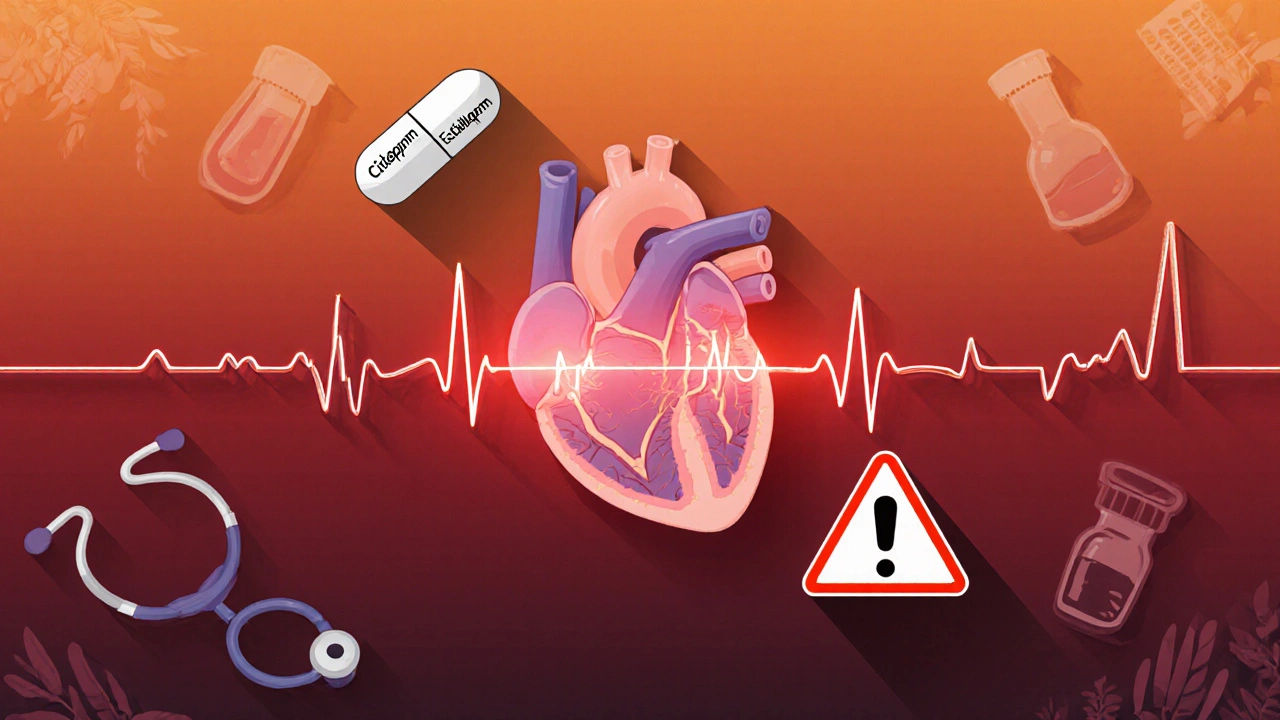
Citalopram and Escitalopram: QT Prolongation Risks and Safe Dose Limits
Citalopram and escitalopram are effective antidepressants but carry QT prolongation risks at higher doses. Learn the safe dose limits, who’s most at risk, and how to use these medications safely with proper monitoring.
Read more