
Emergency Medication Storage: Safe Practices for Critical Drugs
When you rely on medications for life-threatening conditions—like epinephrine for anaphylaxis, nitroglycerin for heart attacks, or insulin for severe diabetes—emergency medication storage, the practice of keeping critical drugs accessible, stable, and ready for immediate use isn’t just smart, it’s life-saving. A pill that’s too hot, too damp, or buried in a cluttered drawer might not work when seconds count. This isn’t about being overly cautious—it’s about making sure your medicine does what it’s supposed to do, every single time.
Many people don’t realize that temperature, light, and moisture can ruin drugs faster than you think. Insulin, for example, loses potency if left in a hot car or a bathroom cabinet. Epinephrine auto-injectors degrade if exposed to extreme heat or freezing. Even common pills like albuterol inhalers or seizure meds like diazepam can break down if stored improperly. medication organization, how you physically arrange and label your emergency drugs matters just as much as the environment. Keeping your EpiPen next to your keys, your glucose tabs in your wallet, or your nitroglycerin in a cool, dark bedside drawer isn’t just convenient—it’s a habit that prevents panic in a crisis.
drug safety, the broader set of actions that protect you from accidental misuse, degradation, or exposure includes checking expiration dates monthly, not just yearly. It means keeping meds away from kids and pets—not just locked up, but out of reach in a place you won’t forget. It also means knowing what not to do: never transfer pills to unmarked containers, never leave them in the glove compartment, and never assume a drug is still good because it "looks fine." The FDA has documented cases where people died because their emergency meds were expired or damaged by heat. This isn’t rare. It’s preventable.
People managing chronic conditions, caregivers for elderly relatives, or parents of children with severe allergies all face the same challenge: keeping life-saving drugs ready without overcomplicating things. That’s why the best systems are simple. A small, labeled, waterproof box in your purse, car, or bedside table works better than a fancy cabinet you never open. Some use pill organizers with alarms. Others keep backup doses in multiple locations—home, work, car. What matters isn’t the gear—it’s the routine. If you can’t find your emergency meds in under 10 seconds, you need to change your system.
And don’t forget about travel. Flying? Cold weather? Moving to a new home? Each change brings new risks. Airplane cargo holds can drop below freezing. Summer road trips turn cars into ovens. Your emergency meds need to survive those conditions. That’s why emergency preparedness, planning ahead for unexpected situations that threaten drug stability or access isn’t optional. It’s part of your health plan. Keep a printed list of your meds, dosages, and storage needs in your wallet. Tell a family member where your backup supply is. Test your system before you need it—do a quick drill: "What if I had a reaction right now? Where’s my EpiPen?"
Below, you’ll find real-world guides from people who’ve been there—how to store chemotherapy drugs safely at home, how to handle multiple prescriptions without mixing them up, and why even small mistakes with drug storage can lead to serious harm. These aren’t theoretical tips. They’re lessons learned from mistakes, near-misses, and lives saved by simple, smart choices. You don’t need to be a pharmacist to get this right. You just need to be consistent.
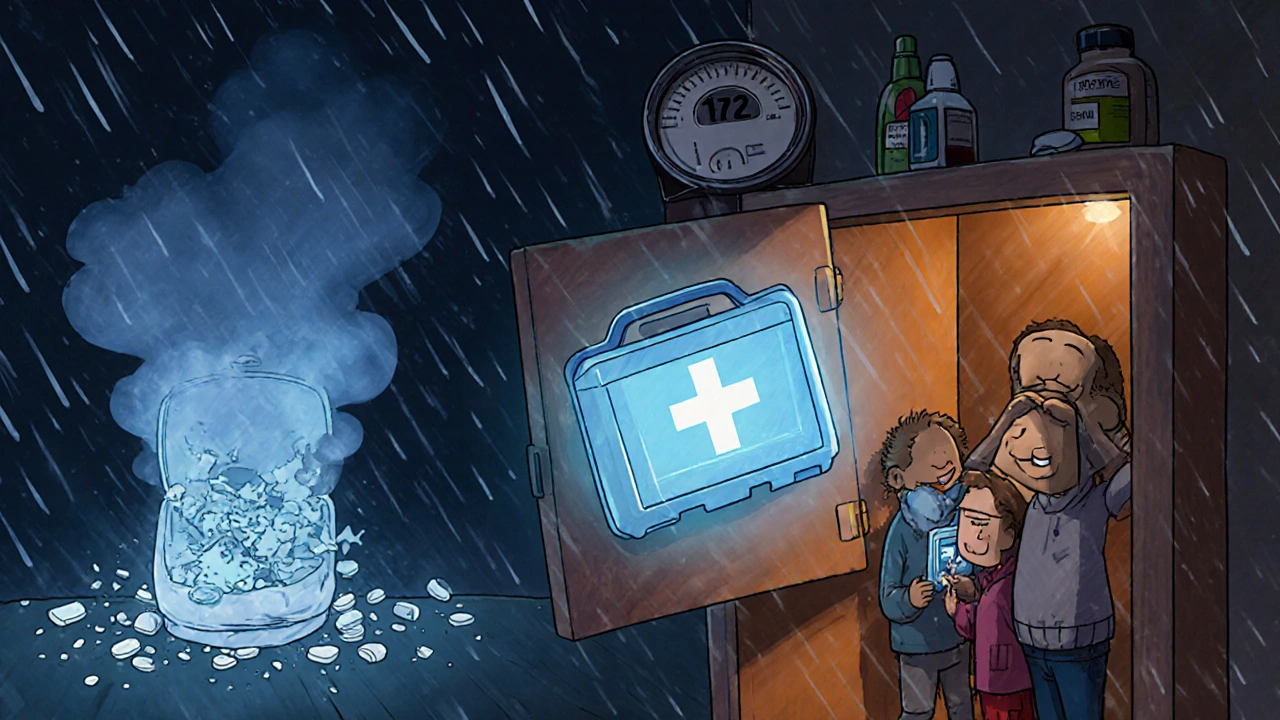
How to Store Emergency Kits to Maximize Medication Shelf Life
Learn how to store emergency medications properly so they stay effective during power outages and disasters. Avoid common mistakes that ruin pills, insulin, and epinephrine - and keep your kit ready for real emergencies.
Read more