
Emergency Kit Tips: What to Keep and Why It Matters
When disaster strikes, you won’t have time to think—only to act. That’s why emergency kit tips, practical steps to prepare essential supplies for sudden crises like power outages, accidents, or natural disasters. Also known as home preparedness checklist, it’s not about fear—it’s about control. A well-stocked kit isn’t just for hurricanes or earthquakes. It’s for the midnight seizure, the child’s allergic reaction, the fall that leaves you bleeding on the kitchen floor. The difference between panic and calm often comes down to what’s already in your drawer.
Most people think of bandages and painkillers, but the real gaps show up in first aid supplies, critical items like tourniquets, epinephrine auto-injectors, and sterile gauze that prevent minor injuries from turning deadly. Did you know 70% of home emergencies happen in the first 15 minutes before help arrives? That’s why your kit needs more than aspirin. Include a digital thermometer, tweezers for splinters, and a small flashlight with extra batteries. Keep a printed list of medications, allergies, and emergency contacts—no one remembers details when they’re scared. And don’t forget your own prescriptions: if you take insulin, blood pressure meds, or seizure drugs, stash a 3-day supply in a waterproof container. Your body doesn’t care if the power’s out—it still needs its medicine.
medication storage, how you keep drugs safe from heat, moisture, and kids, directly affects whether they work when you need them most. Don’t store pills in the bathroom. Humidity kills them. Keep them in a cool, dry cabinet, away from sunlight. Use childproof containers even if you don’t have kids—visitors do. Label everything clearly: name, dose, frequency. If you use insulin pens or injectables, include alcohol wipes and sharps containers. And check expiration dates every six months. A pill that expired last year won’t help you now.
Emergency kit tips aren’t one-size-fits-all. A senior with heart disease needs different tools than a family with toddlers. A person with asthma needs a spare inhaler. Someone with diabetes needs glucose tabs. Your kit should reflect your life, not a template. Think about your risks: Do you live near flood zones? Keep your kit on a high shelf. Do you drive long distances? Keep a smaller version in your car. The goal isn’t perfection—it’s readiness. You don’t need to be a survivalist. You just need to be prepared.
Below, you’ll find real-world advice from people who’ve been there: how to handle chemotherapy waste at home, why ECG monitoring matters before certain antibiotics, and how to safely dispose of dangerous meds without risking your family. These aren’t hypotheticals. They’re lessons learned in crisis. What’s in your kit right now? And more importantly—what’s missing?
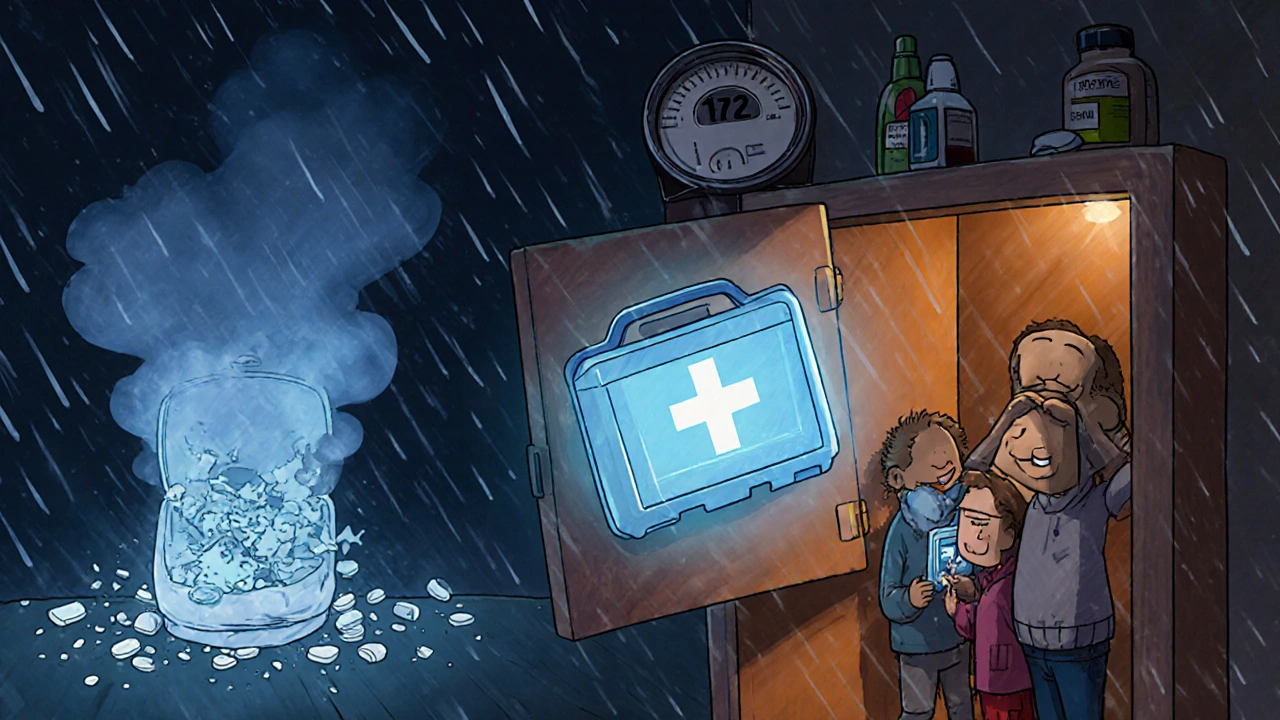
How to Store Emergency Kits to Maximize Medication Shelf Life
Learn how to store emergency medications properly so they stay effective during power outages and disasters. Avoid common mistakes that ruin pills, insulin, and epinephrine - and keep your kit ready for real emergencies.
Read more