
Diabetic Complications: What They Are, How They Happen, and How to Stop Them
When blood sugar stays too high for too long, it doesn’t just make you feel tired—it starts damaging your body from the inside out. This is what we call diabetic complications, long-term health problems caused by uncontrolled high blood sugar that affect nerves, blood vessels, and organs. These aren’t rare side effects—they’re predictable outcomes, and they happen to nearly half of all people with diabetes if it’s not managed well. The good news? Most of them can be slowed or even prevented with simple, consistent steps.
One of the most common nerve damage, a condition called diabetic neuropathy that causes numbness, tingling, or pain, usually starting in the feet is often the first warning sign. It’s not just discomfort—it’s dangerous because you might not feel a cut or blister until it turns into a serious infection. That’s why diabetic foot ulcers, open sores on the feet that can lead to amputation if untreated are the leading cause of hospital stays for people with diabetes. Then there’s kidney disease, a slow erosion of kidney function caused by damaged blood vessels, which can lead to dialysis or transplant. And it’s not just your feet and kidneys. High blood sugar also wrecks your eyes, your heart, and your blood vessels, increasing your risk of stroke and heart attack.
What ties all these together? It’s not just sugar levels—it’s how long they’ve been high. A single spike won’t hurt you. But months or years of readings above 140 mg/dL? That’s when the damage starts. The body tries to repair itself, but constant high glucose overwhelms its ability to keep up. Nerves get coated in sugar, blood vessels stiffen, and organs slowly lose function. The scary part? You might not feel any of this until it’s advanced. That’s why regular check-ups, foot exams, and blood tests aren’t optional—they’re your early warning system.
You won’t find magic pills or miracle diets in the articles below. What you will find are real, practical stories and guides from people who’ve faced these complications head-on. You’ll learn how to spot the first signs of nerve damage before it’s too late, why your foot care routine matters more than you think, how kidney tests can catch problems years before symptoms show, and what daily habits actually make a difference. These aren’t theory pieces—they’re tools you can use today to protect your body tomorrow. The goal isn’t perfection. It’s awareness. And action.
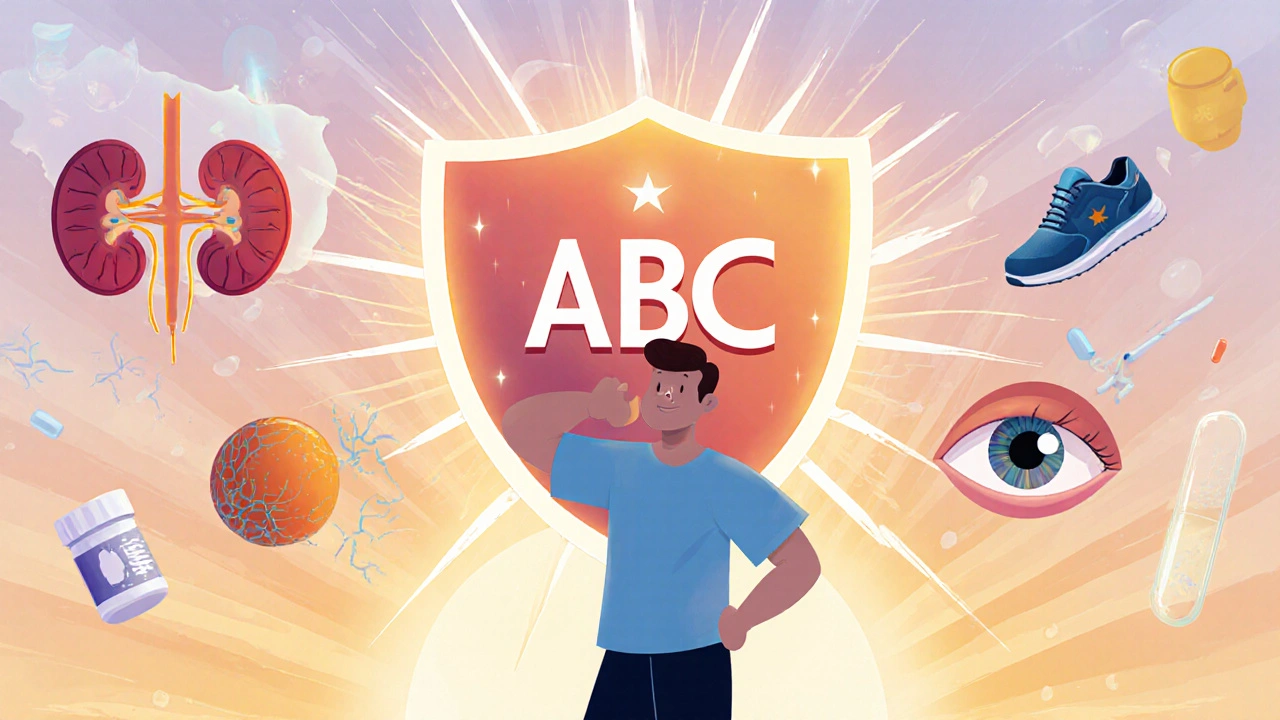
How to Prevent Diabetic Kidney Disease, Neuropathy, and Eye Damage
Learn how to prevent diabetic kidney disease, neuropathy, and eye damage through proven strategies: control your ABCs, use new medications, check your feet daily, and get annual eye exams. Prevention works-even after years with diabetes.
Read more