
Cultural Competence in Healthcare: Why It Matters for Patient Outcomes
When a doctor doesn’t understand your beliefs, language, or background, even the best treatment can fail. Cultural competence, the ability of healthcare providers to effectively deliver care to patients with diverse values, beliefs, and behaviors. It’s not about checking a box—it’s about building trust so patients actually follow through with care. Without it, people skip appointments, misunderstand instructions, or avoid treatment altogether. Studies show patients are more likely to stick with their meds, show up for tests, and tell their doctors the truth when they feel understood.
That’s why healthcare disparities, differences in health outcomes tied to race, ethnicity, language, or socioeconomic status keep showing up in data. A diabetic patient who avoids insulin because they think it’s "poison" isn’t being noncompliant—they’re responding to cultural beliefs no one asked about. Patient communication, the way providers listen, explain, and adapt their language to fit a patient’s worldview is the bridge. It’s not just translating words—it’s translating meaning. A Spanish-speaking mother might not say "I don’t understand"—she’ll nod and leave, but her child’s asthma won’t improve. A provider who asks, "What do you think is causing this?" opens the door.
Health equity, the principle that everyone should have fair access to care regardless of background doesn’t happen by accident. It’s built through training, listening, and adjusting systems. Think about how many prescriptions get filled wrong because the label was only in English. Or how many seniors skip blood pressure checks because they’re afraid of being judged for their diet. Cultural competence fixes these gaps before they become crises.
And it’s not just for clinics. It matters in pharmacies, emergency rooms, home care, and even when someone’s managing multiple meds across different providers. The posts below show real cases where cultural misunderstandings led to mistakes—and how simple changes turned things around. You’ll see how language barriers affect heart meds, how religious beliefs shape pain management, and why asking one extra question can prevent a hospital visit. This isn’t theory. It’s what happens when care meets real life.
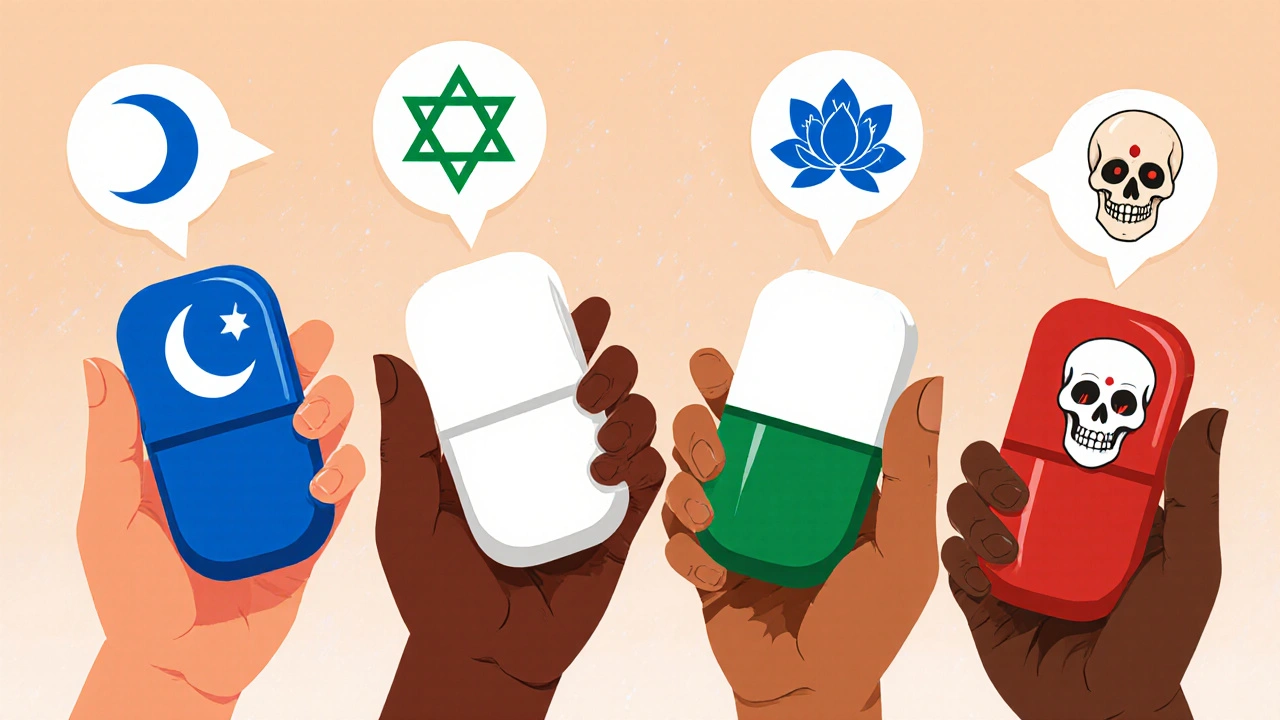
Multicultural Perspectives on Generics: How Culture Shapes Patient Trust and Adherence
Cultural beliefs shape how patients perceive generic medications-from color and shape to religious ingredients. Understanding these perspectives is key to improving adherence and health equity in diverse communities.
Read more