
Coffee and Drugs: How Caffeine Interacts with Medications and What You Need to Know
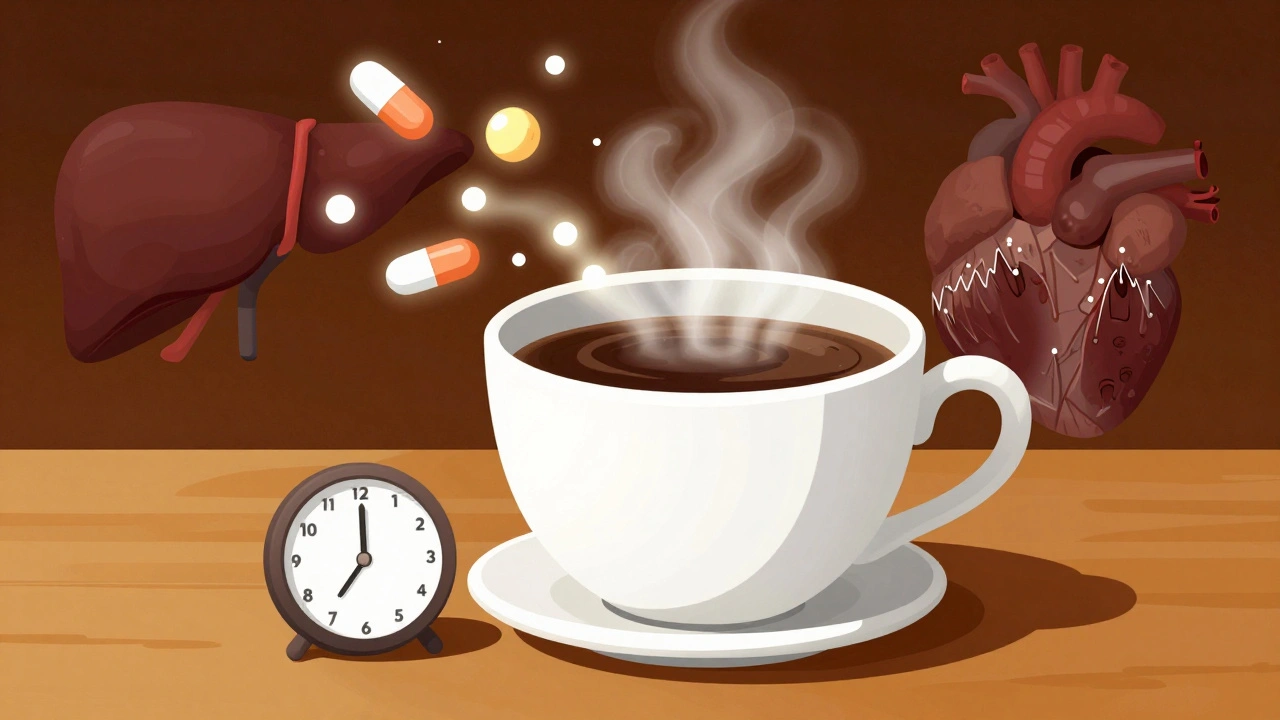
When you drink coffee, a common beverage containing caffeine, a central nervous system stimulant that affects heart rate, alertness, and metabolism. Also known as caffeinated coffee, it's one of the most widely consumed psychoactive substances in the world. But what happens when that morning cup meets your prescription? Many people don’t realize that caffeine, a methylxanthine compound that blocks adenosine receptors and increases adrenaline can change how your body processes drugs — sometimes dangerously. It doesn’t just make you jittery; it can boost side effects, reduce effectiveness, or even trigger life-threatening reactions.
Take antibiotics, medications used to treat bacterial infections, some of which interact with caffeine to increase heart strain like ciprofloxacin or levofloxacin. Drinking coffee while on these can raise your heart rate and cause anxiety or palpitations. With antidepressants, drugs like citalopram and escitalopram that affect serotonin and can prolong the QT interval, caffeine adds extra stress to your heart — especially if you’re already at risk for rhythm problems. Even painkillers, including NSAIDs like etodolac that reduce inflammation but can irritate the stomach lining, become harder on your digestive system when paired with coffee’s acidity. And if you’re on medications for alcohol use disorder, like naltrexone or disulfiram, which help reduce cravings and discourage drinking, coffee might seem harmless — but it can mask withdrawal symptoms or make you feel like you’re "fine" when you’re not.
It’s not just about heart rate or stomach upset. Caffeine can slow down how fast your liver breaks down drugs, making them build up in your system. That’s why people on theophylline, a bronchodilator used for asthma and COPD, which has a narrow safety window need to watch their coffee intake closely — too much caffeine can push levels into the toxic range. Even thyroid medication, like levothyroxine, which requires careful timing and an empty stomach, can be less effective if taken right after coffee. And while some people think coffee helps with ADHD meds like Adderall, it can actually amplify jitteriness and sleep problems.
You don’t have to quit coffee. But you do need to know when it’s working against you. If you’re on more than one medication, especially for heart, mental health, or chronic conditions, your coffee habit might be quietly making things worse. The posts below show real cases — from people who had to stop drinking coffee after a dangerous interaction with antibiotics, to others who found their blood pressure dropped only after cutting caffeine while on beta-blockers. You’ll find clear guidance on which drugs to watch, how to time your coffee, and what alternatives might be safer. This isn’t about fear — it’s about control. Know the risks. Make smarter choices. Your body will thank you.
Caffeine and Medication Safety: What You Need to Know About Dangerous Interactions
Caffeine can interfere with common medications like blood thinners, thyroid drugs, and antidepressants, reducing effectiveness or increasing side effects. Learn which interactions are dangerous and how to stay safe.
Read more