
Caffeine Side Effects with Prescriptions: What You Need to Know
When you take caffeine, a central nervous system stimulant found in coffee, energy drinks, and some medications, it doesn’t just wake you up—it can interfere with how your body handles other drugs. Many people don’t realize that even a daily cup of coffee can turn a safe prescription into a risky one. This is especially true when caffeine meets medications that affect your heart, brain, or metabolism. The problem isn’t always obvious: you might feel jittery, have a racing heart, or get sudden headaches—and not connect it to your morning latte.
prescription drug interactions, when two or more medications (or a medication and a substance like caffeine) change each other’s effects, are more common than you think. For example, if you’re on citalopram, an antidepressant that can prolong the QT interval in the heart, adding caffeine could push your heart rhythm into dangerous territory. Same goes for linezolid, an antibiotic that already raises blood pressure risk—caffeine makes that risk worse. Even medications for ADHD, asthma, or thyroid issues can become unpredictable when mixed with caffeine. It’s not about cutting out coffee entirely—it’s about knowing which prescriptions make caffeine a hidden danger.
Some people think if a drug isn’t labeled with a caffeine warning, it’s safe. That’s a myth. Many interactions don’t show up on pill bottles. Your doctor might not ask about your coffee habit unless you bring it up. And if you’re taking multiple prescriptions—like for diabetes, heart disease, or depression—the chances of a hidden clash go up fast. That’s why tracking what you take, including supplements and caffeine sources, matters more than ever. You don’t need to become a pharmacist, but you do need to speak up: tell your provider what you drink, how much, and when.
Below, you’ll find real stories and expert insights from people who’ve been there—how caffeine turned a routine medication into an emergency, how one simple switch saved someone’s heart rhythm, and why some prescriptions require you to give up caffeine for good. These aren’t theoretical warnings. They’re lived experiences. And they’re the kind of info you won’t find in a drug pamphlet.
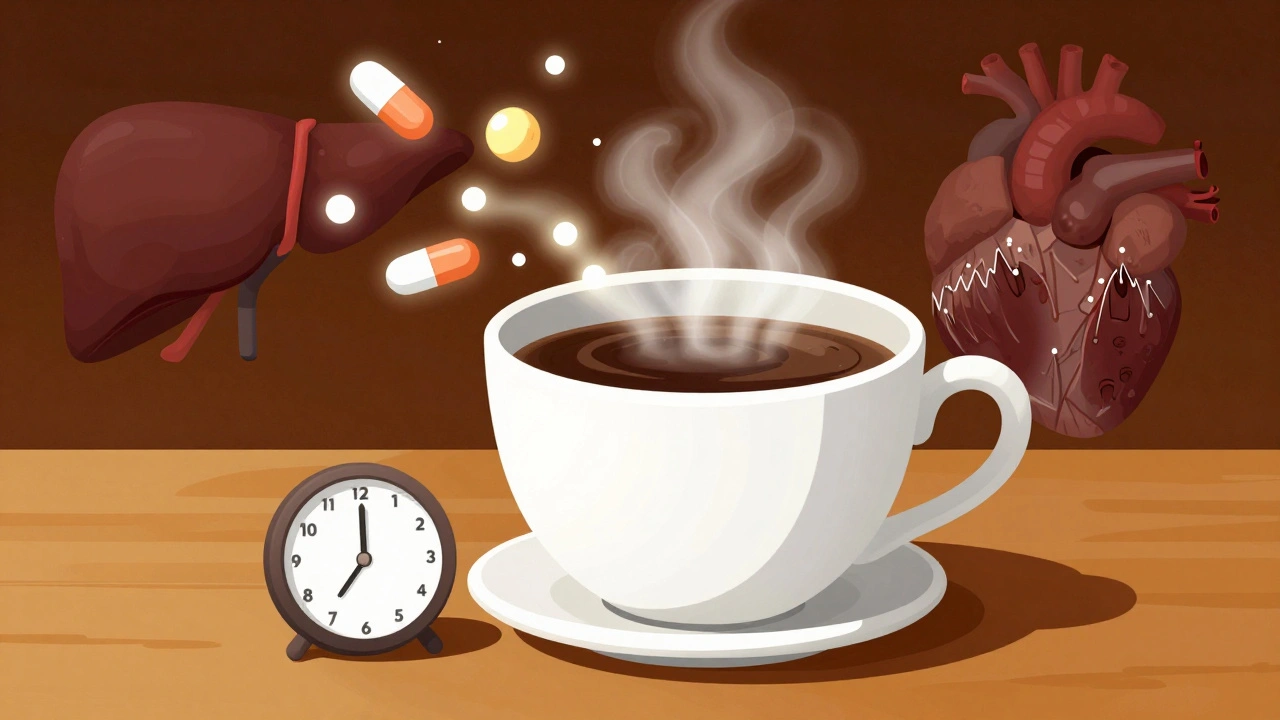
Caffeine and Medication Safety: What You Need to Know About Dangerous Interactions
Caffeine can interfere with common medications like blood thinners, thyroid drugs, and antidepressants, reducing effectiveness or increasing side effects. Learn which interactions are dangerous and how to stay safe.
Read more