
Appetite Regulation: How Medications, Diet, and Health Conditions Control Hunger
When you feel hungry or full, it’s not just about how long it’s been since you ate—it’s your body’s appetite regulation, the biological system that balances hunger signals with energy needs through hormones, nerves, and brain pathways. Also known as hunger control, it’s what tells you when to eat, when to stop, and sometimes, when to ignore hunger even when you’re low on energy. This system doesn’t work in isolation. It’s tied to your metabolism, your gut, your brain, and even the medications you take. If you’ve ever felt hungry even after eating, or lost your appetite during illness, you’ve seen appetite regulation in action—or malfunction.
Several key players control this system. Ghrelin, the hormone that spikes before meals and triggers hunger rises when your stomach is empty. Meanwhile, leptin, the hormone released by fat cells to signal fullness tells your brain you’ve had enough. But these signals can get mixed up. Medications like canagliflozin for diabetes can cause dry mouth and change how you experience hunger. Drugs like linezolid force strict diet changes that indirectly affect eating patterns. Even anticholinergic drugs used for depression can dull appetite by slowing digestion and reducing saliva. And if you’re taking ACE inhibitors or potassium-sparing diuretics, changes in electrolytes can also alter how your body processes food signals.
It’s not just drugs. Conditions like heart failure, liver disease, and HIV can throw appetite regulation off track. People with hepatic encephalopathy often lose interest in food because toxins affect the brain. Those on HIV treatment like raltegravir may gain or lose weight depending on how their metabolism responds. Even something as simple as vitamin B12 deficiency can cause a burning sensation in the mouth that makes eating unpleasant. The connection between what you take, what’s happening inside your body, and how hungry you feel is deeper than most realize.
You’ll find posts here that dig into how specific drugs influence eating behavior—whether by changing hormones, altering taste, or causing side effects like nausea or dry mouth. Some explain how to manage appetite loss during cancer treatment. Others show how combination meds can accidentally suppress hunger, or how switching to a different blood pressure drug might restore normal eating patterns. This isn’t about fad diets or willpower. It’s about the real, measurable biology behind why you eat—or don’t eat—when you do. What you’ll read here is grounded in how these systems actually work in real patients, not theory.
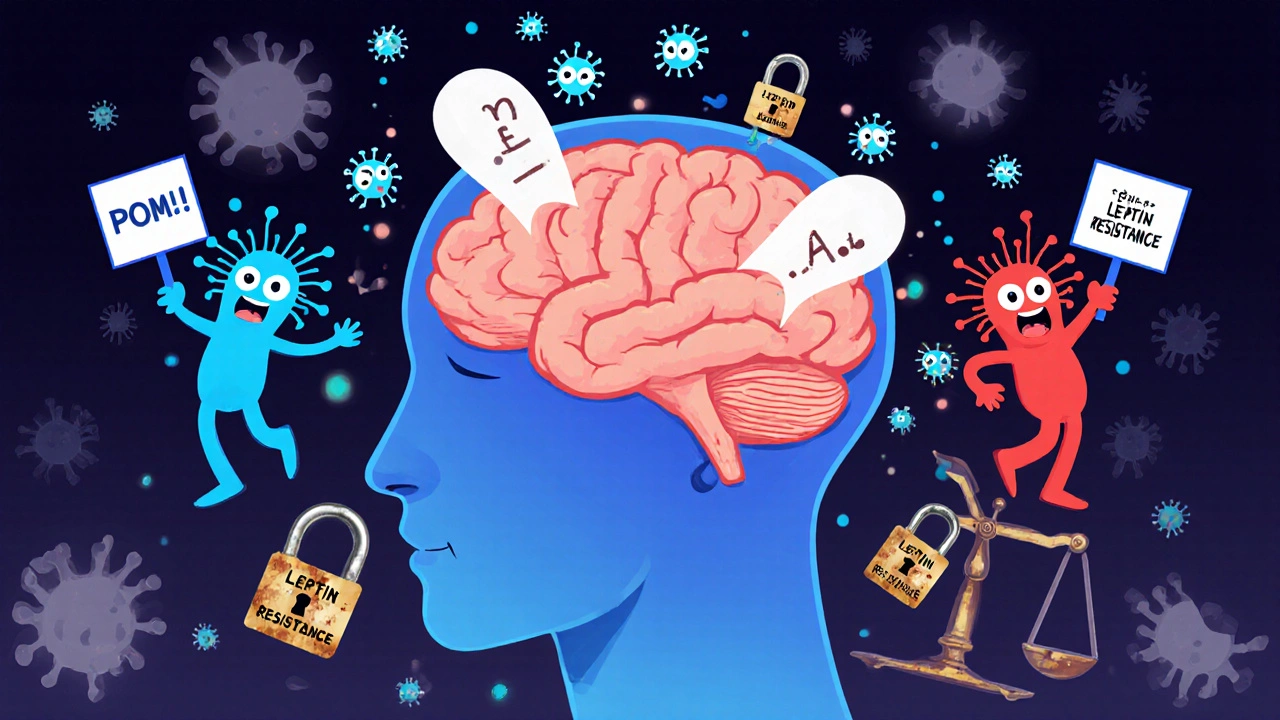
Obesity Pathophysiology: How Appetite Regulation and Metabolic Dysfunction Drive Weight Gain
Obesity is not just about overeating-it's a medical condition driven by broken hunger signals and metabolic dysfunction. Learn how leptin resistance, brain circuits, and hormones like ghrelin and insulin keep weight off despite efforts to lose it.
Read more