
Every time you pick up a prescription, you get a little paper label that seems simple-but it’s packed with details that can keep you safe or put you at risk. If you’ve ever stared at your pill bottle wondering what half the text means, you’re not alone. Most people don’t know that every line on that label has a specific purpose, backed by federal rules and patient safety research. Understanding it isn’t just helpful-it can prevent dangerous mistakes.
Your Name: The First Line of Defense
Right at the top, you’ll see your full name. It’s not just for identification. Medication errors due to mix-ups happen more often than you think-about 1.5 million each year in the U.S. According to the Institute of Medicine, getting the wrong drug because names were confused is one of the most common causes of harm. That’s why every prescription label must include your name in clear, large text. If your name isn’t there, don’t take the medication. Call the pharmacy immediately. This one detail stops thousands of errors before they start.
Medication Name: Brand vs. Generic
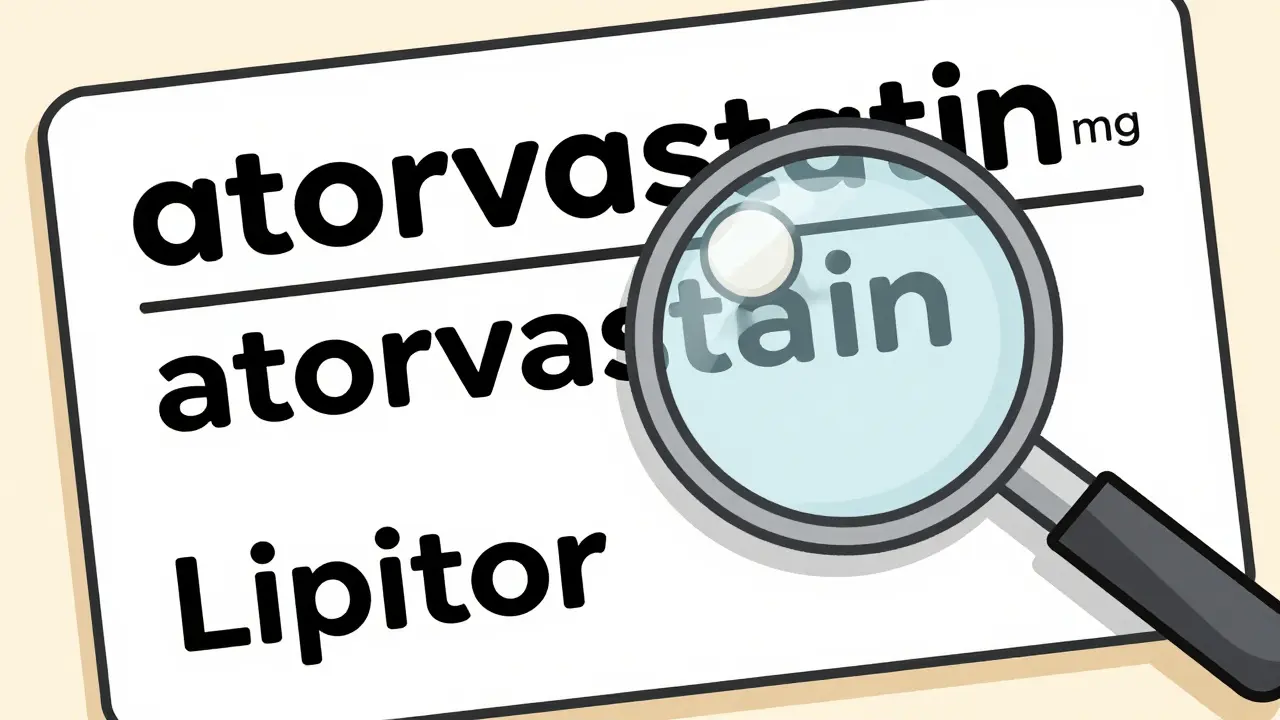
You’ll see two names here: the brand name (like Abstral) and the generic name (fentanyl). The brand name is what the drug company calls it. The generic name is the actual medicine inside. Knowing the generic name matters because you might get the same drug from a different pharmacy under a different brand, or even a cheaper version. For example, if your doctor prescribes Lipitor, you might end up with atorvastatin. Same drug. Same effect. Different price. Always check the generic name so you know what you’re really taking.
Dosage Strength: How Much Is in Each Pill?
This tells you the amount of active drug in each unit. It might say “10 mg” or “500 mcg.” That’s not a suggestion-it’s the exact dose you need. Taking more than this can be dangerous. Taking less might not work. For example, levothyroxine 50 mcg is a common thyroid dose. If you accidentally take 100 mcg, you could trigger a heart rhythm problem. Always double-check this number against what your doctor told you. If it doesn’t match, ask why.
Instructions: When and How to Take It
This is where people get confused the most. It might say “take one tablet by mouth every 8 hours” or “take with food.” These aren’t suggestions-they’re medical instructions. “Every 8 hours” means three times a day, evenly spaced. “Take with food” means don’t swallow it on an empty stomach, or it could upset your gut. Some drugs need to be taken at bedtime. Others must be taken exactly at the same time every day. Missing the timing can reduce effectiveness or cause side effects. If you see “PRN,” that means “as needed.” But even then, there’s usually a daily limit-like “no more than 4 doses in 24 hours.” Never guess. If you’re unsure, call your pharmacist.
Expiration Date: When It Stops Working
The expiration date isn’t just a formality. After that date, the medication can lose potency. Some drugs, like insulin or liquid antibiotics, can become unsafe. The U.S. Pharmacopeia says most pills are stable for 12 to 18 months after being filled. But if you’ve had the bottle in a hot car or a damp bathroom, it might break down faster. Never take expired medicine, especially for serious conditions like heart disease or seizures. If you’re not sure, bring the bottle to your pharmacy. They’ll tell you if it’s still good.
Prescription Number and Pharmacy Info
The Rx number is your prescription’s ID. It’s how the pharmacy tracks refills and checks for duplicates. If you call for a refill and they ask for your Rx number, that’s why. The pharmacy’s name, address, and phone number are there so you can call with questions. Don’t ignore this part. If you have a reaction or think the pill looks different, call the pharmacy first-not your doctor. They’re the ones who filled it and know exactly what you got. The prescriber’s name is also listed. That’s your doctor’s name, but if you’re seeing a new provider, you might not recognize it. That’s normal if the prescription came from a specialist or urgent care.
Visual Description: What the Pill Looks Like
It might say “white, round, film-coated tablet” or “blue, oval capsule.” This helps you spot if something’s wrong. If your pill suddenly looks different-say, from white to yellow-don’t assume it’s just a new batch. It could be the wrong drug. A 2023 Cleveland Clinic study found that patients who checked the pill’s appearance were 40% less likely to take the wrong medication. Always compare the new bottle to the last one. If the color, shape, or imprint doesn’t match, ask the pharmacist to confirm it’s the right medicine.
National Drug Code (NDC): The Barcode Behind the Label
This 10- or 11-digit number looks like gibberish, but it’s the drug’s fingerprint. It tells you exactly which company made it, what the product is, and what size package you got. It’s used by insurers, hospitals, and pharmacies to track every bottle. You don’t need to memorize it, but if you’re checking your bill or reporting a problem, having the NDC handy helps. It’s printed in small font near the bottom, often under the barcode.
Storage Instructions: Keep It Safe
Some meds need to be refrigerated. Others must stay dry. If it says “store at room temperature,” that means between 68°F and 77°F. Don’t leave it in your car in summer or next to your sink. Heat and moisture ruin medicine. Insulin, for example, goes bad if it gets too warm. Some antibiotics must be kept cold or they won’t work. If the label says “protect from light,” keep it in its original container. Ignoring storage rules isn’t just wasteful-it’s risky.
Warnings: The Red Flags
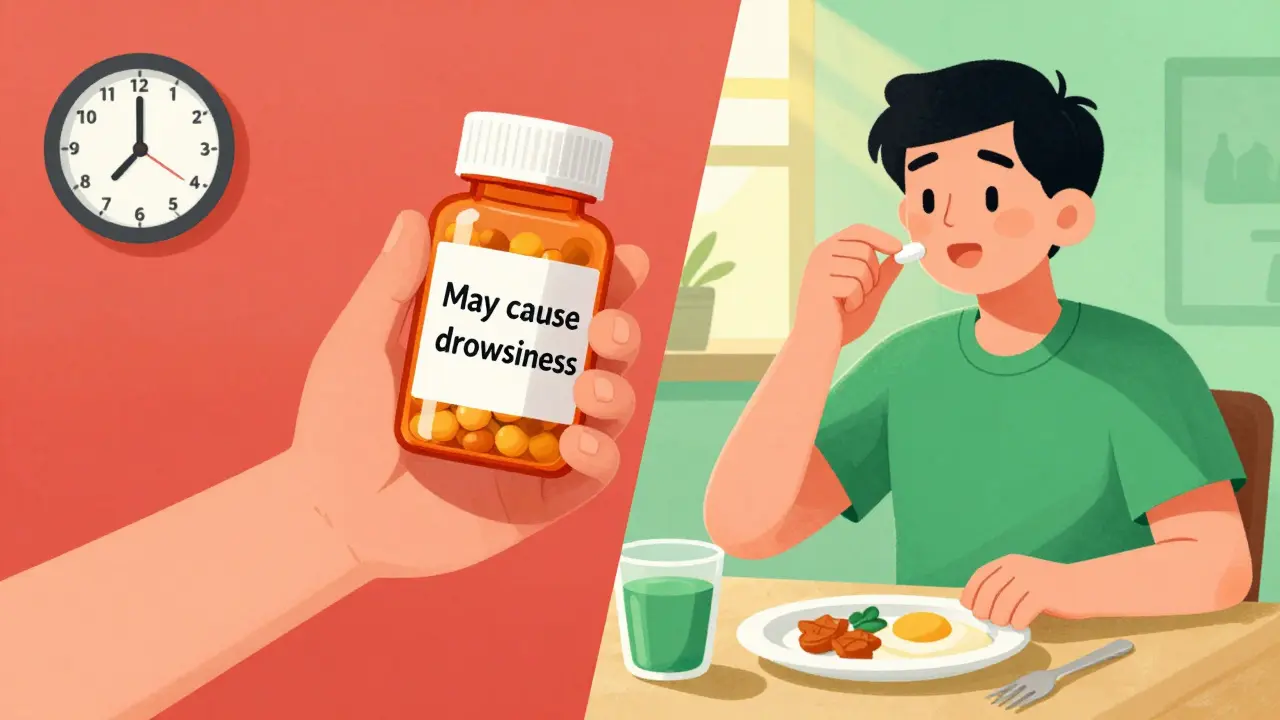
This section might say things like “May cause drowsiness,” “Avoid alcohol,” or “Do not use if pregnant.” These aren’t suggestions-they’re critical safety rules. For example, mixing certain painkillers with alcohol can cause liver failure. Some drugs can’t be taken if you have kidney disease or are over 65. The FDA requires these warnings to be clear and prominent. If you see a warning you don’t understand, ask. Don’t skip it because it seems minor. A 2022 study in the Journal of Patient Safety found that 61% of serious adverse events linked to prescription drugs happened because patients ignored warning labels.
The Most Important Missing Piece: Why You’re Taking It
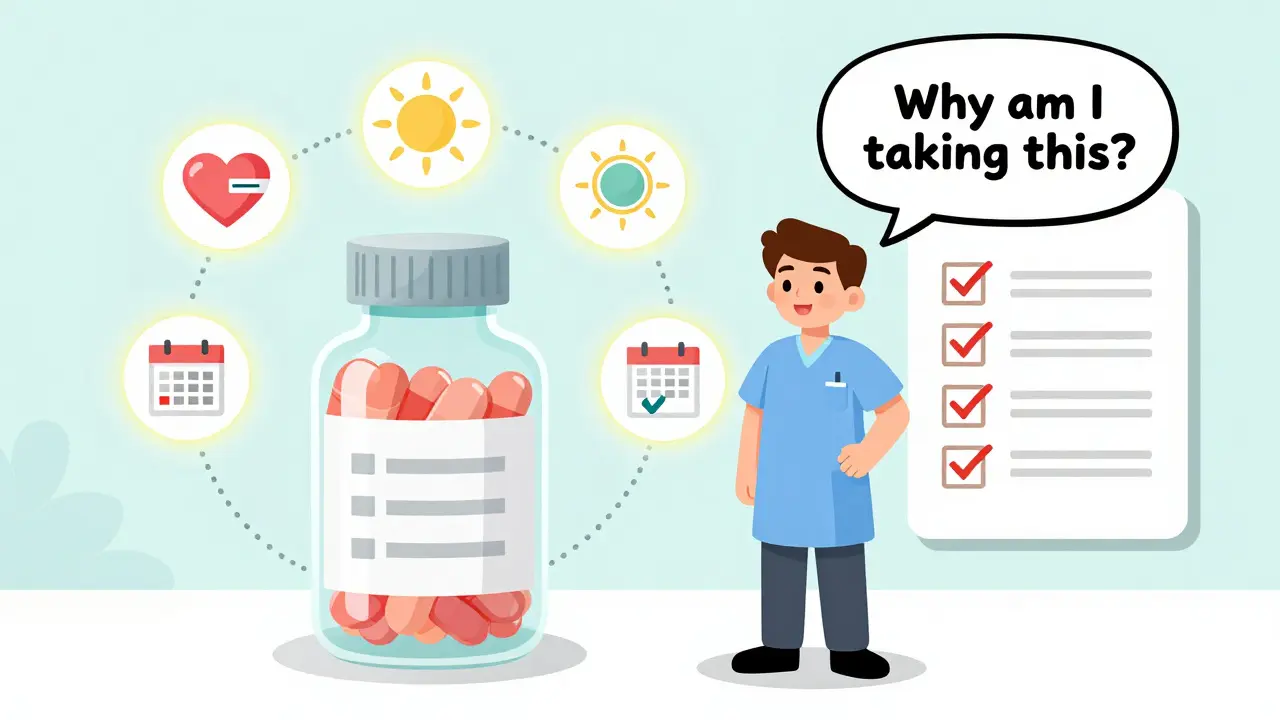
Here’s the big one: most labels still don’t say why you’re taking the drug. Is it for high blood pressure? Depression? Infection? The Institute for Safe Medication Practices found that when the reason is included on the label, wrong-drug errors drop by 55%. Imagine taking metformin thinking it’s for cholesterol, when it’s actually for diabetes. You might not notice it’s not working-and you could end up with complications. The FDA recommends including this since 2020, and many pharmacies now do. But 62% of independent pharmacies still don’t, because their computer systems don’t support it. If your label doesn’t say why you’re taking the medicine, ask your pharmacist. Write it down. Keep it with your bottle.
What’s Not on the Label (But Should Be)
Some things you need to know aren’t printed anywhere. Like what to do if you miss a dose. Or whether it’s safe to drive. Or if it interacts with your vitamins. That’s why the FDA created the “5 Questions to Ask About Your Prescription.” Write them down and ask every time you get a new med:
- What is the name of the medication and what is it for?
- How and when do I take it?
- What should I do if I miss a dose?
- What side effects should I expect?
- Will this interact with other meds I’m taking?
Also, ask for a Medication Guide if your drug is high-risk-like opioids, blood thinners, or antidepressants. These are separate sheets that explain serious risks in plain language. They’re required by law for certain drugs.
How to Use This Info Every Time
Every time you get a new prescription, do this quick check:
- Is your name on it? (If not, don’t take it.)
- Is the generic name clear? (Look it up if you don’t know it.)
- Is the dosage number right? (Compare to your doctor’s note.)
- Do the instructions make sense? (If not, ask for clarification.)
- Is the expiration date still valid?
- Does the pill look the same as last time?
- Is there a reason listed for why you’re taking it? (If not, ask.)
Take a photo of the label with your phone. Save it. That way, if you lose the bottle, you still have the info.
What’s Changing Soon
By 2025, the U.S. Pharmacopeia plans to require every prescription label to include the reason for use. That’s a huge step. Right now, only about 38% of labels include it. But pilot programs in California and Massachusetts showed a 40% drop in medication errors after this change. The FDA is also pushing for pictograms-simple pictures showing “take with food” or “avoid sun”-to help people with low health literacy. Right now, 80 million Americans struggle to read health materials. Visuals could cut mistakes in half.
Final Thought: Your Label Is Your Lifeline
Prescription labels aren’t just paperwork. They’re your safety net. Every line is there because someone got hurt-and then the system changed to prevent it. Don’t ignore them. Don’t assume you know what it means. Ask questions. Write things down. Compare bottles. If something feels off, trust your gut. You’re the last line of defense. And that’s why understanding your label isn’t optional-it’s essential.
What should I do if my prescription label looks different from last time?
Don’t take the medication. Compare the pill’s color, shape, size, and imprint to your previous bottle. If anything’s different, call your pharmacy right away. The same drug from a different manufacturer might look different, but it could also be the wrong drug. Pharmacists can confirm if it’s correct using the NDC number.
Why doesn’t my label say why I’m taking this medicine?
Many pharmacies still don’t include the reason because their electronic systems don’t support it. But the FDA recommends it, and by 2025, it will be required by the U.S. Pharmacopeia. If it’s missing, ask your pharmacist to write it down for you. Knowing why you’re taking a drug cuts wrong-medication errors by more than half.
Can I still take my medication after the expiration date?
For most pills, it’s not dangerous-but it might not work. The FDA says some medications, like insulin, nitroglycerin, and liquid antibiotics, can become unsafe after expiration. If you’re treating a serious condition, don’t risk it. When in doubt, bring the bottle to your pharmacy. They can tell you if it’s still safe to use.
What’s the difference between brand and generic names on the label?
The brand name is what the drug company calls it (like Lipitor). The generic name is the actual medicine (atorvastatin). Generic drugs have the same active ingredient, dose, and effect as the brand. They’re cheaper and just as safe. Always check the generic name so you know what you’re really taking, especially if you switch pharmacies.
How do I know if I’m taking the right dose?
Check the dosage strength on the label (e.g., 10 mg) and compare it to what your doctor told you. If you’re unsure, ask your pharmacist to explain it. Never assume “more is better.” Some drugs, like blood thinners or thyroid meds, have very narrow safety ranges. Taking too much can cause serious harm.
Shane McGriff
January 18, 2026 AT 21:32I used to ignore my pill labels until my grandma nearly died from mixing her blood thinner with grapefruit juice. After that, I read every line like it’s a treasure map. Turns out, the generic name matters more than the brand-saved me $400 last month just by switching to atorvastatin. Also, taking meds with food? Not a suggestion. My stomach used to revolt until I actually followed the instructions. Now I keep a little notebook next to my pill organizer. You’d be shocked how many people don’t do this.
pragya mishra
January 19, 2026 AT 18:40Why do we even need labels? Pharmacies are supposed to know what they’re giving you. If you can’t trust them, why are we paying them so much? My cousin got the wrong meds three times and no one apologized. Just said ‘oops.’
sagar sanadi
January 21, 2026 AT 10:48LMAO so the government wants us to read labels now? Next they’ll tell us to breathe through our noses. They’ve been hiding the real reason pills expire since 1973-pharma’s profit margins. That ‘expiration date’? It’s a scam. My 5-year-old insulin still works fine. I’ve been saving $1,200 a year by not throwing out ‘expired’ meds. The FDA doesn’t want you to know this.
kumar kc
January 22, 2026 AT 00:59If you don’t read your label, you deserve what happens to you.
Renee Stringer
January 23, 2026 AT 03:51I’ve been taking levothyroxine for 12 years. I always check the pill color. Once it changed from white to blue. I called the pharmacy. Turned out it was a different manufacturer. Same thing. But I didn’t take it until they confirmed. I don’t trust anyone else to protect me.
Thomas Varner
January 23, 2026 AT 12:57So… the label’s basically your personal medical bodyguard? Wild. I used to just glance at the dosage and go. Now I’m reading the whole thing like a novel. Also, the NDC thing? I had no idea it was a fingerprint. I took a pic of mine last week. Now I’ve got a whole folder. I’m basically a medical detective now. 🕵️♂️
Emily Leigh
January 24, 2026 AT 09:54Okay but let’s be real-how many people actually read this? I’ve seen people swallow pills like candy while scrolling TikTok. The label’s not the problem. The problem is that we treat our bodies like disposable phones. ‘Oh, it’s just a pill.’ Yeah, until it isn’t. And then it’s too late. Also, why does the FDA wait until 2025 to add the reason? Because bureaucracy moves at glacial speed. We’re still using fax machines in hospitals. 😑
Jacob Cathro
January 25, 2026 AT 01:03Let me get this straight-we’re supposed to memorize NDC codes now? And check pill shapes? And compare bottles? And call the pharmacy? And write down why we’re taking it? Bro. I’m not a pharmacist. I’m a barista who just wants to feel less anxious. This system is designed to make you feel guilty for being human. Also, ‘PRN’? I thought it was a brand name. I’ve been taking my painkillers like they’re coffee. Oops.
Manoj Kumar Billigunta
January 26, 2026 AT 01:45My father had a stroke because he didn’t know his blood pressure med was for cholesterol. He thought it was a vitamin. That’s why I now sit with every new prescription. I write the reason on a sticky note and stick it to the bottle. I’ve done this for my mom, my sister, even my neighbor’s 82-year-old aunt. If you’re reading this, you’re already ahead of most people. Keep going. Ask questions. No one’s coming to save you but you.
Andy Thompson
January 26, 2026 AT 11:58THE GOVERNMENT IS WATCHING YOUR PILLS. I saw a guy at the pharmacy scan his label with an app. That app sent his data to a server. They’re tracking what we take. Why? To control us. The expiration date? Fake. The NDC? A tracking chip. The reason on the label? They’ll add it so they can say ‘you were told.’ But they’re not telling you the truth. They’re building a database. And we’re handing it to them with every bottle we pick up. 🚨🇺🇸
Art Gar
January 26, 2026 AT 19:47While the intent of this article is laudable, the underlying assumption-that patient compliance can be achieved through labeling alone-is empirically unsound. Behavioral economics demonstrates that information asymmetry is insufficient to alter risk-averse decision-making without structural incentives. Furthermore, the U.S. Pharmacopeia’s 2025 mandate lacks regulatory teeth, as evidenced by the continued non-compliance of independent pharmacies despite FDA recommendations. One must therefore conclude that systemic reform, not informational supplementation, is the necessary precondition for meaningful improvement.
clifford hoang
January 27, 2026 AT 08:19Okay so here’s the thing… the label isn’t the problem. The problem is that your doctor doesn’t even know what they’re prescribing. I found out my antidepressant was being prescribed by an AI chatbot. No joke. The pharmacy system auto-fills based on insurance codes. The NDC? It’s just a barcode that links to a corporate database that’s been hacked 14 times. And the reason you’re taking it? They don’t even have it because the EHR system crashed in 2021 and they never fixed it. I’ve been taking metformin for ‘anxiety’ since 2019. I didn’t even know I had diabetes until I Googled it. 🤖💊 #PharmaControl
Paul Barnes
January 28, 2026 AT 18:18The article correctly identifies key safety elements on prescription labels. However, it fails to address the disproportionate burden placed on patients with low health literacy, particularly in rural areas where pharmacy access is limited. Additionally, while photographic documentation of labels is suggested, no mention is made of the privacy risks associated with storing sensitive medical data on personal devices. A more comprehensive approach would include standardized digital access via encrypted patient portals and mandatory pharmacist counseling for high-risk medications.