
Safe Ear Cleaning: How to Clean Ears Without Risking Damage
When it comes to safe ear cleaning, the practice of removing excess earwax without harming the ear canal or eardrum. Also known as earwax management, it’s not about scrubbing—it’s about knowing when to leave it alone. Your ears are self-cleaning. The skin inside your ear canal slowly moves outward, carrying wax and debris with it. Most people never need to do anything beyond wiping the outer ear with a damp cloth.
But when wax builds up and blocks the canal—what doctors call cerumen impaction, a condition where earwax hardens and obstructs hearing or causes discomfort—that’s when people reach for cotton swabs, ear candles, or sharp objects. Big mistake. Pushing anything into the ear canal doesn’t remove wax. It packs it tighter. Studies show over 10,000 emergency room visits each year in the U.S. alone are due to ear injuries from improper cleaning. Even ear irrigation kits sold over the counter can cause damage if used wrong.
So what actually works? For most cases, a few drops of mineral oil, baby oil, or hydrogen peroxide solution softens the wax, letting it drain naturally over a few days. If that doesn’t help, a doctor can safely remove it with suction, curettes, or gentle flushing. ear cleaning tools, including bulb syringes and irrigation systems designed for home use are fine—if you follow instructions exactly and avoid inserting anything into the canal. People with ear tubes, perforated eardrums, or a history of ear surgery should never try home methods without medical advice.
And here’s the truth most people miss: earwax isn’t dirt. It’s a protective barrier. It traps dust, kills bacteria, and keeps the ear canal moist. Removing it too often can lead to dryness, itching, and even infections. If you don’t have symptoms like muffled hearing, ear pain, or ringing, you probably don’t need to clean your ears at all.
What you’ll find below are real, practical guides based on medical evidence—no myths, no marketing hype. From how to recognize signs of blockage to which over-the-counter drops actually work, and why some "natural" remedies are dangerous, this collection cuts through the noise. You’ll learn what doctors recommend, what to avoid at all costs, and how to protect your hearing without spending a dime on gadgets that do more harm than good.
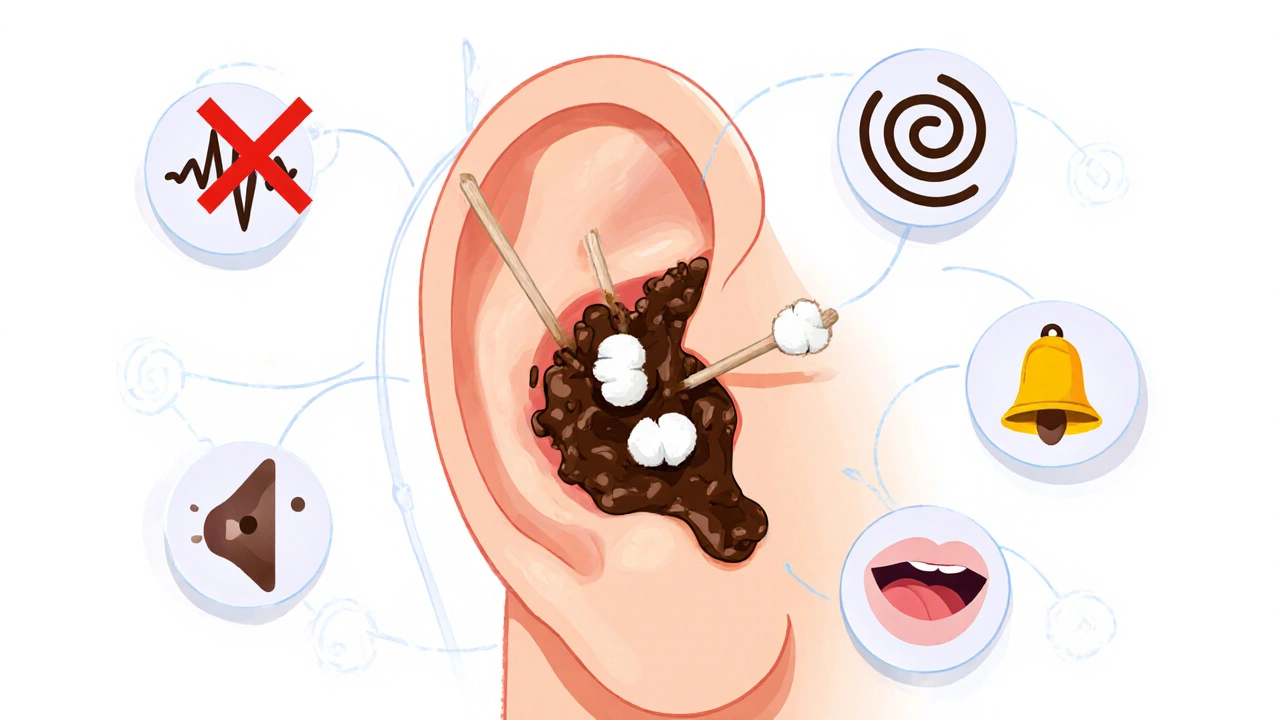
Earwax Impaction: What It Is, How to Recognize It, and Safe Ways to Remove It
Earwax impaction is a common hearing issue caused by hardened wax blocking the ear canal. Learn the symptoms, safe removal methods, and why cotton swabs make it worse. Professional care is the safest solution.
Read more