
OTC Sunscreen: What Works, What to Avoid, and How to Choose
When you grab an OTC sunscreen, a non-prescription skin protectant designed to block harmful UV rays. Also known as over-the-counter sunblock, it’s one of the few daily health choices that actually lowers your risk of skin cancer. But not all OTC sunscreens are made the same. Some give you real protection. Others are just fancy lotion with a high number on the bottle.
What makes a good broad spectrum sunscreen, a product that shields against both UVA and UVB rays? It needs zinc oxide or titanium dioxide — physical blockers that sit on your skin and reflect sunlight. These are safer for sensitive skin and don’t break down as fast in the sun. Avoid sunscreens that rely only on chemical filters like oxybenzone or avobenzone unless they’re paired with physical blockers. The FDA says oxybenzone can be absorbed into your bloodstream, and we still don’t fully know what that means long-term. Plus, chemical sunscreens often fail to deliver the full SPF they promise after two hours of sun exposure.
SPF 30 isn’t a magic number — it blocks about 97% of UVB rays. SPF 50 blocks 98%. Going higher than that gives you almost no extra benefit, but often costs way more. What matters more than the number is how you apply it. Most people use less than half the amount needed. You need about a shot glass full for your whole body. Reapply every two hours, or right after swimming or sweating. And don’t forget your ears, lips, neck, and the tops of your feet — those are common spots for skin cancer to start.
Not all OTC sunscreens are meant for the same skin. If you have acne-prone skin, look for "non-comedogenic" labels. For kids or sensitive skin, stick to mineral-based formulas with zinc oxide. Older adults with dry skin might prefer a moisturizing sunscreen with ceramides. And if you’re using it under makeup, go for a lightweight, fast-absorbing version. The right one doesn’t feel greasy or leave a white cast.
Here’s the truth: sunscreen alone won’t stop all sun damage. You still need to seek shade, wear a wide-brimmed hat, and avoid direct sun between 10 a.m. and 4 p.m. But if you’re going to be outside, a good OTC sunscreen is the most effective first line of defense. It’s not just about preventing sunburn — it’s about reducing your lifetime risk of melanoma, basal cell carcinoma, and premature aging.
Below, you’ll find real, no-fluff guides on what’s actually in your sunscreen, how to spot misleading labels, which ingredients to avoid, and how to pick one that fits your skin type — not your budget. No marketing hype. Just what works, what doesn’t, and why.
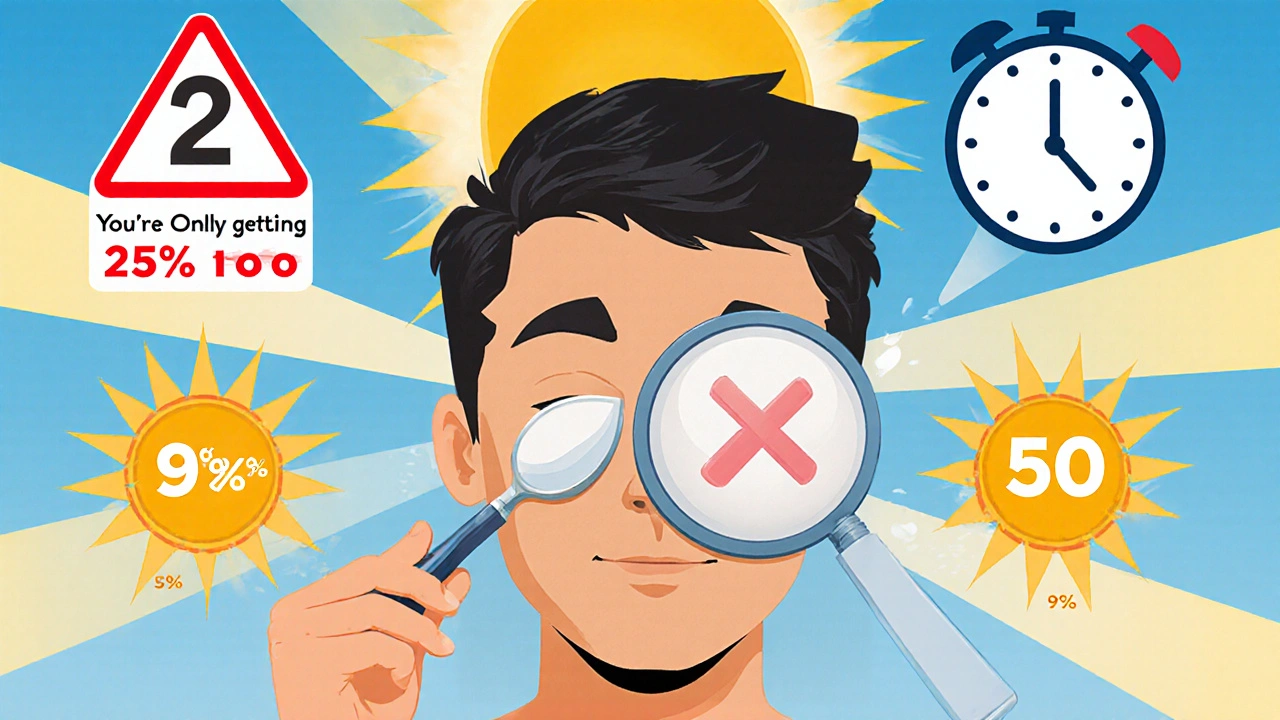
OTC Sunscreens: How to Choose the Right SPF, Broad Spectrum Protection, and When to Reapply
Learn how to choose the right OTC sunscreen with proper SPF, broad spectrum protection, and reapplication timing to prevent skin cancer and aging. Get expert-backed tips on mineral vs. chemical formulas and what to avoid.
Read more