
MAOI Diet: What to Eat and Avoid with Monoamine Oxidase Inhibitors
When you’re taking monoamine oxidase inhibitors, a class of antidepressants that block enzymes breaking down neurotransmitters like serotonin and norepinephrine. Also known as MAOIs, they can be powerful—but they come with a strict dietary rule: avoid foods high in tyramine. This isn’t just a suggestion. Eating the wrong food while on an MAOI can trigger a sudden, dangerous spike in blood pressure—sometimes called a hypertensive crisis. It’s rare, but it can land you in the ER.
That’s where the MAOI diet, a set of food restrictions designed to prevent dangerous interactions with these medications. Also known as tyramine-restricted diet, it’s not about cutting calories or going low-carb. It’s about avoiding aged, fermented, spoiled, or preserved foods that build up tyramine, a compound your body normally breaks down with the help of the enzyme MAO. When MAO is blocked by the drug, tyramine floods your system and forces your blood pressure through the roof. Common culprits include aged cheeses like blue, cheddar, or parmesan; cured meats like salami or pepperoni; tap beer and red wine; soy sauce; fermented tofu; and overripe bananas. Even leftover meals stored too long can become risky. It’s not just about what you eat—it’s about how it’s stored and prepared.
Some people think they can get away with small amounts, but that’s a gamble. One bite of blue cheese or a glass of homebrewed beer might not cause trouble for everyone—but for someone on an MAOI, it’s enough to trigger a pounding headache, blurred vision, chest pain, or even a stroke. The risk isn’t theoretical. Doctors see it. And it’s preventable. You don’t need to give up flavor. Fresh meats, plain dairy, most fruits and veggies, and freshly made meals are all safe. You just need to know the difference.
What’s surprising is how many foods people don’t realize are risky. Canned fish like sardines? Unsafe. Yeast extracts like Marmite? No. Even some over-the-counter cold meds and herbal supplements can interfere. That’s why the MAOI diet isn’t just about food—it’s about understanding how your body reacts to drugs and what’s hiding in plain sight on your grocery shelf.
There’s no one-size-fits-all list, but the core rule is simple: if it’s aged, fermented, pickled, or left sitting too long, skip it. Stick to fresh, unprocessed options. Talk to your pharmacist or doctor about your favorite snacks—they’ll tell you what’s safe. And if you’ve been on an MAOI for months and never had an issue, don’t assume you’re immune. The reaction can happen anytime, even after years of no problems.
The posts below give you real, practical advice on what to avoid, what to replace it with, how to read labels, and what to do if you accidentally eat something risky. You’ll find clear comparisons of safe vs. unsafe foods, tips for dining out, and what to do if you start feeling symptoms. This isn’t about fear—it’s about control. With the right info, you can take your medication safely and still enjoy your meals.
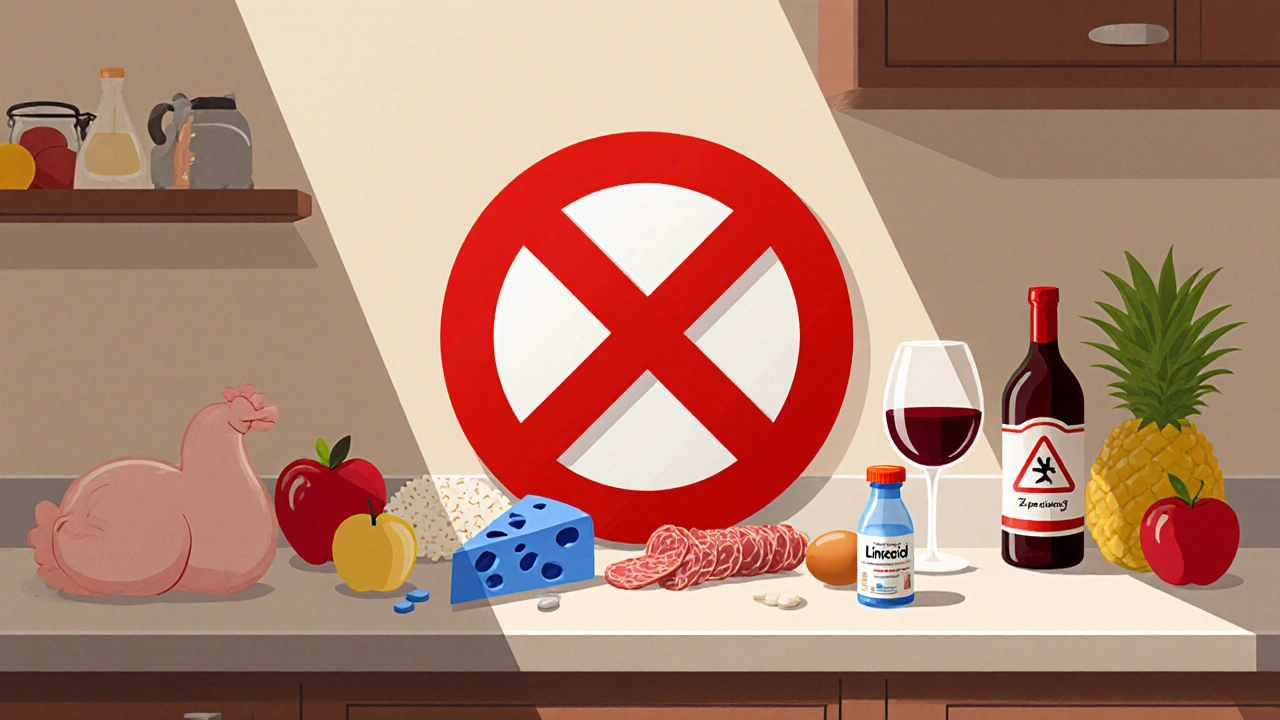
Linezolid and Tyramine: What You Must Eat (and Avoid) to Prevent Hypertensive Crisis
Linezolid can cause a dangerous spike in blood pressure if you eat tyramine-rich foods like aged cheese or red wine. Learn exactly what to avoid, what’s safe, and why you must wait 14 days after your last dose.
Read more