
Home Chemotherapy Safety: What You Need to Know to Stay Protected
When home chemotherapy safety, the set of practices and precautions needed to handle cancer drugs safely in a non-clinical environment. Also known as outpatient chemotherapy, it lets people receive treatment without daily hospital visits—but only if done right. This isn’t just about taking pills on time. It’s about preventing accidental exposure, avoiding dangerous interactions, and keeping your household safe from toxic residues.
Chemo drugs don’t just target cancer cells—they can harm healthy tissue, too. That’s why chemotherapy side effects, the unintended physical reactions caused by cancer drugs, including nausea, fatigue, and immune suppression aren’t the only concern. Spilled liquid chemo, contaminated surfaces, or even urine from someone who just took treatment can carry active drugs for days. home care for cancer patients, the support and management of cancer treatment in a residential setting, often involving family members or caregivers requires strict hygiene, proper disposal, and clear communication. A single mistake—like using the same towel to wipe down a counter and then touching your eyes—can lead to skin irritation, reproductive harm, or worse.
Many people don’t realize that chemo can stay active in bodily fluids for up to 48 hours after treatment. That means flushing the toilet twice, washing hands before and after using the bathroom, and wearing gloves when handling soiled linens aren’t optional—they’re life-saving steps. Even pets can be at risk if they lick contaminated surfaces. And while you might think gloves are enough, you also need to avoid skin contact during preparation, store meds out of reach of kids and pets, and never crush pills unless your doctor says it’s safe.
There’s also the hidden risk of drug interactions. Some chemo drugs react badly with common supplements, painkillers, or even grapefruit juice. Your oncology team should give you a clear list of what to avoid, but if you’re unsure, ask again. It’s better to double-check than to risk a dangerous reaction.
What you’ll find below isn’t just theory. These posts cover real-world situations: how to clean up a chemo spill without putting yourself in danger, which household items should be kept separate, what to do if a child touches a contaminated surface, and how to talk to your family about staying safe without causing panic. You’ll also learn about the risks of mixing chemo with other meds, how to handle waste properly, and why some people need to sleep alone during treatment. These aren’t generic tips—they’re based on what actually works in homes across the country.
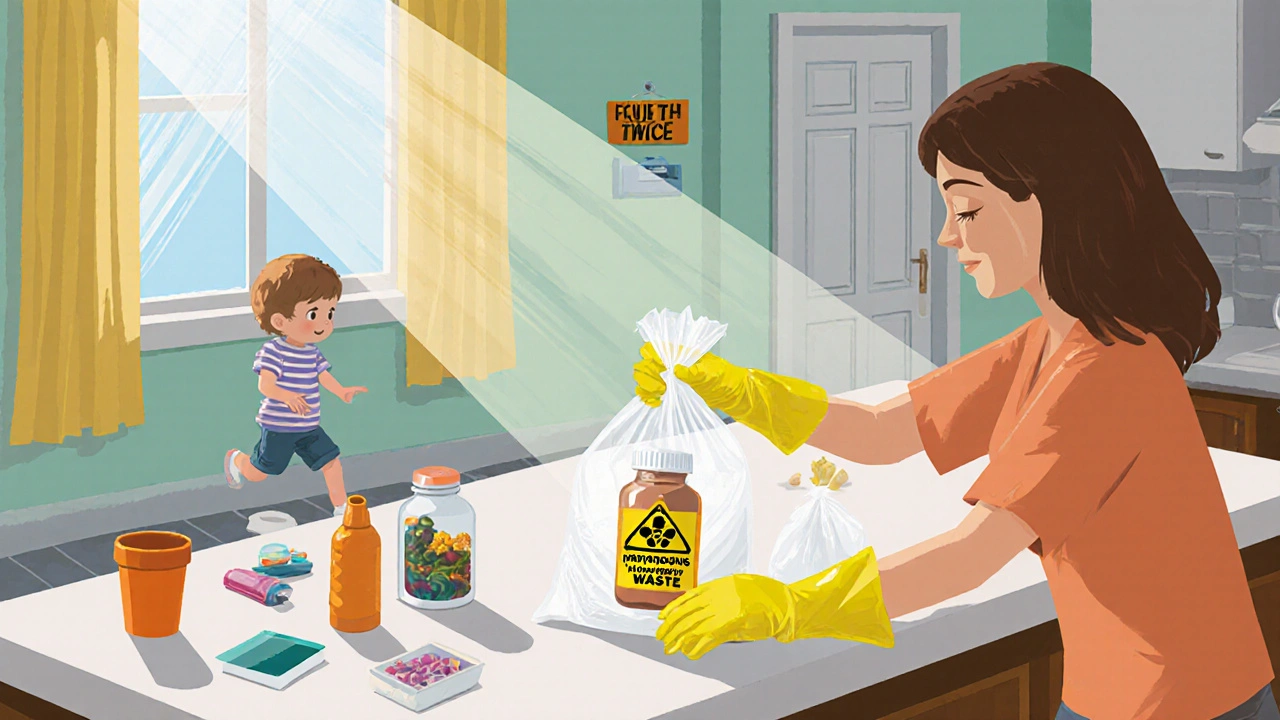
How to Safely Dispose of Chemotherapy Medication at Home
Learn how to safely dispose of chemotherapy medication at home with step-by-step guidance on double-bagging, protective gear, body waste handling, and what to avoid. Protect your family and environment from hazardous drug exposure.
Read more