
Hazardous Drug Disposal: Safe Ways to Get Rid of Dangerous Medications
When you have old or unused medicines that are dangerous to keep around—like opioids, chemotherapy drugs, or certain psychiatric meds—you can’t just toss them in the trash or flush them down the toilet. This is where hazardous drug disposal, the safe handling and destruction of medications that pose risks to people or the environment. Also known as pharmaceutical waste management, it’s not just about cleaning out your medicine cabinet—it’s about preventing accidental poisonings, environmental contamination, and drug abuse. Many people don’t realize that even a single pill left in the house can be deadly to a child, a pet, or someone who finds it. And flushing certain drugs can pollute water supplies for years.
Drug take-back programs, official collection events or drop-off locations run by pharmacies, hospitals, or law enforcement. Also known as medication disposal events, it’s the safest way to get rid of hazardous drugs. These programs are free, secure, and designed to destroy drugs so they can’t be reused or leaked into the ecosystem. The FDA and EPA both recommend them over home disposal methods. You’ll find these drop-offs at local pharmacies, police stations, or during National Prescription Drug Take Back Day. If your town doesn’t have one, ask your pharmacist—they often know where to send you.
Some drugs come with special instructions. For example, certain opioids like fentanyl patches or methadone tablets can be lethal if mishandled. The FDA says you can flush these specific ones if no take-back option is available—but only if the label says so. For everything else, mix the pills with dirt, coffee grounds, or cat litter, seal them in a plastic bag, and throw them in the trash. Never crush pills unless instructed. And never pour liquid medicines down the drain. Flammable drugs, medications like alcohol-based tinctures or aerosol inhalers that can ignite or explode under heat or pressure. Also known as combustible pharmaceuticals, they require special handling and should never be incinerated at home. These need to go to a hazardous waste facility, not your regular trash.
Why does this matter? Because improper disposal leads to real harm. Studies show that over 70% of people who misuse prescription painkillers get them from family or friends’ medicine cabinets. And water systems across the U.S. have detected traces of antidepressants, antibiotics, and hormones from flushed meds. This isn’t just a "someone else’s problem"—it’s your responsibility. Getting rid of these drugs the right way protects your kids, your neighbors, and the planet.
Below, you’ll find real-life guides on how to handle dangerous medications safely—from chemotherapy waste to opioid disposal, and what to do when you’re unsure. These aren’t theoretical tips. They’re practical steps used by hospitals, pharmacies, and families who’ve learned the hard way what works—and what doesn’t.
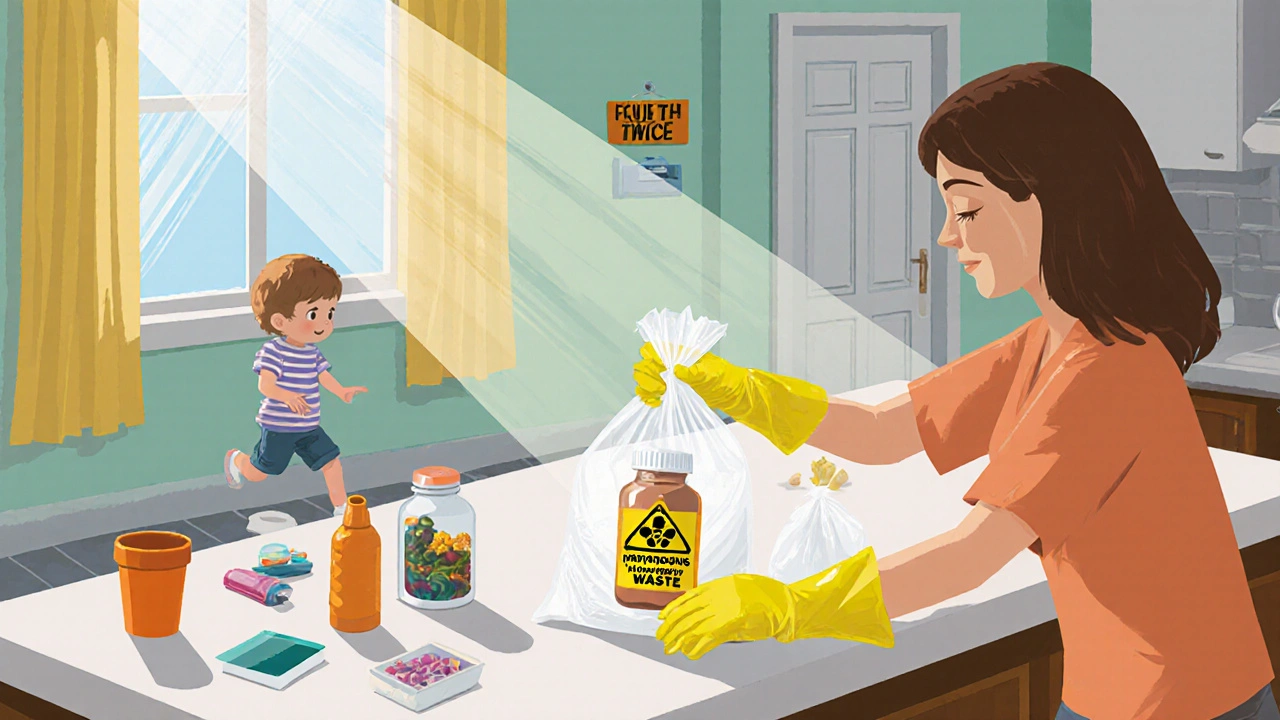
How to Safely Dispose of Chemotherapy Medication at Home
Learn how to safely dispose of chemotherapy medication at home with step-by-step guidance on double-bagging, protective gear, body waste handling, and what to avoid. Protect your family and environment from hazardous drug exposure.
Read more