
Chemotherapy Waste: Safe Handling, Risks, and What You Need to Know
When you think of chemotherapy waste, toxic byproducts from cancer treatments that require special handling to prevent harm. Also known as hazardous oncology waste, it includes empty vials, IV bags, syringes, gloves, gowns, and even patient bodily fluids contaminated with cancer drugs. This isn’t ordinary medical trash. It’s classified as hazardous because these drugs don’t break down easily and can damage cells—even in small amounts. Hospitals, clinics, and home care providers must treat it differently than regular waste, or it can expose nurses, janitors, family members, and even the environment to serious risks.
Why does this matter? Because hazardous medical waste, any material contaminated with dangerous substances like chemotherapy agents, bloodborne pathogens, or radioactive materials doesn’t just vanish when thrown in a bin. If not incinerated or neutralized properly, chemo drugs can leak into water systems, contaminate landfills, or linger on surfaces. A 2022 study found traces of chemotherapy drugs in hospital wastewater even after treatment—meaning standard sewage systems aren’t enough. And it’s not just the environment. Staff who handle this waste without proper training or gear face higher risks of reproductive issues, skin reactions, and even long-term cancer risks themselves.
So how is it managed? oncology waste disposal, the regulated process of collecting, segregating, and destroying chemotherapy-contaminated materials to prevent exposure follows strict rules. In the U.S., it’s overseen by the EPA and OSHA. Items are sorted into color-coded containers—usually yellow for trace chemo waste, red for bulk. Empty vials? Still hazardous if they had more than 3% of the original dose left. Gloves used during prep? Not disposable in a regular trash can. Even patient urine or vomit from someone who just had chemo needs special handling for at least 48 hours after treatment. Many hospitals now use closed-system transfer devices to reduce exposure during mixing, and some are switching to safer drug formulations that break down faster.
And it’s not just about hospitals. More people are getting chemo at home now. That means caregivers—spouses, children, aging parents—are handling contaminated supplies without always knowing the risks. A used syringe in the trash, a wiped-down countertop that still has traces of drug residue, a diaper with chemo in it—these aren’t rare. That’s why education matters. You can’t just treat it like regular trash. You need to know what’s safe, what’s not, and where to take it.
Below, you’ll find real guides from clinicians and safety experts on how chemo waste is handled in practice—from hospital protocols to home care tips. You’ll see how drug interactions, improper disposal, and lack of training create hidden dangers. And you’ll learn what’s being done to make this safer—for patients, for workers, and for the planet.
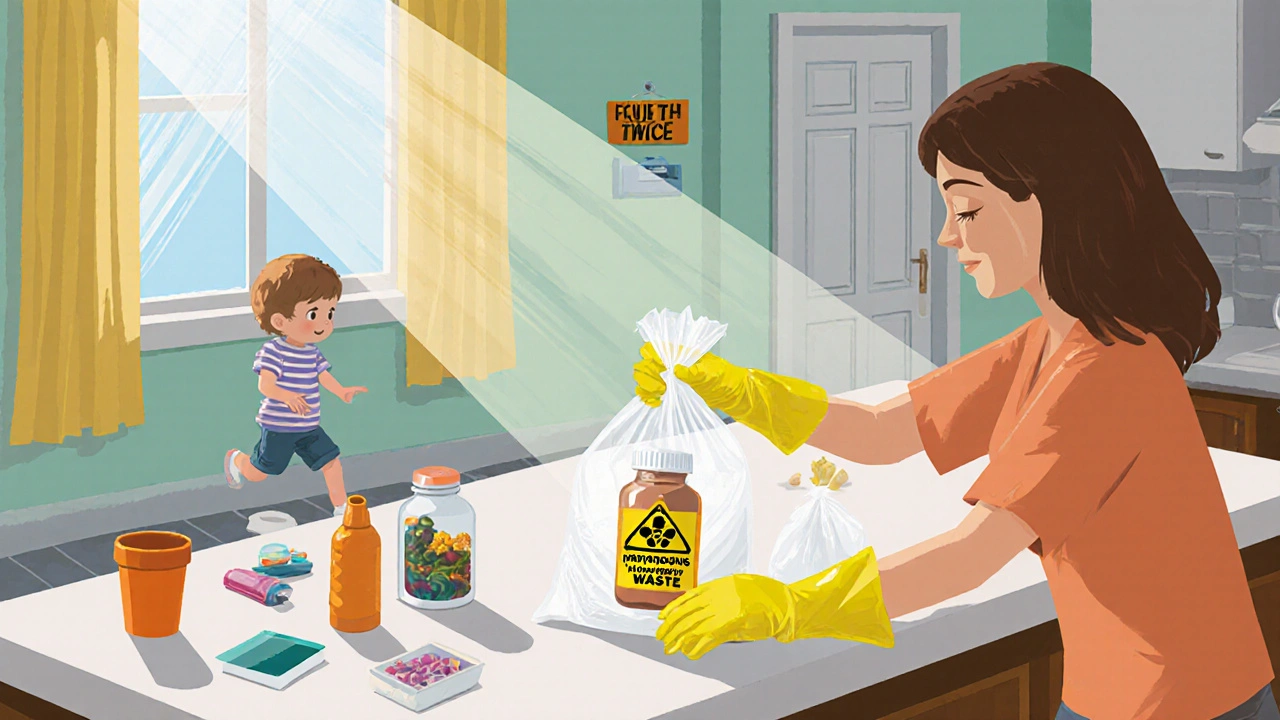
How to Safely Dispose of Chemotherapy Medication at Home
Learn how to safely dispose of chemotherapy medication at home with step-by-step guidance on double-bagging, protective gear, body waste handling, and what to avoid. Protect your family and environment from hazardous drug exposure.
Read more