
Chemotherapy Disposal: Safe Ways to Get Rid of Cancer Drugs
When you or a loved one is undergoing chemotherapy, a powerful treatment that kills fast-growing cancer cells but also leaves behind toxic waste. Also known as cancer drug therapy, it’s life-saving—but the leftover pills, vials, and syringes aren’t something you just toss in the trash. Chemotherapy disposal, the process of safely getting rid of unused or expired cancer medications isn’t optional. It’s a public health requirement. These drugs are classified as hazardous drug waste, substances that can cause serious harm if they enter water systems, landfills, or homes. Even tiny amounts left in a pill bottle can poison children, pets, or wildlife.
Many people don’t realize that flushing chemo drugs down the toilet or throwing them in the regular trash is dangerous—and often illegal. Hospitals and clinics follow strict rules set by the EPA and OSHA, but what about at home? If you have leftover pills, patches, or IV bags, you need a clear plan. Some pharmacies offer take-back programs, and some cities have special drop-off sites for hazardous medical waste. If those aren’t available, the FDA recommends mixing the drugs with dirt, coffee grounds, or cat litter in a sealed container before tossing them. Never rinse out pill bottles before recycling—they can still carry traces of toxic chemicals. And never share your meds with someone else, even if they have similar symptoms. Each chemo drug is precisely dosed for one person’s body, weight, and cancer type.
What about empty containers? Even if they look clean, they may still have drug residue. Always check the label. Some say "Do not recycle." Others can go in regular recycling after rinsing with water—but only if local rules allow it. If you’re unsure, call your pharmacy or local waste authority. They’ll tell you what’s safe in your area. This isn’t just about following rules. It’s about protecting your neighbors, your water supply, and future generations. A single improperly disposed chemo vial can contaminate thousands of gallons of groundwater. That’s why proper chemotherapy disposal matters more than most people realize.
Below, you’ll find real-life guides from people who’ve walked this path—how to handle leftover meds after treatment ends, what clinics actually do with unused drugs, and how to spot fake disposal advice online. These aren’t theoretical tips. They’re lessons learned from patients, nurses, and pharmacists who’ve seen what happens when things go wrong.
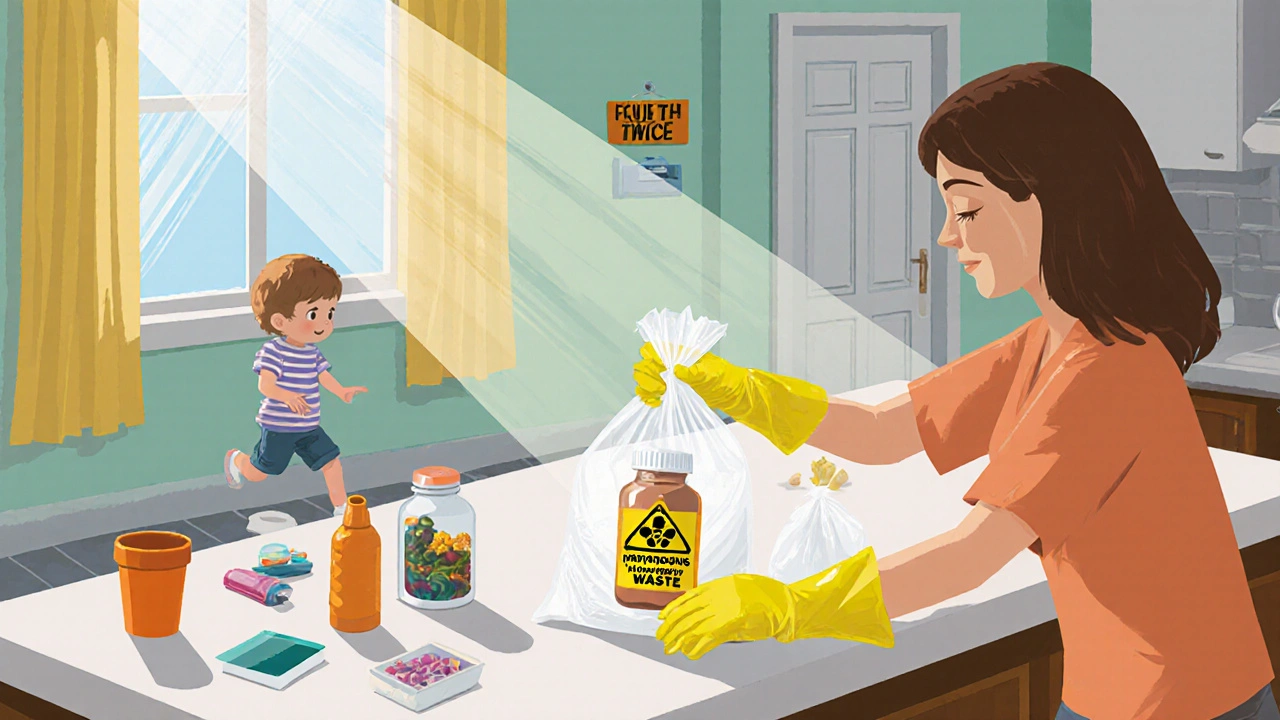
How to Safely Dispose of Chemotherapy Medication at Home
Learn how to safely dispose of chemotherapy medication at home with step-by-step guidance on double-bagging, protective gear, body waste handling, and what to avoid. Protect your family and environment from hazardous drug exposure.
Read more