
Cancer Medication Disposal: Safe Ways to Get Rid of Unused Drugs
When you finish treatment or switch drugs, cancer medication disposal, the process of safely getting rid of unused or expired chemotherapy and targeted therapy drugs. Also known as hazardous drug disposal, it’s not like tossing out an old painkiller. These drugs are powerful—and dangerous if they end up in water, soil, or the hands of someone who shouldn’t have them. The FDA and EPA treat many cancer drugs as hazardous waste because they can harm children, pets, and even wildlife if flushed or thrown in the trash.
Most people don’t realize that flushing chemo pills down the toilet or tossing them in the bin isn’t just irresponsible—it’s often illegal. These drugs don’t break down easily. They show up in rivers, drinking water, and even in fish. And if a child finds a bottle in the trash? A single tablet can be deadly. That’s why pharmacy take-back, a system where pharmacies collect unused medications for proper disposal. Also known as drug return programs, it’s the safest option in most cases. Many hospitals and oncology clinics also run take-back programs for patients. If you’re unsure where to go, call your pharmacy or check with your local health department. Some areas even have drop boxes at police stations or community centers.
Not every community has a take-back program. If yours doesn’t, there’s still a safe way: mix the pills with something unappetizing—used coffee grounds, cat litter, or dirt—put them in a sealed plastic bag, then toss them in the trash. Never crush pills unless your doctor says it’s okay. Some drugs are designed to release slowly, and crushing them can make them dangerous to handle. Remove labels or scratch out personal info to protect your privacy. And never, ever flush them unless the label says to—very few cancer drugs fall into that rare exception.
What about liquids, injections, or patches? Liquid chemo should go in a sealed container with absorbent material like paper towels. Patches? Fold them in half with the sticky sides together, then put them in the trash. Needles and syringes? Use a sharps container—never a soda bottle. Many pharmacies sell these for under $10, or your clinic may give you one for free.
You might wonder: why does this matter if I’m done with the meds? Because safety isn’t just about you. It’s about your neighbor’s toddler, your dog, the water supply, and the people who handle trash every day. Improper disposal puts healthcare workers at risk and pollutes the environment for decades. That’s why hospitals and pharmacies have strict rules—and why you should too.
Below, you’ll find real stories and practical guides from people who’ve been through treatment. They share what worked, what didn’t, and how they kept their homes safe after chemo. Whether you’re a patient, caregiver, or just trying to do the right thing, these posts give you the clear, no-fluff facts you need to dispose of cancer meds without risk.
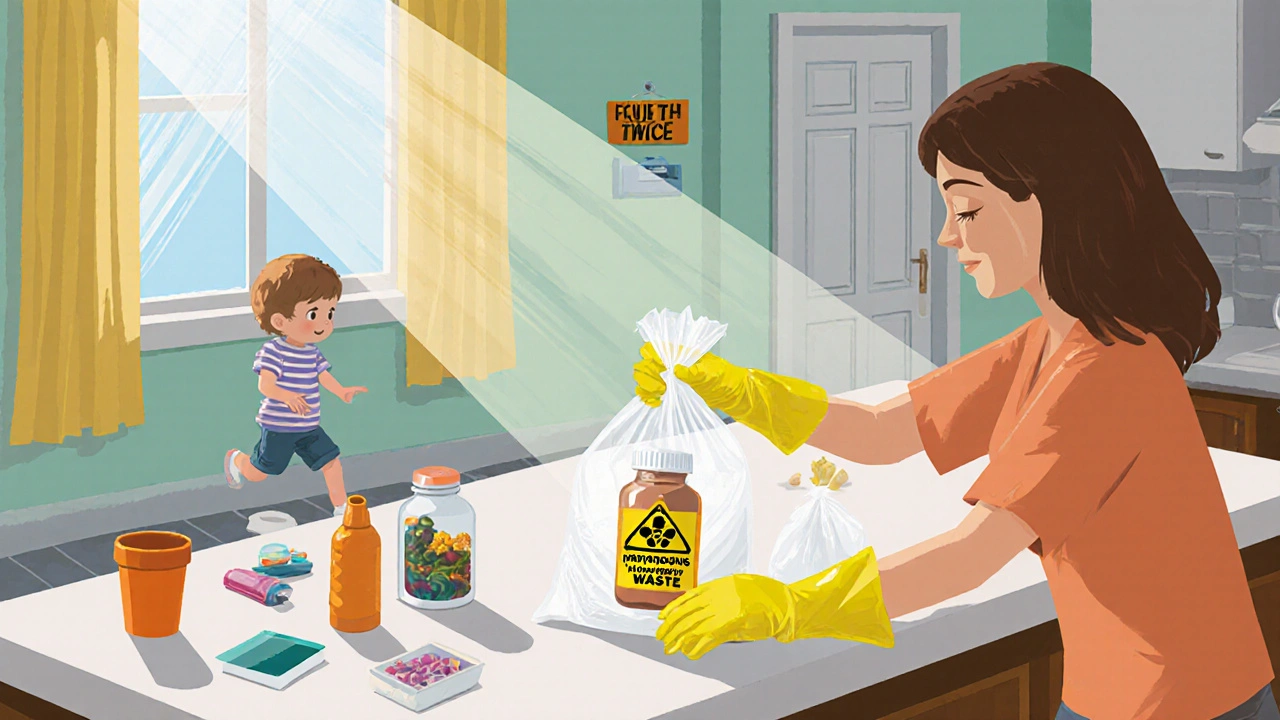
How to Safely Dispose of Chemotherapy Medication at Home
Learn how to safely dispose of chemotherapy medication at home with step-by-step guidance on double-bagging, protective gear, body waste handling, and what to avoid. Protect your family and environment from hazardous drug exposure.
Read more