

Euglycemic DKA Risk Checker
Risk Assessment
SGLT2 inhibitors are a class of antihyperglycemic medications approved for type 2 diabetes management that work by inhibiting glucose reabsorption in the proximal renal tubule, promoting urinary glucose excretion. Imagine you're managing your type 2 diabetes with a new medication. You check your blood sugar-it's normal. But suddenly, you feel nauseous, dizzy, and your breath smells fruity. This isn't the classic sign of diabetic ketoacidosis (DKA) you might expect. Instead, it's a dangerous condition called euglycemic DKA (euDKA), where blood sugar stays low while ketones build up. First introduced with canagliflozin (Invokana) approved by the FDA in March 2013, this drug class now includes dapagliflozin (Farxiga), empagliflozin (Jardiance), and ertugliflozin (Steglatro). Despite their proven benefits for heart and kidney health, these medications carry a specific risk of DKA that often flies under the radar.
Understanding Diabetic Ketoacidosis and Euglycemic DKA
Traditional diabetic ketoacidosis (DKA) typically occurs in type 1 diabetes when insulin levels drop too low. This causes the body to burn fat for energy, producing ketones that make the blood acidic. Blood sugar usually spikes above 250 mg/dL, making diagnosis straightforward. But with SGLT2 inhibitors, a different scenario unfolds. Euglycemic DKA (euDKA) happens when ketones build up dangerously while blood sugar stays near normal-often below 200 mg/dL. This atypical presentation is why doctors often miss it. The European Medicines Agency (EMA) confirmed in June 2023 that "rare cases of this condition, including life-threatening ones, have occurred in patients taking SGLT2 inhibitors for type 2 diabetes and a number of these cases have been atypical, with patients not having blood sugar levels as high as expected."
| Feature | Traditional DKA | Euglycemic DKA |
|---|---|---|
| Blood Glucose Level | Typically >250 mg/dL | Often <250 mg/dL (frequently <200 mg/dL) |
| Common Triggers | Missed insulin doses, severe illness | Acute illness, surgery, low-carb diet, insulin dose reduction |
| Diagnosis Challenge | Easy due to high blood sugar | Hard to spot because blood sugar appears normal |
| Typical Patient | Type 1 diabetes | Type 2 diabetes on SGLT2 inhibitors |
Why SGLT2 Inhibitors Increase DKA Risk
So why do SGLT2 inhibitors cause this? These drugs work by making your kidneys dump glucose into urine. This lowers blood sugar but also reduces insulin levels slightly. When combined with stressors like illness or surgery, your body can't produce enough insulin to stop ketone production. A 2024 review in Metabolites found SGLT2 inhibitors nearly triple the risk of DKA compared to DPP-4 inhibitors (2.03 vs 0.75 events per 1000 person-years). But here's the catch: many studies show conflicting results. A 2023 meta-analysis of 71,553 patients found no significant increase in DKA risk with SGLT2 inhibitors versus placebo. This contradiction highlights how complex the relationship is. The key takeaway? The risk is real but varies based on individual factors like diabetes type, kidney function, and other medications.
Recognizing the Symptoms
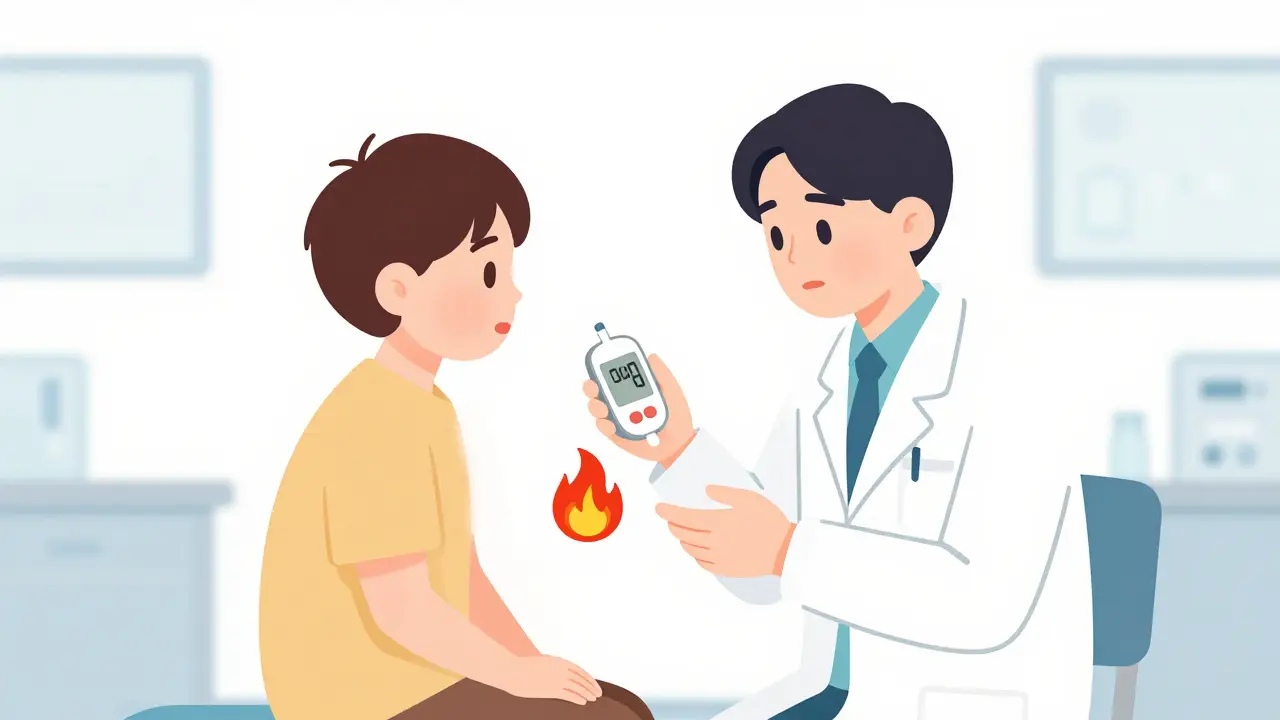
Because euDKA doesn't show high blood sugar, symptoms can be confusing. You might experience nausea, vomiting, stomach pain, or trouble breathing. Fatigue and confusion are common too. Some people report a fruity odor on their breath-classic for DKA-but with normal glucose readings. The American Diabetes Association warns: "SGLT2 inhibitors have been associated with DKA, which may present with only modestly elevated blood glucose levels (euglycemic DKA)." If you feel unwell while taking these medications, check ketones immediately. Don't wait for high blood sugar to act. A 2022 Diabetes Care study showed patient education on ketone monitoring reduced DKA cases by 67% in SGLT2 inhibitor users.
Who's Most at Risk?
Not everyone on SGLT2 inhibitors develops euDKA. Certain factors raise the risk. A 2023 analysis of FDA reports found that 63.2% of cases occurred within the first year of treatment. Common triggers include:
- Acute illness (32.7% of cases)
- Reducing insulin doses (24.1%)
- Surgery (15.3%)
- Excessive alcohol (7.8%)
People with lower beta-cell function are also vulnerable. One study showed DKA occurred in 2.4% of users with C-peptide below 1.0 ng/mL versus 0.6% in those with higher levels. This means if your body struggles to produce insulin naturally, you're at greater risk. The American Diabetes Association advises avoiding SGLT2 inhibitors in patients with a history of DKA, type 1 diabetes (unless specifically approved), or severe insulin deficiency.
What Regulators Say
The FDA first warned about DKA risk in 2015, requiring label updates for all SGLT2 inhibitors. In 2023, the EMA completed a thorough review and mandated healthcare professionals to "consider the possibility of ketoacidosis in patients taking SGLT2 inhibitors who have symptoms consistent with the condition even if blood sugar levels are not high." The UK's MHRA also issued warnings about combined use of GLP-1 agonists and insulin increasing DKA risk. These updates reflect growing awareness of euDKA's dangers. Current guidelines require clear warnings about atypical presentation in all product information.

Real-World Impact
Since 2013, the FDA's Adverse Event Reporting System recorded 1,247 DKA cases linked to SGLT2 inhibitors. Nearly half (48.7%) were euDKA with blood glucose below 250 mg/dL. The median time to onset was 28 weeks after starting therapy. A 2021 study in Diabetes Therapy found DKA mortality rates were 4.3% for SGLT2 inhibitor cases versus 2.1% for traditional DKA-likely due to delayed diagnosis. Despite these risks, the cardiovascular and kidney benefits of SGLT2 inhibitors remain significant. For most type 2 diabetes patients, the benefits outweigh the risks when proper precautions are taken.
How to Stay Safe
Doctors now recommend specific steps to prevent euDKA:
- Discontinue SGLT2 inhibitors at least 3 days before surgery or during acute illness
- Check ketone levels with urine strips or blood meters when feeling unwell
- Seek immediate medical help if ketones are moderate or high, regardless of blood sugar
- Avoid SGLT2 inhibitors if you have a history of DKA or insulin deficiency
A 2024 Lancet Digital Health study validated a machine learning model that predicts DKA risk with 87% accuracy using 15 clinical variables. This tool helps doctors identify high-risk patients before prescribing SGLT2 inhibitors. Future developments include SGLT1/2 dual inhibitors with potentially lower DKA risk, currently in phase 3 trials.
Can SGLT2 inhibitors cause diabetic ketoacidosis even with normal blood sugar?
Yes. This is called euglycemic DKA (euDKA), where blood glucose levels stay below 250 mg/dL (often below 200 mg/dL) while ketones build up. Traditional DKA usually involves high blood sugar, but SGLT2 inhibitors can cause DKA without it. This makes diagnosis harder and requires checking ketones even when blood sugar seems normal.
What are the early warning signs of euDKA?
Early symptoms include nausea, vomiting, stomach pain, unusual fatigue, and fruity-smelling breath. Unlike traditional DKA, these symptoms occur even when blood sugar readings are normal or only slightly elevated. If you experience these while taking SGLT2 inhibitors, test for ketones immediately and contact your doctor.
Should I stop taking SGLT2 inhibitors before surgery?
Yes. The American Association of Clinical Endocrinologists recommends stopping SGLT2 inhibitors at least 3 days before any procedure requiring fasting. This gives your body time to adjust and reduces the risk of euDKA during the stress of surgery. Always follow your surgeon's specific instructions.
How do I check for ketones at home?
You can use urine test strips (like Ketostix) or a blood ketone meter (similar to glucose meters). Urine tests are cheaper but less precise; blood tests are more accurate and detect ketones earlier. Keep test strips handy and know how to interpret results-moderate to high ketones require immediate medical attention.
Are SGLT2 inhibitors safe for type 1 diabetes patients?
Only under strict supervision. Some SGLT2 inhibitors are approved for type 1 diabetes in specific cases, but they increase DKA risk significantly. The American Diabetes Association advises extreme caution: patients must have reliable insulin delivery, regular ketone monitoring, and no history of DKA. Most endocrinologists avoid prescribing them for type 1 unless other options fail.
Rene Krikhaar
February 6, 2026 AT 00:48euDKA can happen even with normal blood sugar-watch for nausea and fruity breath.
one hamzah
February 6, 2026 AT 18:33SGLT2 inhibitors are 🔥 but euDKA is sneaky 😬. Check ketones even if sugar is normal. Gotta spread awareness! 💡
Matthew Morales
February 8, 2026 AT 05:00Yeah this is crucial! I've seen cases where people didn't realize it was DKA because their sugar was low. 😅
Diana Phe
February 8, 2026 AT 17:57Big Pharma is pushing these drugs to make money. The FDA is asleep at the wheel. We need to ban SGLT2 inhibitors immediately!
Carl Crista
February 10, 2026 AT 16:01They're hiding the risks. It's all part of a plot to control diabetics. Check the data yourself
Andre Shaw
February 12, 2026 AT 08:28These SGLT2 inhibitors are overhyped. Everyone's scared of DKA but the real problem is the FDA's lazy approval process. They should be banned!
Dr. Sara Harowitz
February 13, 2026 AT 23:55Exactly! These drugs are dangerous, and the FDA is failing us! We need stricter regulations immediately! This is a public health crisis!
Kieran Griffiths
February 15, 2026 AT 12:21It's really important to understand that euDKA can happen even when blood sugar levels are normal.
SGLT2 inhibitors work by causing the kidneys to excrete glucose, which can sometimes lead to ketone buildup without the usual high blood sugar.
This is why symptoms like nausea, vomiting, abdominal pain, and fruity breath might occur even if your glucose is in the normal range.
Many people mistake these symptoms for something else, like a stomach bug, which delays treatment.
Doctors need to be aware of this because standard DKA tests look for high blood sugar, but euDKA doesn't present that way.
It's crucial for patients on SGLT2 inhibitors to monitor their ketone levels regularly, especially if they're sick or stressed.
The European Medicines Agency confirmed that cases of euDKA have occurred with these drugs, sometimes life-threatening.
Early detection is key to preventing complications.
If you're on this medication, don't ignore symptoms just because your blood sugar seems okay.
Always check for ketones if you feel unwell.
This condition is rare but serious.
It's better to be safe and get checked out.
Remember, your health is worth it.
Stay informed and proactive.
Always consult your doctor if you have concerns.