
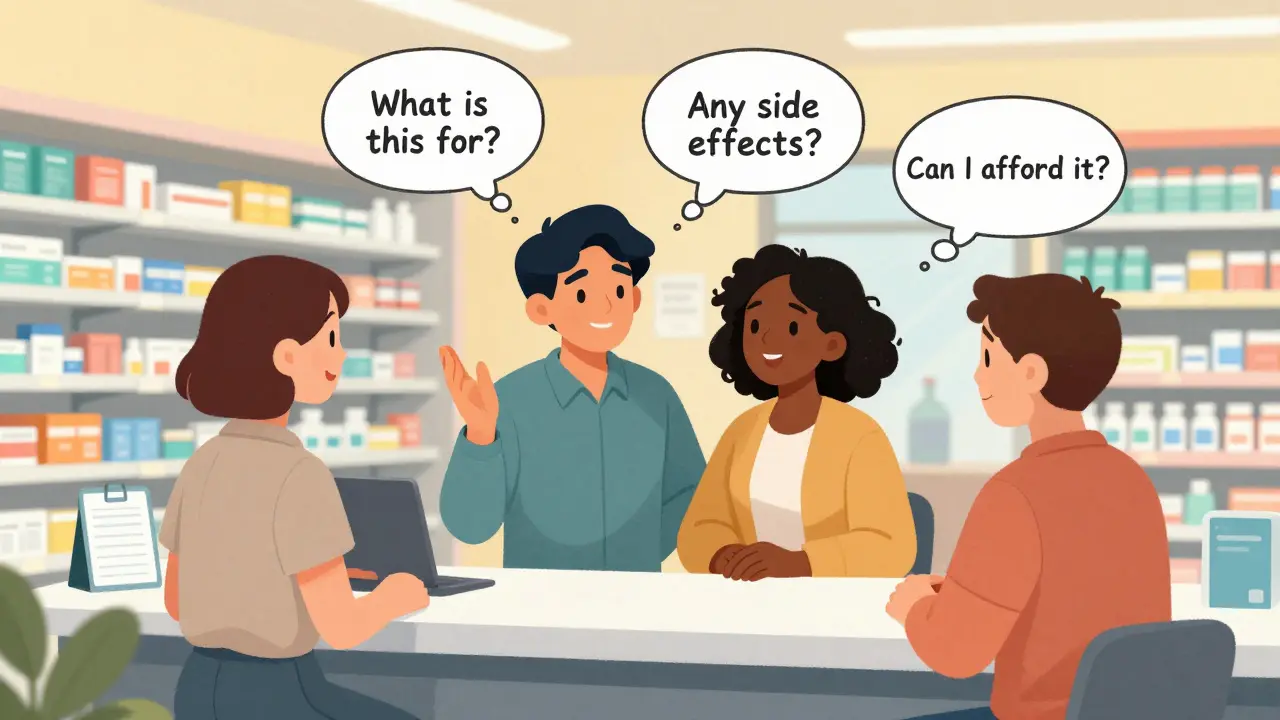
Most people know to ask their doctor about a new prescription. But how many stop to ask the person actually handing them the pills - the pharmacist?
Pharmacists are the most accessible healthcare professionals in the U.S. With over 66,000 community pharmacies nationwide, you’re likely within five miles of one. Yet, many walk out with a bag of pills and no real idea what they’re for, how to take them safely, or what could go wrong. That’s a problem. Medication errors send about 1.3 million people to the emergency room every year. Most of those mistakes could have been avoided with a simple conversation.
What is this medication for - and why am I taking it?
It sounds basic, but 30% of medication errors happen because patients don’t understand why they’re taking a drug. You might get a prescription for something like metformin and assume it’s for weight loss. Or you might be given a pill labeled "for high blood pressure" but never hear if it’s to lower your numbers, prevent a stroke, or protect your kidneys.
Ask: "What condition is this treating?" and "How will I know it’s working?" If your doctor wrote "for hypertension," ask the pharmacist to explain what that means in plain terms. Don’t just accept the label. If you’re unsure, write it down. Understanding your medication is the first step to taking it right.
How and when should I take this?
Timing matters. Some pills work best on an empty stomach. Others need food to be absorbed properly. Some are meant to be taken at night. Others need to be spaced out evenly through the day.
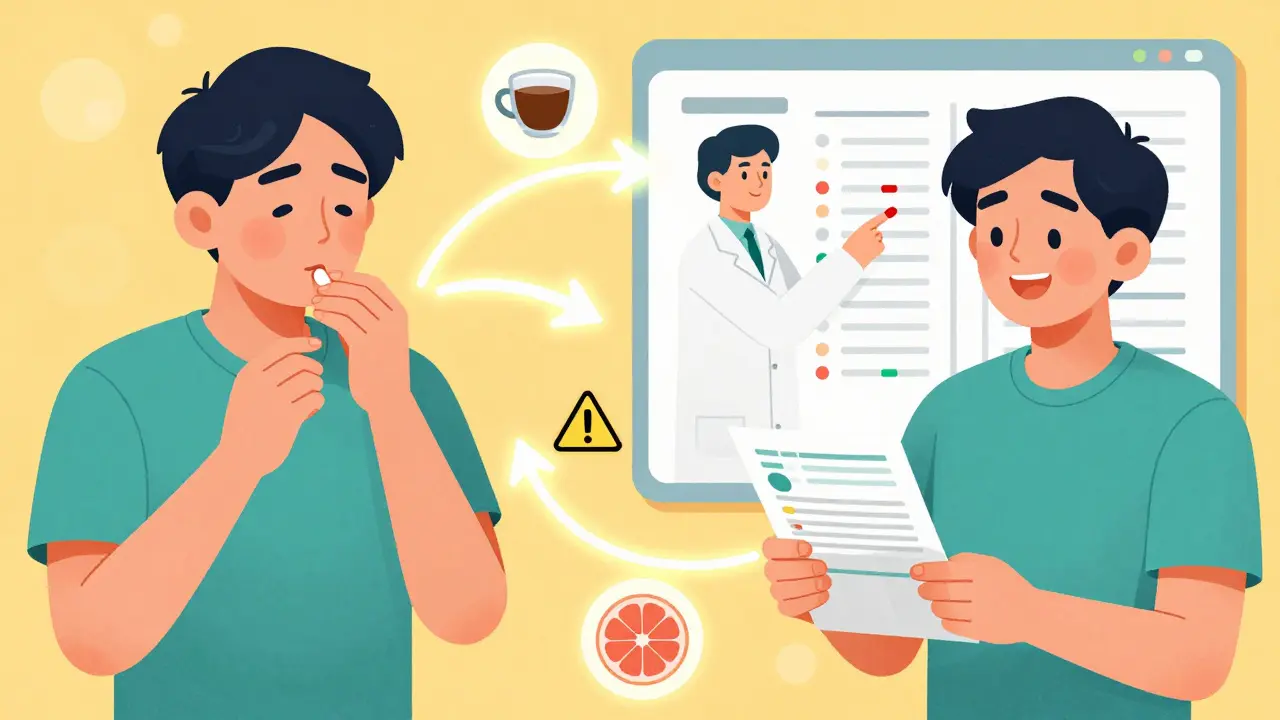
Ask: "Should I take this with food or on an empty stomach?" "Is there a best time of day to take it?" "Can I take it with my morning coffee or grapefruit juice?"
One common mistake: taking antibiotics with dairy. Calcium can block absorption. Or taking a sleep aid with alcohol - a dangerous combo that even some doctors forget to mention. Pharmacists know these details. They see what works and what doesn’t every day.
What side effects should I watch for?
Everyone worries about side effects. But not everyone knows which ones are normal and which are dangerous.
Ask: "What are the most common side effects?" "Which ones mean I should call my doctor right away?" "Are there any I should expect but can manage at home?"
For example, statins might cause muscle aches - that’s common. But if you also have dark urine or extreme fatigue, that could signal liver trouble. Antidepressants might make you feel nauseous at first - that often fades. But if you feel suicidal or have racing thoughts, that’s urgent. Pharmacists can tell you what’s routine and what’s a red flag. They’ve seen it all.
Could this interact with anything else I’m taking?
This is the big one. Most people don’t think to mention their supplements, vitamins, or even over-the-counter painkillers. But here’s the truth: 15% of hospital admissions from drug reactions are preventable. That’s because people don’t tell their pharmacist about the turmeric they’re taking for arthritis, the melatonin for sleep, or the ibuprofen they grab for headaches.
Ask: "Does this interact with any of my other medications, supplements, or herbs?" Bring a list - every pill, capsule, and gummy you take. Even the ones you only take "once in a while."
Real story: A man on blood pressure meds was also taking hawthorn berry supplements for heart health. His doctor didn’t know. His pharmacist did - and warned him. The combo was dropping his blood pressure too low. He stopped the supplement and avoided a fall, a hospital trip, and possible heart damage.
What if I miss a dose?
Life happens. You forget. You’re traveling. You run out. You feel better and decide to skip it.
Ask: "What should I do if I miss a dose?" "Can I double up later?" "Should I wait until tomorrow?"
Some meds, like birth control or antibiotics, need strict timing. Others, like blood pressure pills, are more forgiving. But guessing can hurt. Missing a dose of insulin? Dangerous. Skipping a diuretic? You might swell up. Pharmacists can give you a clear, step-by-step plan for what to do when you slip up - no judgment, just facts.
Is there a cheaper or generic version?
Brand-name drugs can cost 80-85% more than generics. And here’s the kicker: they’re the same thing. By law, generics must contain the exact same active ingredient, in the same strength, and work the same way.
Ask: "Is there a generic version?" "Can you check if a different brand or form is less expensive?" "Are there patient assistance programs or coupons?"
Some pharmacies offer $4 lists for common meds. Others have discount cards you can sign up for on the spot. One woman in Austin was paying $120 a month for her cholesterol drug. Her pharmacist found a generic version that cost $12. She saved $1,200 a year. That’s not a small thing.
When will I start feeling better? Do I need tests?
Many patients stop taking meds because they don’t feel immediate results. But not all drugs work like painkillers.
Ask: "When should I expect to notice a change?" "Will I need blood tests or other monitoring?" "How will we know if this is working?"
Antidepressants can take 4-6 weeks. Blood pressure meds might not make you feel anything - but your numbers tell the story. Diabetes meds? You’ll need regular A1C checks. Pharmacists know the timelines. They can set your expectations so you don’t quit too soon.
Are there non-drug options?
Not every problem needs a pill. Sometimes, lifestyle changes - diet, movement, sleep - can do the job.
Ask: "Are there non-drug ways to manage this?" "Would exercise, weight loss, or cutting back on salt help?"
One man with prediabetes was given metformin. His pharmacist asked about his diet and found he was drinking three sugary sodas a day. Together, they set a goal: switch to sparkling water. Three months later, his blood sugar improved so much he didn’t need the pill anymore. Pharmacists aren’t just pill dispensers - they’re health coaches.
How do I remember to take it?
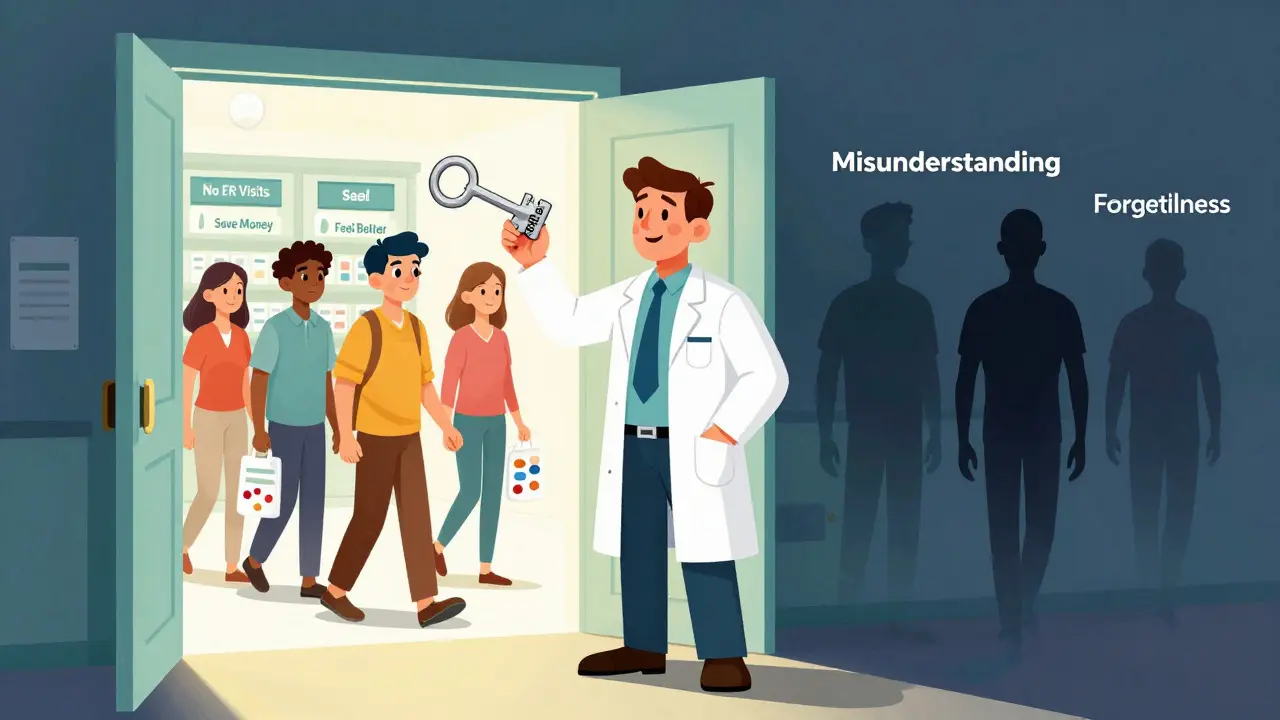
Half of people stop taking chronic meds within the first year. Why? They forget. They get overwhelmed. They think they don’t need it anymore.
Ask: "What’s the easiest way to remember?" "Do you have pill organizers?" "Can you set up refill reminders?"
Pharmacists can give you blister packs, phone alerts, or even link your prescriptions to a pharmacy app. One study found that patients who used the "teach-back" method - repeating instructions back in their own words - were 40% more likely to stick with their meds. Don’t just nod. Say it out loud.
Can I get written info or reliable resources?
Pharmacists can give you printed sheets, links to FDA-approved patient guides, or even QR codes that take you to videos explaining your drug.
Ask: "Can I get a printed patient information sheet?" "Where can I find trustworthy info about this drug?"
Avoid random websites. Google searches can lead to fear-mongering or false claims. The FDA’s MedWatch site, NIH resources, and the official drug manufacturer’s patient guide are your safest bets. Your pharmacist can point you there.
What’s the best time to talk to them?
Don’t wait until you’re in a rush. The best time to ask questions is when you pick up your prescription. Pharmacists usually have 5-7 minutes right then to answer. If they’re busy, ask: "Can I come back later?" or "Can I call you tomorrow?"
Bring your list: all prescriptions, OTC meds, vitamins, supplements, and herbal products. Use the FDA’s "My Medicine Record" form - it’s free and helps you stay organized.
And if you’re not getting enough time? Say so. Pharmacists are trained to help. They want you to be safe. If you feel rushed, ask to speak with the pharmacist directly - not just the tech handing you the bag.
Why this matters more than you think
Pharmacist interventions reduce hospital visits by 33% and cut emergency room trips by nearly a third. That’s not a small number. It’s life-changing.
And it’s not just about pills. It’s about understanding your body, your health, and your choices. The more you ask, the more control you have. The more you know, the less you fear.
You don’t need to be a medical expert. You just need to be curious. One question can prevent a mistake. Three questions can save your health. Don’t leave the pharmacy without answers.
Should I ask my pharmacist even if my doctor already told me everything?
Yes. Doctors are busy and may not have time to explain everything in detail. Pharmacists specialize in medications and can clarify dosage, interactions, side effects, and alternatives in plain language. They’re trained to catch things doctors might miss - like a supplement you forgot to mention or a cheaper generic option.
Can pharmacists change my prescription?
No, they can’t change your prescription on their own. But they can call your doctor if they spot a problem - like a duplicate drug, dangerous interaction, or wrong dose. In 45 states, pharmacists can also prescribe certain medications like naloxone, smoking cessation aids, or birth control. Always let them know if something feels off.
What if I’m embarrassed to ask questions?
There’s no reason to feel embarrassed. Pharmacists hear the same questions every day. They’ve seen people forget to take meds, mix up pills, or take supplements that clash with prescriptions. They’re there to help, not judge. If you’re nervous, write your questions down ahead of time. Even asking one question is better than staying silent.
Do pharmacists know about my other doctors and meds?
They can see your fill history at their pharmacy, but they won’t know about prescriptions from other pharmacies or non-prescription items unless you tell them. Always bring a complete list - including vitamins, herbs, and OTC drugs. That’s how they catch hidden interactions. Don’t assume they already know.
Are pharmacist consultations free?
Yes. Medication counseling is included with your prescription. You don’t pay extra to ask questions when you pick up your meds. Medicare Part D also covers comprehensive medication reviews at no cost if you qualify. If someone tries to charge you for basic advice, ask to speak with the pharmacist directly - they’re required to provide this service.
Joy Nickles
December 31, 2025 AT 15:00Emma Hooper
January 2, 2026 AT 11:39Marilyn Ferrera
January 2, 2026 AT 14:17Robb Rice
January 4, 2026 AT 00:03Harriet Hollingsworth
January 5, 2026 AT 18:56Deepika D
January 6, 2026 AT 03:48Darren Pearson
January 8, 2026 AT 01:08Stewart Smith
January 9, 2026 AT 12:13Sara Stinnett
January 10, 2026 AT 12:22linda permata sari
January 11, 2026 AT 18:41Brandon Boyd
January 13, 2026 AT 16:00Branden Temew
January 14, 2026 AT 22:01