
Opioid Use Disorder Risk Assessment Tool
Understand Your Risk
This tool helps distinguish between physical dependence (a common physiological response to opioids) and Opioid Use Disorder (addiction), which involves behavioral changes despite harm. Remember: physical dependence does NOT equal addiction.
Based on DSM-5 criteria, answer the questions below to assess your risk of Opioid Use Disorder. Physical dependence is extremely common in long-term opioid users but does not indicate addiction.
Risk Assessment Result
Many people think if you take opioids for a while and then feel sick when you stop, you’re addicted. That’s not true. You might just be physically dependent. And confusing the two can cost people their pain relief, their dignity, and even their lives.
What’s the real difference?
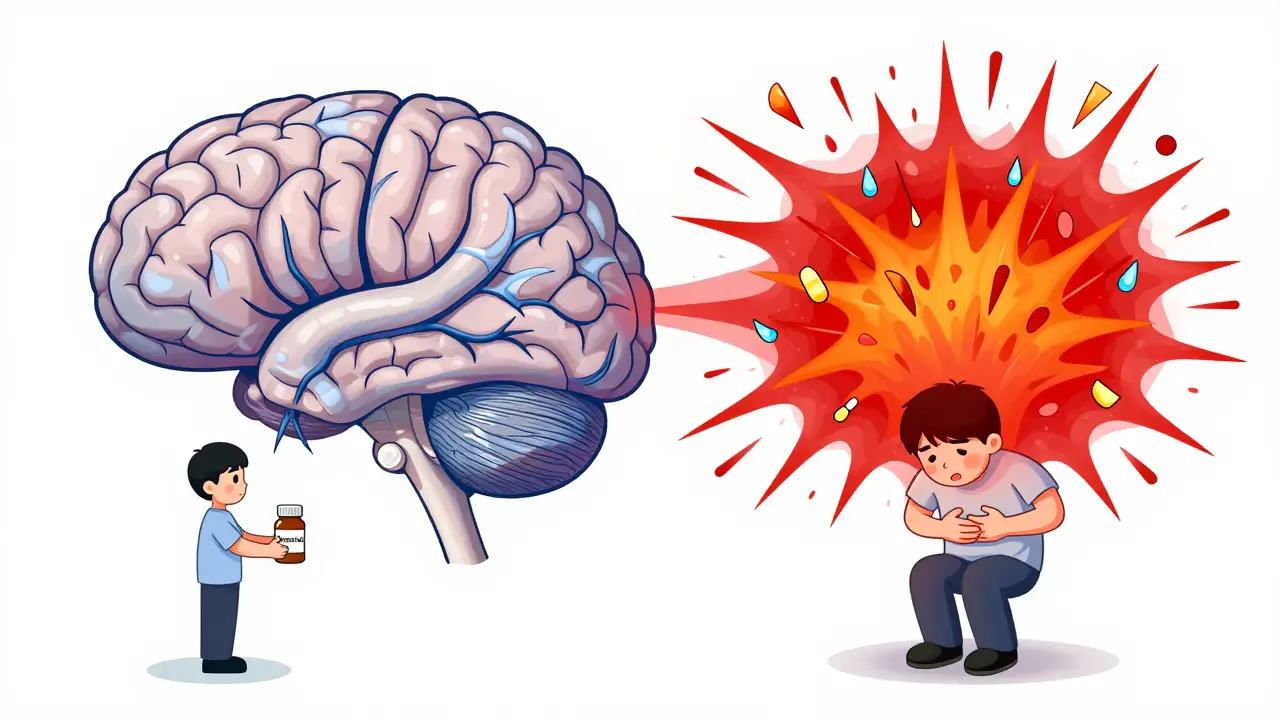
Physical dependence is your body adapting to a drug. It’s normal. If you take opioids daily for more than a week - even exactly as prescribed - your brain changes how it works to stay balanced. When you stop, your body freaks out because it’s been relying on the drug to function. That’s withdrawal: nausea, sweating, diarrhea, anxiety, vomiting. These symptoms are real, intense, and measurable. The Clinical Opiate Withdrawal Scale (COWS) shows that over 90% of people on long-term opioids will experience at least two of these symptoms if they quit cold turkey. Addiction, or Opioid Use Disorder (OUD), is something else entirely. It’s not about physical symptoms. It’s about behavior. It’s when you keep using opioids even when it destroys your job, your relationships, your health. You steal money. You lie. You take more than prescribed. You crave it, even when you know it’s hurting you. The brain circuits that control reward, impulse, and decision-making get rewired. This isn’t weakness. It’s a chronic brain disease. The DSM-5, the official guide doctors use to diagnose mental health conditions, stopped using the word “dependence” in 2013 because it caused so much confusion. Now, they only use “Substance Use Disorder.” That change wasn’t just semantic. It saved lives.How common is each?
Here’s the startling part: almost everyone who takes opioids long-term becomes physically dependent. Studies show nearly 100% of patients on daily opioids for 30 days or more develop it. But only about 8% develop Opioid Use Disorder. That means for every 100 people taking opioids for pain, 92 won’t become addicted - even if they experience withdrawal. A 2017 study in Pain Medicine found that out of 9.9 million Americans who misused prescription opioids, only 1.7 million met the clinical criteria for OUD. That’s a big gap. And yet, many doctors still treat physical dependence like addiction. They abruptly cut patients off. They refuse to refill prescriptions. They shame them. A 2020 study in the Journal of Pain Research found that 68% of chronic pain patients believed withdrawal meant they were addicted. That fear is why 42% of them quit their meds - even when they still needed them. They weren’t afraid of pain. They were afraid of being labeled an addict.How your brain changes
Physical dependence happens in the locus coeruleus - a tiny area in your brainstem that controls stress responses and autonomic functions like heart rate and digestion. Opioids calm this area. Over time, your brain overcompensates. When the drug leaves, the system goes into overdrive. That’s why you sweat, shake, and feel like you’re dying. Addiction lives in the reward system. The mesolimbic pathway - the same one activated by food, sex, and money - gets hijacked. Dopamine surges when you take opioids. Your brain starts to prioritize the drug over everything else. The prefrontal cortex, which handles self-control, gets weaker. Neuroimaging shows people with OUD have 20-30% less activity in this region when trying to resist cravings. That’s not a choice. That’s biology. And here’s the cruel twist: withdrawal symptoms fade in weeks. The brain resets. But the changes in the reward system? Those can last years. That’s why relapse is so common - even after months or years clean.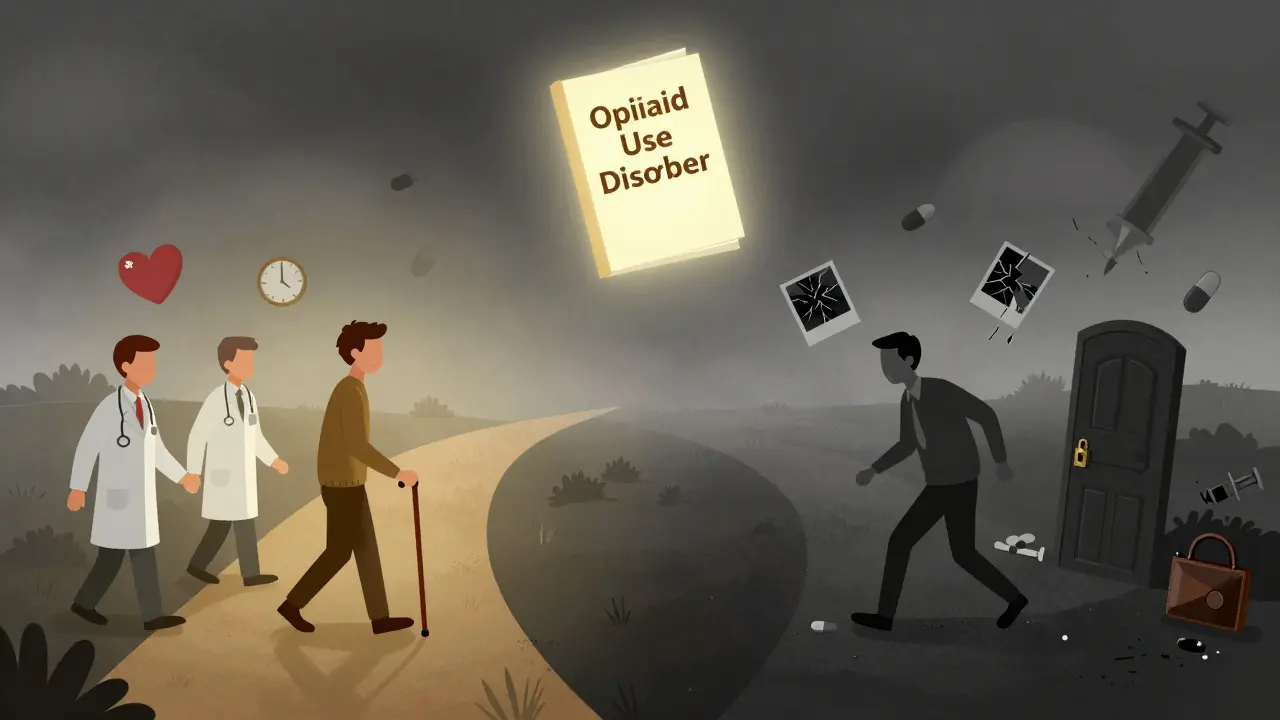
What does treatment look like?
If you’re physically dependent, the goal is safe tapering. No panic. No judgment. The CDC recommends reducing your dose by 5-10% every 2-4 weeks. For someone on 100 morphine milligram equivalents (MME) per day or more, go slower - maybe 5% per month. Use the COWS scale to track symptoms. If scores hit 12 or higher, slow down the taper. Medications like lofexidine can ease withdrawal without being addictive. If you have OUD, tapering isn’t enough. You need Medication-Assisted Treatment (MAT). That means buprenorphine or methadone - drugs that stabilize your brain, reduce cravings, and block the high from other opioids. Studies show buprenorphine cuts overdose deaths by 70-80%. Methadone cuts them by half. Add counseling. Add support. Add time. Recovery isn’t about quitting. It’s about rebuilding.Why this confusion hurts people
In 2021, the American Medical Association passed a resolution urging doctors to stop conflating dependence with addiction. Why? Because when patients are abruptly cut off, they don’t just suffer pain. They turn to street drugs. Heroin. Fentanyl. In 2021, over 80,000 Americans died from opioid overdoses. The CDC estimates that aggressive opioid tapering without proper support may have contributed to 20,000 of those deaths. One patient told me: “I took my oxycodone for my back for five years. I never used it for fun. I never lied to my doctor. When I tapered, I was sick for two weeks. But I didn’t crave it. I didn’t want more. My doctor said, ‘Good, you’re not addicted.’ That meant everything.” Another said: “I started with a prescription after surgery. Then I needed more. Then I was buying pills off a guy I met at the gas station. I lost my job. My wife left. I stole from my mom. I didn’t want to do it. But I couldn’t stop.” That’s OUD. That’s not dependence. That’s a disease.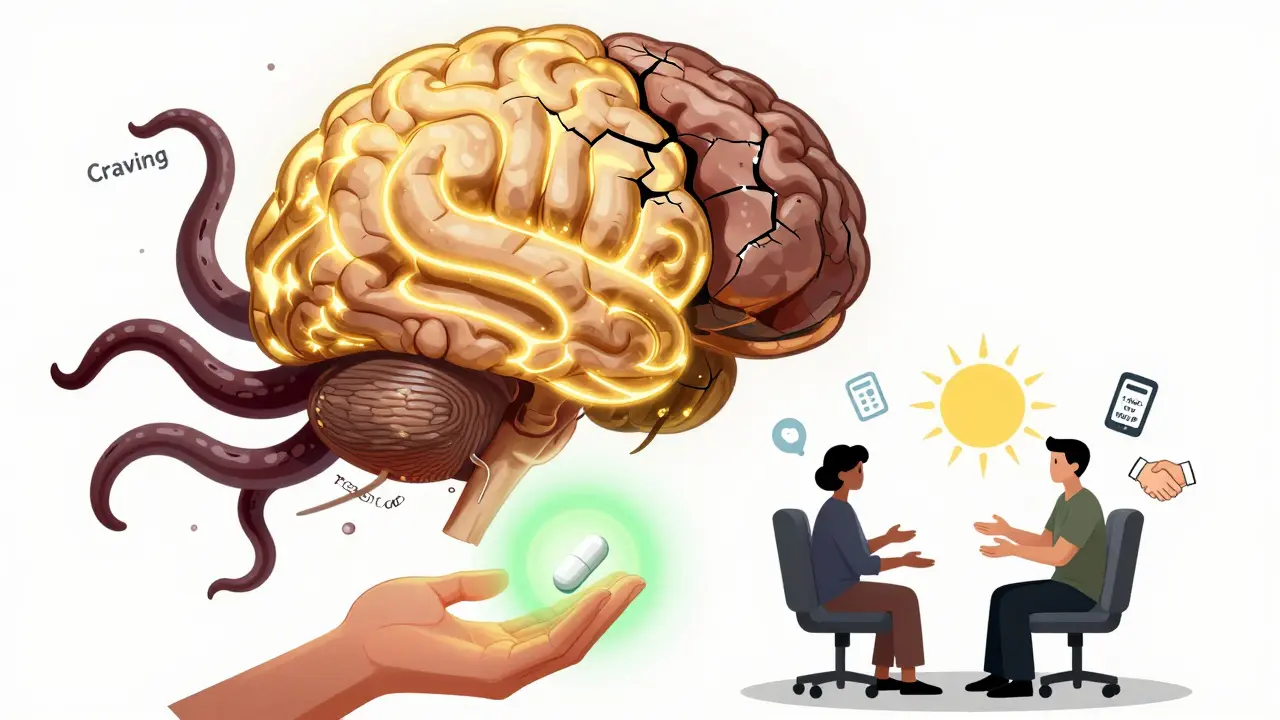
What you should know
- Taking opioids as prescribed doesn’t make you an addict. It makes you human. - Withdrawal is not proof of addiction. It’s proof your body worked. - OUD is treatable. It’s not a moral failure. It’s a medical condition. - If you’re on long-term opioids, talk to your doctor about tapering - don’t quit on your own. - If you’re struggling to stop using despite harm, you’re not alone. Help exists. The CDC, NIDA, and the American Society of Addiction Medicine all agree: physical dependence is a physiological state. Addiction is a behavioral disorder. They’re not the same. They’re not interchangeable. And treating them as if they are? That’s the real crisis.How to know if you or someone you love needs help
Ask these questions:- Do you keep using opioids even though they’re hurting your relationships, job, or health?
- Do you spend a lot of time getting, using, or recovering from opioids?
- Do you have strong cravings - a physical urge you can’t ignore?
- Have you tried to quit and failed?
- Do you need more of the drug to feel the same effect?
What to do next
If you’re on opioids and worried about dependence:- Don’t stop suddenly. Talk to your prescriber about a slow taper.
- Ask if you can use lofexidine or clonidine to manage withdrawal symptoms.
- Request a copy of your dosing history. Know your MME per day.
- Ask about non-opioid pain options: physical therapy, nerve blocks, acupuncture.
- Call SAMHSA’s helpline: 1-800-662-HELP (4357). It’s free, confidential, 24/7.
- Find a provider who offers MAT. Buprenorphine is available in clinics and even by mail in many places.
- Join a support group. Peer support saves lives.
- Remember: recovery is possible. You’re not broken. You’re healing.
Is physical dependence the same as addiction?
No. Physical dependence means your body has adapted to a drug and will experience withdrawal if you stop. Addiction, or Opioid Use Disorder, means you continue using the drug despite serious harm to your health, relationships, or life. Dependence is biological. Addiction is behavioral and neurological.
Can you be physically dependent without being addicted?
Yes. In fact, most people who take opioids long-term for pain become physically dependent - about 100% do. But only around 8% develop addiction. Taking medication as prescribed doesn’t make you addicted. Stopping because you’re scared of withdrawal doesn’t mean you’re addicted either.
What are the signs of Opioid Use Disorder?
The DSM-5 lists 11 criteria. You need at least two in 12 months. Key signs include: craving the drug, losing control over how much or how often you use, continuing to use despite harm (like losing your job or relationships), spending a lot of time getting or recovering from the drug, and failing to quit despite wanting to. Craving is present in 83% of severe cases.
How long does opioid withdrawal last?
Acute withdrawal usually peaks within 72 hours and lasts 7-10 days. Symptoms include nausea, vomiting, diarrhea, sweating, anxiety, and muscle aches. After that, some people feel fatigued or restless for weeks - this is called post-acute withdrawal. But it’s not addiction. It’s your body returning to normal.
Is it safe to stop opioids cold turkey?
It’s not recommended. Stopping suddenly can cause severe withdrawal and increase the risk of relapse or overdose later. The CDC advises tapering slowly - reducing your dose by 5-10% every 2-4 weeks. For higher doses, go even slower. Always work with a doctor. There are medications like lofexidine that can ease withdrawal without being addictive.
What’s the best treatment for Opioid Use Disorder?
Medication-Assisted Treatment (MAT) is the gold standard. Buprenorphine reduces overdose deaths by 70-80%. Methadone cuts them by about 50%. These medications stabilize your brain, reduce cravings, and allow you to focus on recovery. MAT works best with counseling and peer support. It’s not replacing one drug with another - it’s treating a brain disease.
kabir das
January 29, 2026 AT 04:50Wait, wait, wait-so if I take opioids for back pain, and then I start sweating like I just ran a marathon in a sauna, and my guts feel like they’re staging a coup, that’s NOT addiction?!!?!!? I mean, come on-this is the same thing my cousin went through after his surgery, and everyone called him a junkie! He cried for weeks, and his mom stopped talking to him! Now you’re telling me he wasn’t even addicted?! That’s insane. And yet… I believe it. I’ve read this stuff before, but nobody ever explains it like this. My hands are shaking just typing this. I’m not okay. I’m not okay.
rajaneesh s rajan
January 30, 2026 AT 20:01So let me get this straight: 92% of people on long-term opioids aren’t addicts, but doctors still treat them like criminals? Classic. The system doesn’t care if you’re suffering-it cares if you’re inconvenient. And now we’ve got a whole generation of chronic pain patients who’d rather risk fentanyl than face another ‘you’re addicted’ lecture from a doctor who’s never held a patient’s hand during withdrawal. It’s not medicine. It’s punishment dressed in white coats. 🤷♂️
Pawan Kumar
January 31, 2026 AT 05:18One must consider the broader geopolitical and pharmaceutical-industrial context here. The DSM-5’s reclassification of dependence as a behavioral disorder was not an organic evolution of medical science-it was a deliberate maneuver by regulatory bodies under pressure from opioid manufacturers and insurance conglomerates seeking to reduce liability. The 8% statistic? Likely manipulated through exclusionary diagnostic criteria. One must ask: who benefits from conflating dependence with addiction? The answer, as always, lies in the balance sheets of corporations-not the suffering of patients.
Kacey Yates
February 2, 2026 AT 00:00THIS IS SO IMPORTANT. People think withdrawal = addict. NO. It means your body worked. That’s it. My dad was on oxycodone for 7 years after his accident. Never used it for fun. Never lied. Just hurt. When they cut him off cold turkey he almost died. No one helped him taper. Now he’s on buprenorphine and alive. MAT saved him. Stop shaming people. Just stop.
ryan Sifontes
February 3, 2026 AT 12:17so like… if i take pain meds and get sick when i stop… am i a bad person? because that’s what i feel like. everyone i know says i’m addicted. even my therapist. but i dont even want the pills anymore. i just want to not feel like i’m gonna die. why does no one get this?
Laura Arnal
February 4, 2026 AT 04:34Thank you for writing this. 💙 I work in ER and see the aftermath every day. People get cut off, panic, turn to street drugs, overdose. It’s heartbreaking. We need more doctors who understand the difference. And we need to stop calling people addicts like it’s a personality flaw. It’s a disease. And recovery? It’s possible. You’re not broken. You’re healing. 🌱
Jasneet Minhas
February 4, 2026 AT 04:57Interesting how the West has spent decades pathologizing pain management while ignoring the fact that 70% of opioid prescriptions originate from a mere 5% of prescribers. The real crisis isn’t addiction-it’s the collapse of primary care. When your only option is a 7-minute visit with a doctor who’s never seen you before, of course they’ll taper you like you’re a lab rat. This isn’t medicine. It’s triage by algorithm.
Eli In
February 5, 2026 AT 12:17I’m from the US, but my sister lives in India and she’s been on opioids for fibromyalgia for 6 years. No one in her town even knows what MAT is. She’s terrified to ask for help. I just sent her this post. I hope it helps. We need to spread this knowledge everywhere-not just in places with fancy clinics. 💛