

Penicillin Cost Comparison Calculator
Calculate Your Savings
Estimate the financial impact of using penicillin versus alternative antibiotics for your condition.
Estimated Savings
in cost savings per treatment course.
What Penicillin Desensitization Really Means
If you’ve been told you’re allergic to penicillin, you’ve probably been handed a list of alternative antibiotics - drugs that are often broader, more expensive, and less effective. But here’s the truth: penicillin desensitization isn’t a last resort. It’s a safe, proven way to get back to the best possible antibiotic when you need it most.
Most people labeled as penicillin-allergic aren’t truly allergic. Studies show about 90% of them can take penicillin without issue. Yet, because of a vague history - maybe a rash from childhood or a misdiagnosed reaction - they’re locked out of the most targeted, least resistance-driving antibiotic class. That’s where desensitization comes in.
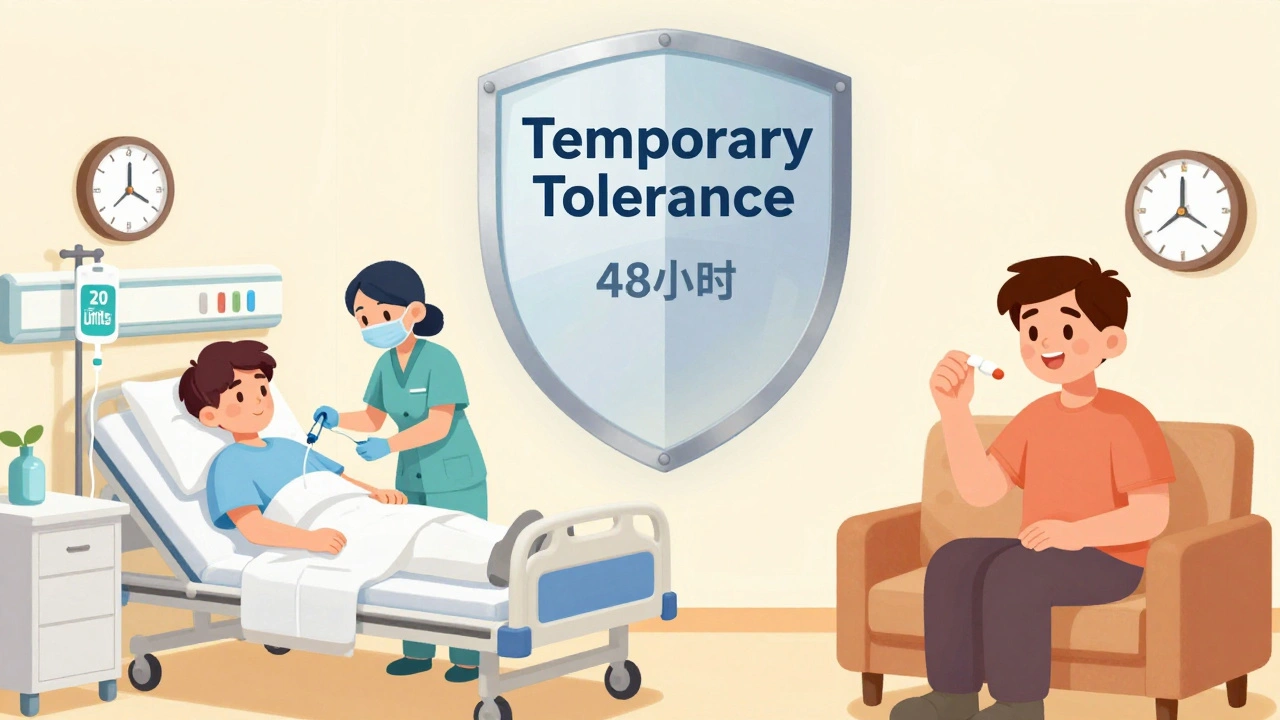
This isn’t about curing an allergy. It’s about temporarily tricking your immune system into tolerating penicillin long enough to complete a critical course of treatment. Once the drug is stopped, the tolerance fades - usually within 3 to 4 weeks. But during that window, you get the benefit of a safer, more effective antibiotic without risking a dangerous reaction.
When Penicillin Desensitization Is Necessary
You don’t need this procedure just because you’re nervous about penicillin. It’s reserved for life-or-decisions where alternatives simply won’t do.
- Neurosyphilis - penicillin is the only drug that reliably crosses the blood-brain barrier to kill the bacteria.
- Severe bacterial endocarditis - especially if caused by Streptococcus species that respond only to penicillin or ampicillin.
- Group B Streptococcus in pregnancy - penicillin is the gold standard to prevent newborn infection during delivery.
- Advanced Lyme disease with neurological involvement - where ceftriaxone isn’t available or penicillin G is preferred.
In these cases, switching to a carbapenem or vancomycin isn’t just a trade-off - it’s a step backward. These alternatives increase the risk of C. diff infections, drive antimicrobial resistance, and cost hospitals an extra $3,000 to $5,000 per admission, according to data from the Journal of Allergy and Clinical Immunology.
That’s why the CDC and Infectious Diseases Society of America now treat penicillin allergy delabeling - including desensitization - as a key strategy in fighting superbugs.
How the Procedure Works: IV vs. Oral Protocols
There are two main ways to do penicillin desensitization: intravenous (IV) and oral. Both follow the same principle - start with tiny, harmless amounts and slowly increase until you reach the full therapeutic dose.
For IV desensitization, the process begins with a solution so dilute it contains just 20 units of penicillin - less than 1/1000th of a normal dose. Every 15 to 20 minutes, the dose doubles. By the end of about 4 hours, you’re receiving the full prescribed dose. This method is tightly controlled and requires constant monitoring.
Oral desensitization uses the same logic but with pills or liquid. Doses are spaced further apart - every 45 to 60 minutes - because absorption is slower. Many clinicians consider oral safer because reactions are usually milder and easier to manage. About one-third of patients experience mild itching or hives during the process, which can be handled with antihistamines.
Here’s how the two compare:
| Feature | IV Protocol | Oral Protocol |
|---|---|---|
| Starting Dose | 20 units (0.2 mL of 100 units/mL) | 0.1 mg (10-5 dilution) |
| Interval Between Doses | 15-20 minutes | 45-60 minutes |
| Total Duration | Approx. 4 hours | 6-8 hours |
| Monitoring Required | Continuous vital signs every 15 minutes | Check-in every 30-60 minutes |
| Typical Reaction Rate | 10-15% | 30-35% (mostly mild) |
| Best For | Urgent cases, hospitalized patients | Stable patients, outpatient settings |
Who Should Not Undergo Desensitization
Desensitization isn’t for everyone. It’s strictly off-limits if you’ve had certain severe reactions in the past.
These are absolute contraindications:
- Stevens-Johnson Syndrome (SJS)
- Toxic Epidermal Necrolysis (TEN)
- Drug Reaction with Eosinophilia and Systemic Symptoms (DRESS)
These aren’t typical allergies - they’re life-threatening immune system overreactions that damage skin and organs. Giving penicillin again, even in tiny doses, could trigger a fatal recurrence.
Also, don’t confuse desensitization with a graded challenge. A graded challenge is for people with low-risk histories - maybe a vague rash from years ago - and involves testing with a few increasing doses to see if a reaction occurs. Desensitization is for confirmed or highly suspected IgE-mediated allergies, where the goal isn’t to test tolerance, but to build it.
Using a graded challenge when you need full desensitization is dangerous. Retrospective studies show improper use has led to preventable anaphylaxis in 2-3% of cases.
Preparation and Safety Measures
Before the first dose, you’ll be given a set of medications to help prevent or reduce reactions:
- Ranitidine (50mg IV or 150mg oral)
- Diphenhydramine (25mg IV or oral)
- Montelukast (10mg oral)
- Cetirizine or loratadine (10mg oral)
All of these are given about an hour before the first penicillin dose. This isn’t optional - it’s standard practice backed by decades of clinical experience.
During the procedure, you’ll be monitored nonstop. Nurses check your blood pressure, heart rate, oxygen levels, and breathing every 15 minutes. If you develop hives, flushing, wheezing, or low blood pressure, the infusion is stopped immediately. The team will treat the reaction and, if stable, may resume the protocol at a slower pace.
For pregnant women with syphilis, the procedure is often done in Labor and Delivery - not just for convenience, but because severe reactions, though rare, can affect both mother and baby. The hospital must have full anaphylaxis equipment on standby: epinephrine, IV fluids, airway tools, and staff trained to respond in under a minute.
Why This Isn’t Done Everywhere
You won’t find penicillin desensitization in most community hospitals. Only about 17% of them have formal protocols, compared to 89% of academic medical centers.
Why? It’s not just about the drug. It’s about the infrastructure. You need:
- Pharmacists trained to prepare the precise dilutions
- Nurses who understand the protocol and documentation requirements
- Allergists or infectious disease specialists overseeing the process
- Electronic health record systems that flag the procedure and auto-generate orders
Prisma Health’s 2024 guidelines require 19 separate labels on IV bags and mandatory EMAR (electronic medication administration record) sign-offs after each dose. That’s not something you can wing.
Plus, staff need training. The American Academy of Allergy, Asthma & Immunology recommends at least five supervised desensitizations before a provider can do one alone.

What Happens After Desensitization
Once you finish the protocol, you’re not done. You must keep taking penicillin every day - no gaps. If you stop for more than 48 hours, the tolerance resets. If you need another course later, you’ll have to go through the whole process again.
That’s why desensitization is only used when you know you’ll need the full course - like treating syphilis over 10-14 days or endocarditis over 4-6 weeks.
After treatment, you should still see an allergist for formal testing. Skin tests and blood tests can confirm whether you’re truly allergic or if the label was wrong. If you’re not allergic, you can be delabeled - meaning your medical record gets updated, and you won’t need desensitization again.
The Bigger Picture: Fighting Antibiotic Resistance
Every time we avoid penicillin because of a mislabeled allergy, we’re choosing a broader-spectrum antibiotic. That’s not harmless. It increases the risk of resistant infections like MRSA and C. diff. It drives up costs. It weakens our entire antibiotic arsenal.
The CDC reports that 10% of Americans carry a penicillin allergy label. If even half of those people were properly evaluated and delabeled, we’d reduce inappropriate antibiotic use by tens of thousands of cases a year.
That’s why the National Action Plan for Health Care-Associated Infections gave $15 million in grants to hospitals to build penicillin allergy programs. The IDSA predicts that by 2027, half of U.S. hospitals will have formal desensitization and delabeling services - up from just 22% today.
Penicillin desensitization isn’t a niche trick. It’s a public health tool. And when used right, it saves lives, cuts costs, and helps keep antibiotics working for everyone.
Common Questions About Penicillin Desensitization
Is penicillin desensitization safe?
Yes, when performed correctly in a monitored setting. Major studies show success rates above 95% for patients without severe prior reactions. The risk of anaphylaxis during the procedure is less than 1% when protocols are followed and staff are trained. Mild reactions like itching or flushing occur in about 30% of cases but are easily managed with antihistamines.
Can I do penicillin desensitization at home?
No. Penicillin desensitization must be done in a hospital or clinical setting with immediate access to emergency equipment and trained staff. Even oral protocols require supervision because reactions can escalate quickly. The CDC and AAAAI both mandate inpatient or closely monitored outpatient settings.
How long does the effect last?
The tolerance lasts only as long as you keep taking penicillin daily. If you stop for more than 48 hours, your immune system forgets the tolerance. You’ll need to repeat the full desensitization process if you need penicillin again in the future. It’s not a permanent fix - it’s a temporary bridge to complete necessary treatment.
Can I be desensitized to other antibiotics?
Yes. The same principles apply to other beta-lactams like cephalosporins and carbapenems, and even non-antibiotic drugs like taxanes (used in chemotherapy). Brigham and Women’s Hospital has successfully performed over 170 taxane desensitizations. But each drug requires its own specific protocol - you can’t assume one works for another.
What if I react during the procedure?
The team will stop the infusion immediately and treat the reaction with antihistamines, steroids, or epinephrine if needed. Once you’re stable, they may restart the protocol at a lower dose or slower pace. Many patients who react early still complete desensitization successfully after adjustments. The key is having experienced staff ready to respond.
Do I still need allergy testing after desensitization?
Yes. Desensitization doesn’t tell you if you’re truly allergic - it just lets you tolerate penicillin for now. After treatment, you should see an allergist for skin testing and possibly blood tests. If those are negative, your allergy label can be removed from your medical record. That means you won’t need desensitization again for future courses.
Carolyn Ford
December 4, 2025 AT 00:23Karl Barrett
December 4, 2025 AT 17:43Isabelle Bujold
December 5, 2025 AT 13:32Joe Lam
December 7, 2025 AT 02:58Jenny Rogers
December 7, 2025 AT 05:10Rachel Bonaparte
December 7, 2025 AT 13:35Scott van Haastrecht
December 8, 2025 AT 22:05Chase Brittingham
December 9, 2025 AT 18:20Bill Wolfe
December 11, 2025 AT 14:44Ollie Newland
December 13, 2025 AT 09:28Rebecca Braatz
December 14, 2025 AT 12:46Michael Feldstein
December 16, 2025 AT 12:44jagdish kumar
December 18, 2025 AT 00:16Benjamin Sedler
December 19, 2025 AT 19:32