
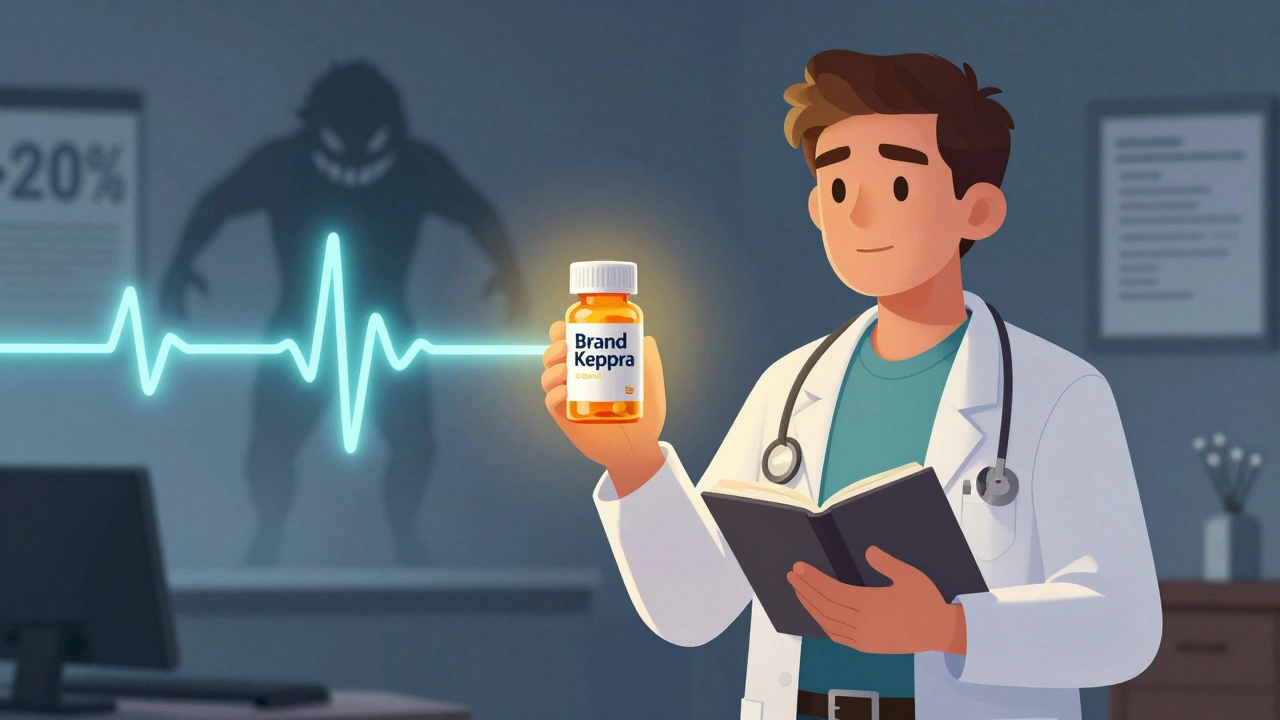
Switching from a brand-name medication to a generic might sound like a simple cost-saving move - but for some people, it’s not just a change in packaging. It’s a change in how their body responds. If you’ve noticed your symptoms returning, your energy dropping, or side effects popping up after your pharmacy switched your prescription, you’re not imagining it. And you’re not alone. Thousands of patients report real differences when they switch from brand to generic, especially with medications that need to stay in a tight range in the body.
Why Some People Can’t Switch to Generics
The FDA says generics must be bioequivalent to brand-name drugs. That means they’re supposed to work the same way. And for most people, they do. But there’s a catch: the FDA allows a 20% variation in how much of the active ingredient gets absorbed - from 80% to 125% of the brand’s level. For drugs like warfarin, levothyroxine, or seizure medications, even a small shift can mean the difference between control and crisis. Take levothyroxine, the thyroid hormone replacement. A 2021 study in Neurology found that patients who switched from brand to generic seizure drugs had a 23% higher chance of having a seizure. For people on warfarin, switching between generic manufacturers led to a 17% spike in emergency room visits because their blood clotting levels became unstable. These aren’t rare cases. They’re documented patterns. Then there’s the issue of inactive ingredients. Generics use different fillers, dyes, or preservatives. If you’re allergic to lactose, gluten, or a specific dye like FD&C Red No. 40, you might react to the generic version - even though the active drug is the same. About 7% of patients report allergic or intolerant reactions to these non-active ingredients, according to the Journal of Allergy and Clinical Immunology.What to Say to Your Doctor - And How to Say It
Talking to your doctor about staying on brand isn’t about being difficult. It’s about being specific. Vague statements like “I don’t like the generic” won’t cut it. Doctors hear that all the time. What works? Evidence. Start by writing down what happened. Not just “I felt worse.” But:- “I switched to the generic on March 15. By March 22, my heart started racing and I couldn’t sleep. My TSH level jumped from 1.8 to 5.2.”
- “After switching from brand Keppra to generic, I had three seizures in two months. I hadn’t had one in five years.”
- “The generic made me nauseous every day. The brand never did.”
- Situation: “I was switched to a generic version of my medication last month.”
- Background: “I’ve been on the brand for three years with no issues.”
- Assessment: “Since the switch, my symptoms returned and my lab values changed.”
- Recommendation: “Can we go back to the brand? I’d like to try it for another month and retest.”
Insurance Is the Real Hurdle - Here’s How to Navigate It
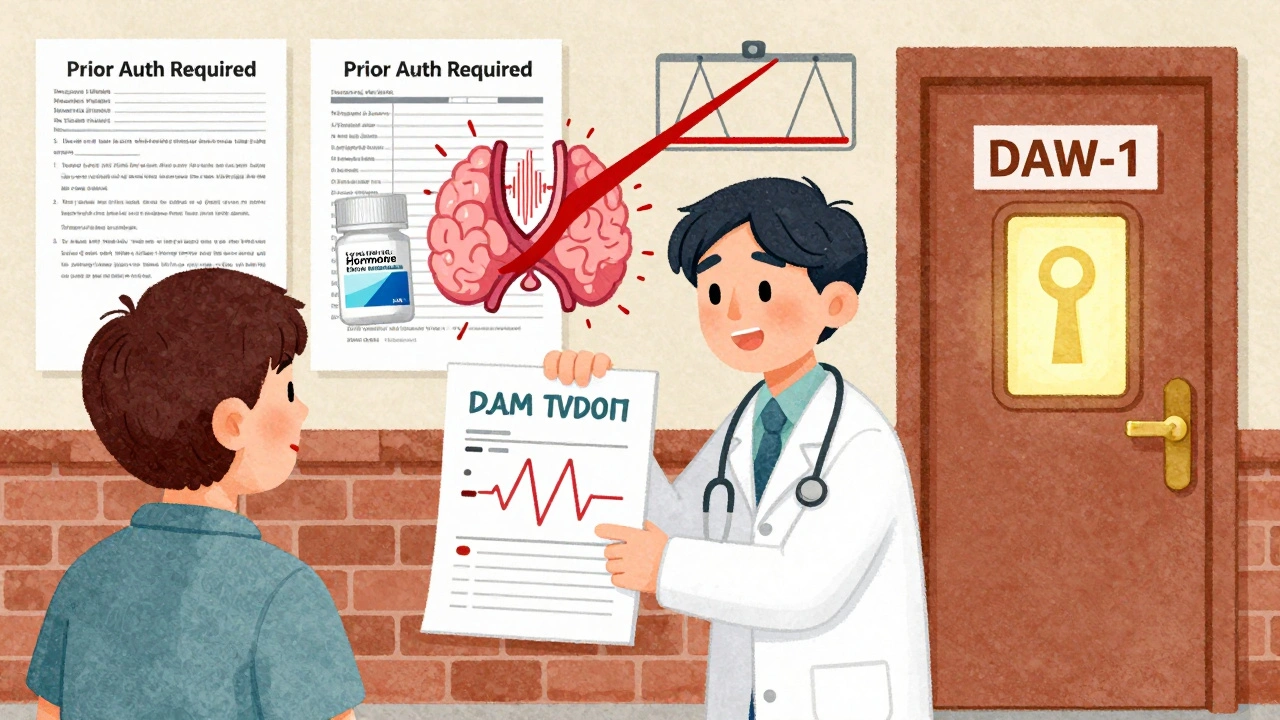
Even if your doctor agrees, your insurance might not. Eighty-two percent of commercial health plans require you to try the generic first. If you want to stay on brand, you’ll need prior authorization. Your doctor will have to fill out paperwork proving medical necessity. You can make this easier by giving them:- Proof of previous generic failure (lab results, pharmacy records)
- A list of inactive ingredients in the generic that you reacted to
- The FDA’s Orange Book code for your drug (search Drugs@FDA for your brand name - look for the “Therapeutic Equivalence” rating)
What Your Pharmacist Can Do - And What They Won’t Tell You
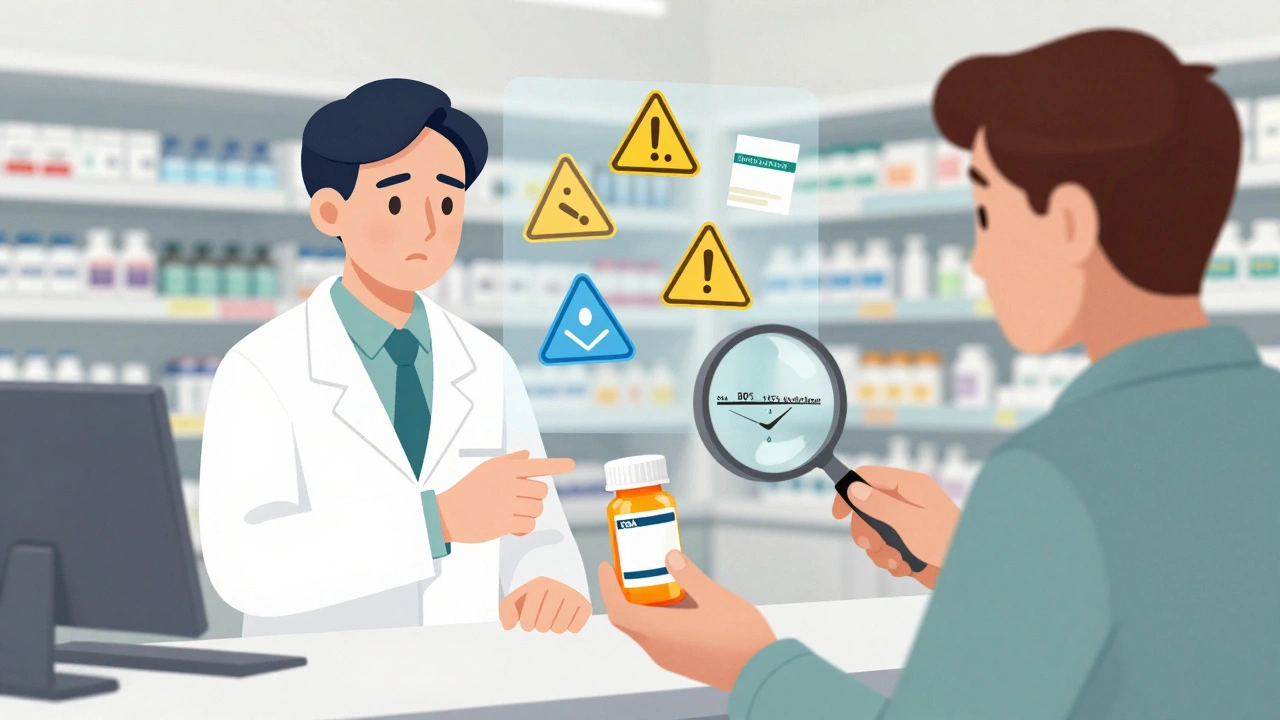
Pharmacists are trained to substitute generics unless told not to. In 47 states, they can switch your medication without asking you. Only 12 states require your consent. But here’s something most patients don’t know: pharmacists see the same patterns you do. A Reddit survey of pharmacists found 63% have noticed real differences in patient response to generics - especially with psychiatric meds, thyroid drugs, and epilepsy treatments. Don’t be afraid to ask your pharmacist: “Is this the same generic I was on before?” or “What’s the manufacturer?” Some generics are made by different companies, and switching between them can cause issues too. Bring your old pill bottle to your appointment. Show your doctor the name on the label. That’s proof you’ve been on a specific version - and it worked.When It’s Okay to Switch - And When It’s Not
Not every drug needs to stay brand. For antibiotics, statins, or blood pressure meds, generics work just fine for nearly everyone. The problem is with drugs that have a narrow therapeutic index - where the difference between a therapeutic dose and a toxic one is small. These are the drugs where staying on brand matters most:- Levothyroxine (for thyroid)
- Warfarin (blood thinner)
- Phenytoin, carbamazepine, lamotrigine (anti-seizure)
- Cyclosporine, tacrolimus (organ transplant meds)
- Lithium (for bipolar disorder)
- Some antidepressants and antipsychotics
What’s Changing in 2025 - And What It Means for You
The FDA is stepping up inspections of generic drug factories. In 2023, 22% of foreign facilities got warning letters - up from 15% in 2022. That means quality control is under more scrutiny. The CREATES Act, now active in 2024, is making it harder for brand companies to block generic access. But that doesn’t mean generics are perfect. The FDA still allows a 20% variation in absorption - and for some patients, that’s too much. Meanwhile, biologics (complex drugs like Humira or Enbrel) don’t have true generics. They have biosimilars, which are only 90% similar. That’s a whole different conversation. The bottom line? Your body is your best indicator. If you feel different on a generic - even if it’s “supposed” to be the same - trust that. Document it. Bring it to your doctor. And don’t let cost-cutting policies override your health.Can my pharmacist switch my brand medication to a generic without telling me?
In 47 U.S. states, pharmacists can substitute a generic for a brand-name drug without notifying you or getting your doctor’s permission. Only 12 states require patient consent. To prevent this, ask your doctor to write "Dispense as Written" (DAW-1) on your prescription. You can also request the brand directly from your pharmacy and ask them to check your insurance’s prior authorization rules.
Why do some people have problems with generics but others don’t?
Everyone’s body reacts differently. People with conditions that require very precise drug levels - like thyroid disease, epilepsy, or blood thinning - are more sensitive to small changes in absorption. Also, if you’re allergic to certain inactive ingredients (like lactose, gluten, or artificial dyes) in a specific generic, you’ll have a reaction even if the active ingredient is identical. Genetics, metabolism, and overall health play a role too.
How do I find out if my medication has a generic version?
Go to the FDA’s Drugs@FDA database (search by brand name). Look for the "Therapeutic Equivalence" rating. If it says "AB," it’s considered bioequivalent. If it says "BN" or "BX," it’s not rated as equivalent - meaning switching could be risky. You can also ask your pharmacist to pull up the Orange Book code for your drug.
What if my doctor says the generic is fine but I still feel off?
Keep tracking your symptoms. Write down when you started the generic, what changed, and how you felt day by day. Bring lab results if you have them. Return to your doctor with this data. If they still dismiss you, ask for a referral to a specialist - like an endocrinologist or neurologist - who’s more familiar with narrow therapeutic index drugs. Your experience matters, even if it’s not yet reflected in large studies.
Is it worth fighting my insurance to stay on brand?
If your condition is serious and you’ve had a bad reaction to generics, yes. Appeals for brand-name drugs are approved 72% of the time when you provide clear clinical documentation. It takes effort - gathering records, writing notes, calling your insurer - but the average time investment is only 2.7 hours. For many, that’s less than the time lost dealing with a seizure, hospital visit, or uncontrolled symptoms. If your health is at stake, it’s worth it.
Next Steps: What to Do Today
- Check your last prescription - is it the brand or generic? If it’s generic and you’ve felt worse, write down exactly how.
- Look up your drug on Drugs@FDA to see its therapeutic equivalence rating.
- Call your pharmacy and ask what manufacturer’s generic you’re getting. Write it down.
- Before your next appointment, prepare a one-page summary: what happened, when, and what you want.
- Ask your doctor to write DAW-1 on your next prescription.
Makenzie Keely
December 2, 2025 AT 15:33Wow-this is one of the most important posts I’ve read all year. I’ve been on levothyroxine for 12 years, and switching generics nearly sent me into cardiac arrest. My TSH went from 1.9 to 6.4 in three weeks. I brought lab results, a symptom journal, and even the pill bottle from my original brand to my endocrinologist. They approved the brand with DAW-1 on the first try. Don’t let anyone tell you it’s ‘all in your head.’ Your body knows. Document everything. Fight for yourself.
Vincent Soldja
December 3, 2025 AT 23:16Generics work fine for most people. If you can’t tolerate them, maybe you’re just not compliant.
Katherine Gianelli
December 4, 2025 AT 04:55I’m a nurse and I’ve seen this over and over-patients on warfarin switching generics and ending up in the ER with INRs off the charts. One lady had a brain bleed because her pharmacy switched her without telling her. She didn’t even know the pill looked different. Pharmacists aren’t required to warn you in most states. That’s terrifying. Please, if you’re on a narrow-therapeutic-index med-ask for DAW-1. Save your life. Seriously.
parth pandya
December 5, 2025 AT 12:25i was on generic cyplosporine for my kidney transplant and i got sick for weeks no one belived me till i showed the lab results and the batch number was different from my brand one. now my doc always writes daw-1. dont trust the system. trust your body.
Joykrishna Banerjee
December 7, 2025 AT 07:18How quaint. You're all just whining because Big Pharma doesn't want you to save $10/month. The FDA has rigorous standards. Your anecdotal 'symptom journals' are statistically meaningless. If you're having issues, it's likely non-adherence, poor diet, or your neurotic personality projecting side effects. Also, emoticons are for children. 😒
Ignacio Pacheco
December 9, 2025 AT 03:53So let me get this straight-your body is a finely tuned instrument that detects 0.3% variation in inactive fillers, but you can’t tell the difference between a $2 generic and a $120 brand when it comes to your Netflix subscription? 🤔
Kidar Saleh
December 11, 2025 AT 01:22I’m from London. We don’t have this problem here. The NHS doesn’t allow substitution without consent. We have strict batch tracking, and pharmacists consult with GPs before switching. It’s not about cost-it’s about safety. The U.S. system is broken. You’re being treated like a number, not a human. This post should be mandatory reading for every medical student.
Chloe Madison
December 11, 2025 AT 20:35Thank you for this. I was terrified to speak up when I started having panic attacks after switching to generic lamotrigine. I thought I was being dramatic. I wrote down every symptom, brought my old bottle, and printed the FDA’s therapeutic equivalence page. My psychiatrist said, ‘I’ve never seen a patient this consistent with their data.’ They approved the brand immediately. You are not overreacting. You are being smart. Keep going.
Francine Phillips
December 13, 2025 AT 08:00I switched to generic and my seizures came back. Doctor said it was stress. I went to another doctor. They checked my levels. It was the generic. Now I get the brand. Don't let them gaslight you. Your life matters more than their paperwork.