
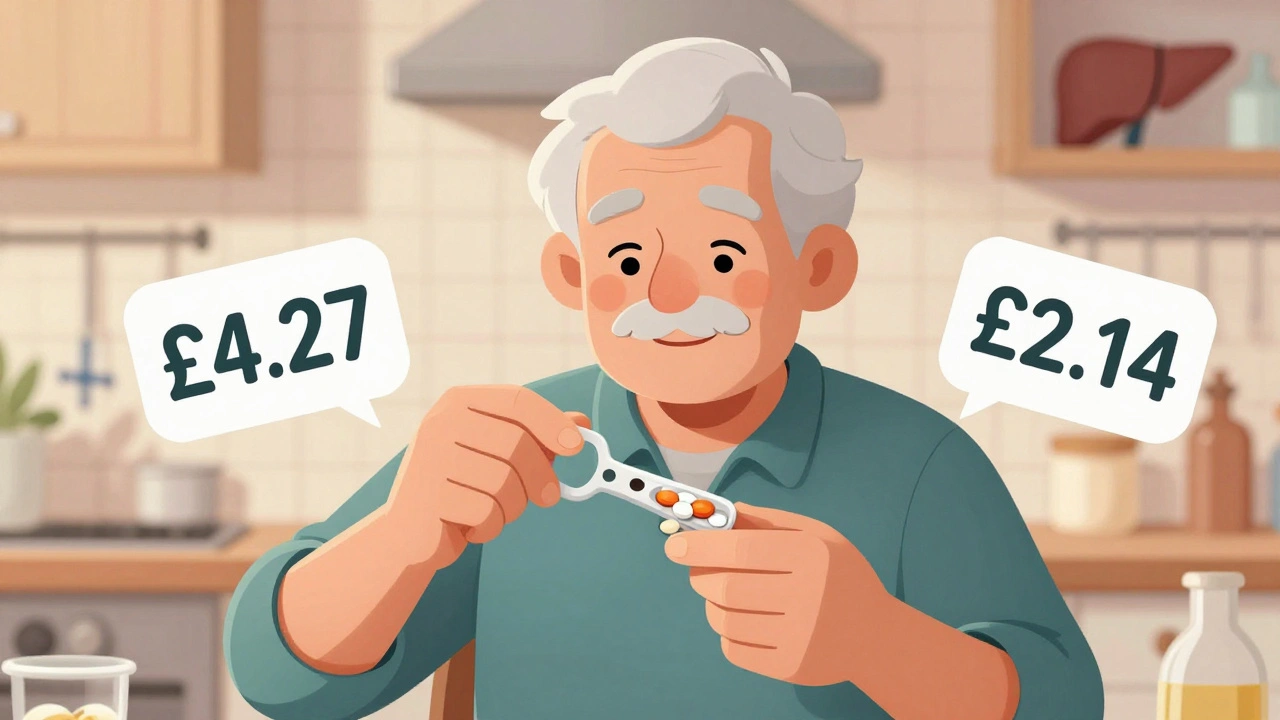
Many people in the UK and beyond are turning to pill splitting to cut down on prescription drug costs. It sounds simple: buy a higher-dose tablet, split it in half, and get two doses for the price of one. But this isn’t just a hack-it’s a medical decision with real risks and real savings. If done wrong, it can lead to underdosing, overdosing, or even hospitalization. If done right, it can save hundreds a year on blood pressure pills, cholesterol meds, or thyroid medication. The key? Knowing which pills you can split, how to split them, and when to avoid it entirely.
Why Pill Splitting Saves Money
Pharmaceutical companies often price higher-dose pills at the same cost-or even less-than two lower-dose ones. For example, a 40mg atorvastatin tablet might cost £3.50, while two 20mg tablets cost £5.60. Splitting the 40mg tablet saves you nearly 40%. Same with lisinopril: a 20mg tablet costs £4, but two 10mg tablets cost £4.50. That’s £50+ saved per month on just one medication. According to a 2022 Kaiser Family Foundation analysis, nearly 15% of Medicare beneficiaries in the US use pill splitting to save money. While UK data isn’t as detailed, similar patterns exist here. Many people on fixed incomes, especially older adults, rely on this method. It’s not about being cheap-it’s about staying alive. When a £120 monthly prescription is unaffordable, splitting becomes a survival tactic.Not All Pills Can Be Split-Here’s How to Tell
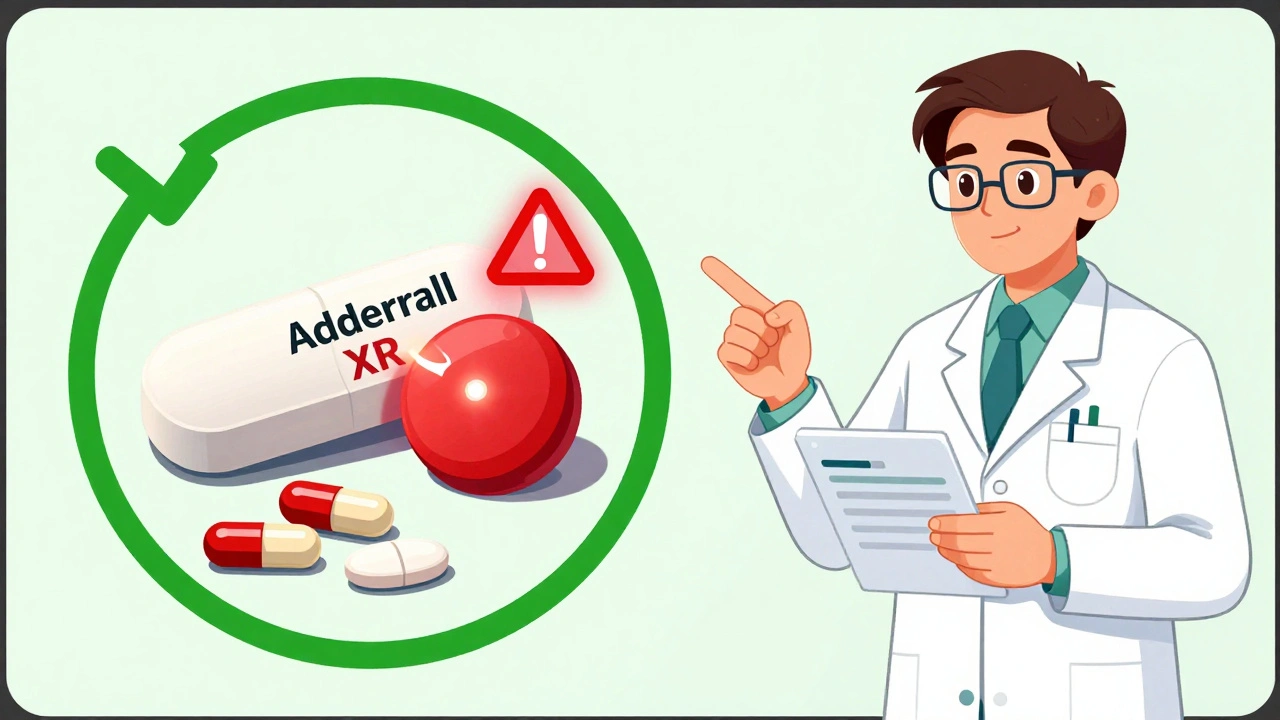
This is where most people go wrong. You can’t just split any pill. Some medications are designed to release slowly over hours. Splitting them destroys that system, causing a dangerous spike in drug levels. Never split:- Extended-release or time-release pills (like metformin ER, Adderall XR, or OxyContin)
- Enteric-coated tablets (omeprazole, aspirin EC)-these have a shell that dissolves in the intestine, not the stomach
- Capsules or gel caps
- Medications with a narrow therapeutic index-tiny changes in dose can be deadly. This includes warfarin, digoxin, levothyroxine (Synthroid), and tacrolimus
The Right Way to Split a Pill
If your doctor or pharmacist says it’s okay, here’s how to do it right:- Use a dedicated pill splitter-never a knife, scissors, or your teeth. These tools crush or crumble pills, leading to uneven doses.
- Buy a simple plastic splitter with a V-shaped holder and a retractable blade. They cost £3-£10 at Boots, Lloyds, or Amazon.
- Split the pill right before you take it. Don’t pre-split and store halves. Moisture and air degrade the medication. Studies show split tablets lose potency after 24-48 hours.
- Inspect both halves. If one side is crumbling, uneven, or has powder residue, throw it out. Take only the clean half.
- Wash your hands and the splitter after each use. Contamination matters.
Real-World Cost Savings (and When It Doesn’t Work)
Let’s look at real numbers:- Atorvastatin 40mg: £4.27 per tablet → split into two 20mg doses = £2.14 per dose. Two 20mg tablets cost £3.48. Savings: 38%
- Lisinopril 20mg: £4.00 per tablet → split = £2.00 per dose. Two 10mg tablets cost £4.50. Savings: 56%
- Sertraline 100mg: £0.12 per tablet → split = £0.06 per 50mg dose. Two 50mg tablets cost £0.16. Savings: 63%
- Levothyroxine 100mcg: £1.10 per tablet. But splitting it? Don’t even think about it. Even a 5% dose change can throw your thyroid into chaos. This is one of the most dangerous pills to split.
What Experts Say
Dr. Michael Miller from Cleveland Clinic puts it bluntly: “A score line might indicate a pill can be split, but it doesn’t mean that you should.” The Institute for Safe Medication Practices ran a study where 94 people split 25mg hydrochlorothiazide tablets. 41% of the halves were off by more than 10%. 12% were off by over 20%. That’s not a typo. One person got a dose that was 20% too high. Another got 20% too low. Both could have serious consequences. The American Society of Health-System Pharmacists says pill splitting should be a last resort. Before you split, ask: “Is there a patient assistance program? Can I switch to a generic? Is there a discount card?” Many UK pharmacies offer discount schemes. Some manufacturers give free samples. These are safer than splitting.Common Mistakes and Real Stories
People share their experiences online-and the results are mixed. One Reddit user, ‘MedSaver87’, split 40mg simvastatin with a £5 splitter and saved £287 a month. No issues. Another, ‘AnxiousPatient22’, split a time-release amlodipine tablet because they couldn’t afford the 5mg version. They ended up in hospital with a dangerously low heart rate. A GoodRx survey found 63% of people successfully split statins with proper tools. But 28% had crumbling or uneven halves. PharmacyTimes.com reports that 41% of people who split without professional advice noticed their meds weren’t working as well. And then there’s Synthroid. On r/Thyroid, someone wrote: “Split my Synthroid by mistake and had to get emergency blood work when my TSH went crazy.” That’s not a warning. That’s a red flag.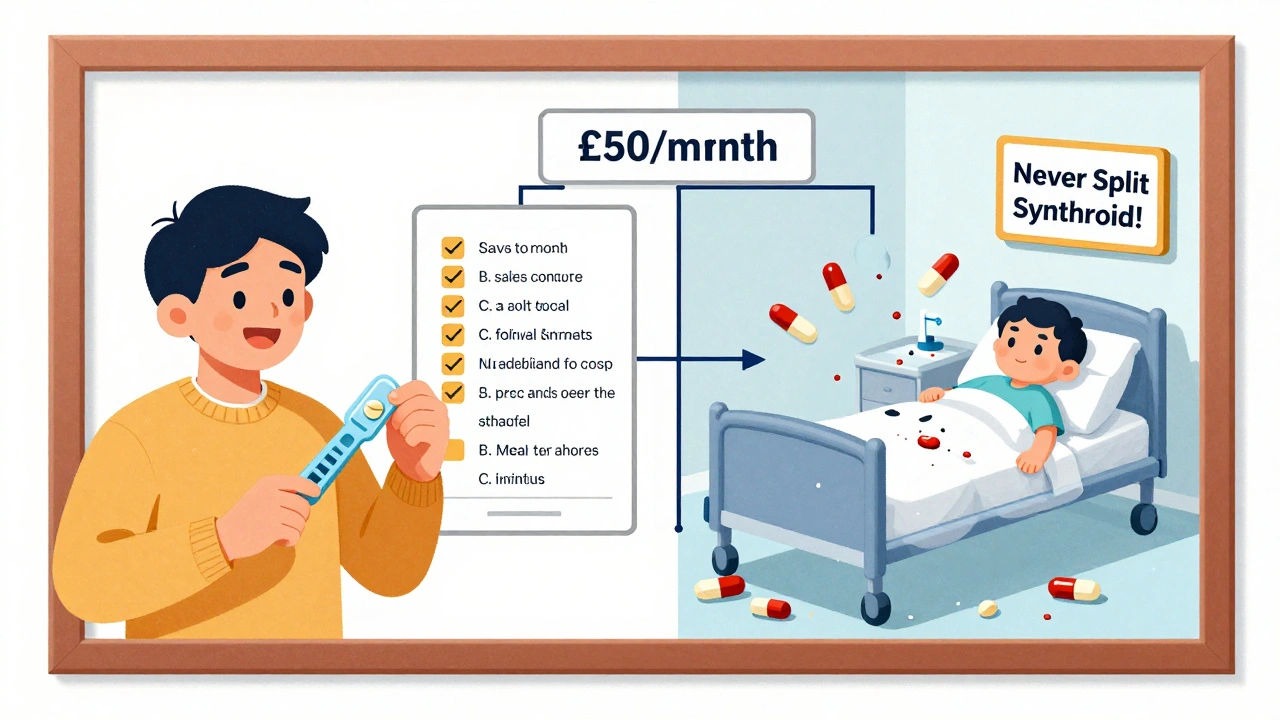
When to Talk to Your Doctor or Pharmacist
This isn’t something to decide alone. Always ask:- “Is this medication approved for splitting?”
- “Can you check the package insert?”
- “Is there a lower-dose version available?”
- “Are there cheaper alternatives or patient programs?”
Alternatives to Pill Splitting
Before you grab that splitter, consider these safer options:- Pharmacy discount cards: Services like SingleCare or HealthSaver can cut costs by 30-60% on many prescriptions.
- Manufacturer patient assistance programs: Many drug companies offer free or low-cost meds to people who qualify based on income.
- Switching to generics: A generic version of your drug might be dramatically cheaper.
- Buying in bulk: Some pharmacies offer discounts for 90-day supplies.
Final Checklist Before You Split
Use this before you split any pill:- ✅ Is the pill scored? (Not enough-keep reading)
- ✅ Does the package insert say it’s safe to split?
- ✅ Is it NOT extended-release, enteric-coated, or a narrow-therapeutic-index drug?
- ✅ Do you have a dedicated pill splitter?
- ✅ Are you splitting it right before you take it?
- ✅ Have you talked to your pharmacist or doctor?
Pill splitting can be a smart, life-changing tool-if used correctly. But it’s not a DIY experiment. It’s a medical decision. Treat it like one.
Can I split any pill with a score line?
No. A score line only means the tablet was designed to be split during manufacturing-not that it’s safe for you to split at home. Always check the package insert. Medications like extended-release tablets, enteric-coated pills, and those with narrow therapeutic indexes (like warfarin or levothyroxine) should never be split, even if they have a score line.
What’s the best tool to split pills?
A dedicated pill splitter with a V-shaped holder and a retractable blade is the only safe tool. These cost between £3 and £10 and are sold at most pharmacies like Boots and Lloyds. Never use a knife, scissors, or your teeth-they crush pills and lead to uneven doses. Studies show knife-splitting can result in dose variations of up to 72%.
Is it safe to split pills in advance?
No. Splitting pills ahead of time exposes them to air, moisture, and heat, which can degrade the medication. The FDA and clinical guidelines recommend splitting pills immediately before taking them. Split halves should be used within 24 hours, and never stored in humid places like the bathroom.
Which medications are most dangerous to split?
Medications with a narrow therapeutic index are the most dangerous. These include warfarin (blood thinner), digoxin (heart medication), levothyroxine (Synthroid), and tacrolimus (immunosuppressant). Even a 5-10% dose change can cause serious harm. Also avoid splitting extended-release, time-release, or enteric-coated pills-splitting them can release the full dose at once, leading to overdose.
How much can I save by splitting pills?
Savings vary by drug, but typically range from 25% to 50%. For example, splitting a 40mg atorvastatin tablet saves 38% compared to buying two 20mg tablets. Lisinopril 20mg split saves 56%. But not all drugs save money-some 100mg pills cost the same as two 50mg ones. Always check current prices on GoodRx or your pharmacy’s pricing tool before splitting.
Are there safer alternatives to pill splitting?
Yes. Ask your pharmacist about patient assistance programs from drug manufacturers-they often offer free or low-cost meds. Discount cards like SingleCare can reduce prices by 30-60%. The NHS Prescription Prepayment Certificate (PPC) lets you pay a flat fee for unlimited prescriptions over 3 or 12 months. Switching to generics or buying in 90-day supplies can also cut costs without the risks of splitting.
Aidan Stacey
December 12, 2025 AT 04:47Look, I get it-pills are expensive, and people are desperate. But splitting meds isn’t some DIY life hack, it’s playing Russian roulette with your heart and thyroid. I’ve seen folks do it and end up in the ER because they thought ‘it’s just a score line.’ Please, just talk to your pharmacist. They’ve got tools, programs, and sometimes free samples. You’re not being cheap-you’re being smart by asking for help.
Courtney Blake
December 13, 2025 AT 03:52Wow. So now we’re encouraging people to cut pills like they’re cutting coupons? 🤦♀️ Next they’ll be splitting insulin pens. This is why America’s healthcare system is a dumpster fire. If you can’t afford your meds, go to a clinic. Or move to Canada. At least there, they don’t make you become your own pharmacist.
Sylvia Frenzel
December 13, 2025 AT 06:34So let me get this straight-you’re telling me I can save 50% on my blood pressure meds by using a $5 plastic splitter… but I can’t split Synthroid because one tiny mistake could kill me? Cool. So I guess the real message here is: if you’re rich, you’re safe. If you’re poor, you’re a walking medical hazard. Thanks for the reassurance.
Paul Dixon
December 14, 2025 AT 23:55My grandma’s been splitting her lisinopril for 5 years with a little plastic splitter from Boots. Never had an issue. She checks the package insert, splits it right before she takes it, and never stores halves. She’s 78 and still walks 3 miles a day. It’s not magic-it’s just being careful. Not everyone’s gonna mess it up.
Jim Irish
December 15, 2025 AT 11:57Pill splitting can be a valid cost-saving strategy under medical supervision. However, the risks associated with improper use are significant. Always consult a pharmacist before proceeding. Generic alternatives and prescription assistance programs are safer first steps. The NHS PPC is an underutilized resource. Prioritize safety over savings.
Mia Kingsley
December 16, 2025 AT 15:29wait so u can split sertraline but not synthroid? but synthroid is just a hormone?? like why is that more dangerous than splitting a mood med?? oh wait i forgot u need to be a doctor to know this 😂
Katherine Liu-Bevan
December 18, 2025 AT 00:25Proper pill splitting requires three things: a verified safe medication, a dedicated splitter, and splitting immediately before ingestion. Studies show that even with perfect technique, variability can reach 15%. That’s why it’s not recommended as a first option. If you’re considering this, your first call should be to your pharmacy-they may have a free or discounted program you didn’t know about. Don’t risk your health for $50 a month.
Jean Claude de La Ronde
December 19, 2025 AT 08:18So we’re turning medicine into a thrift store bargain bin? Brilliant. Next up: splitting your antidepressants because ‘it’s just a score line’ and then blaming Big Pharma when you start hallucinating your cat is giving you life advice. 🤡 At least in Canada, we don’t have to become amateur pharmacists just to breathe.
Eddie Bennett
December 20, 2025 AT 23:36My cousin split his amlodipine because he couldn’t afford the 5mg. Ended up with a heart rate of 38. Took him 3 months to recover. He’s fine now but says he’ll never do it again. I know people do it to survive. But please-don’t be that guy. Ask your pharmacist. They’ve seen it all. And they won’t judge you.
john damon
December 21, 2025 AT 16:19Just use a pill splitter 😎 and you’re golden 🤙 no cap. also why are you even reading this if you’re scared of splitting a pill? 🤷♂️
matthew dendle
December 23, 2025 AT 13:42lol so if you split a pill you’re a dumbass but if you buy 1000 pills from mexico you’re a hustler? this whole post is just fearmongering wrapped in a nice bow. i split my meds with a knife and still run marathons. the system is rigged and you know it