
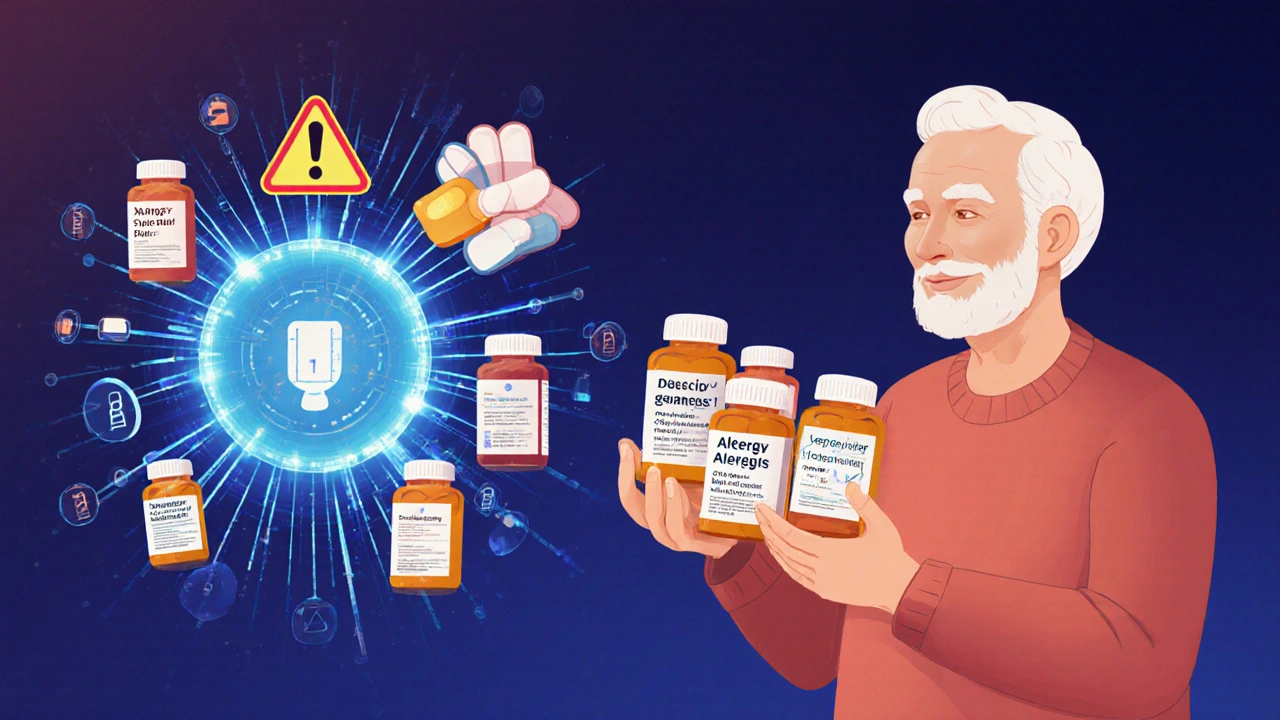
Managing multiple pharmacies and prescribers isn’t just about keeping inventory stocked or prescriptions filled. When you’re handling care for seniors who take 5, 10, or even 15 different medications across several locations, one mistake can lead to a hospital visit-or worse. The real danger isn’t the number of pharmacies or doctors involved. It’s the gaps between them. A prescription sent from one prescriber might not sync with what another pharmacy knows. A drug name might be typed differently in one system than another. A patient’s allergy might be missed because it’s stored in a different database. These aren’t hypothetical risks. They happen every day.
Why Centralized Systems Are Non-Negotiable
Without a single source of truth, pharmacies operate in silos. That’s dangerous. A senior might get the same blood thinner from two different pharmacies because neither system knows the other filled it. Or a pharmacist might miss a dangerous interaction because the prescriber’s notes aren’t visible across locations. According to the American Journal of Health-System Pharmacy, 17% of medication errors in multi-pharmacy chains come from inconsistent drug naming. One pharmacy calls it “warfarin,” another calls it “Coumadin.” The system doesn’t know they’re the same. That’s how mistakes happen. Centralized pharmacy management software fixes this by creating a universal drug file. Every medication-no matter which pharmacy fills it-uses the same NDC code, same name, same dosage info. EnterpriseRx by McKesson and PrimeRx by PioneerRX are two industry-standard platforms that do this. They sync daily, sometimes in real time, so if a prescription is filled at Pharmacy A, Pharmacy B instantly knows. No more double-dosing. No more hidden interactions.How These Systems Keep Prescribers in Sync
It’s not enough to connect pharmacies. You need to connect prescribers too. Seniors often see multiple doctors: a cardiologist, a neurologist, a primary care provider, maybe a pain specialist. Each one writes prescriptions. Without a unified system, those prescriptions fly in different directions. One doctor might prescribe an anticoagulant. Another prescribes an NSAID. Together, they raise bleeding risk. But if the pharmacist can’t see both, they can’t warn the patient. Modern systems like EnterpriseRx now integrate directly with major EHR platforms like Epic and Cerner. That means when a prescriber sends a new script, the pharmacy system pulls in the full clinical context-diagnoses, lab results, allergies, previous meds. It’s not just a list of pills. It’s the full story. And if a prescriber changes a dose or cancels a script, the change updates across all connected pharmacies automatically. No more phone calls. No more faxes. No more waiting days for a clarification.Inventory Control Across Locations
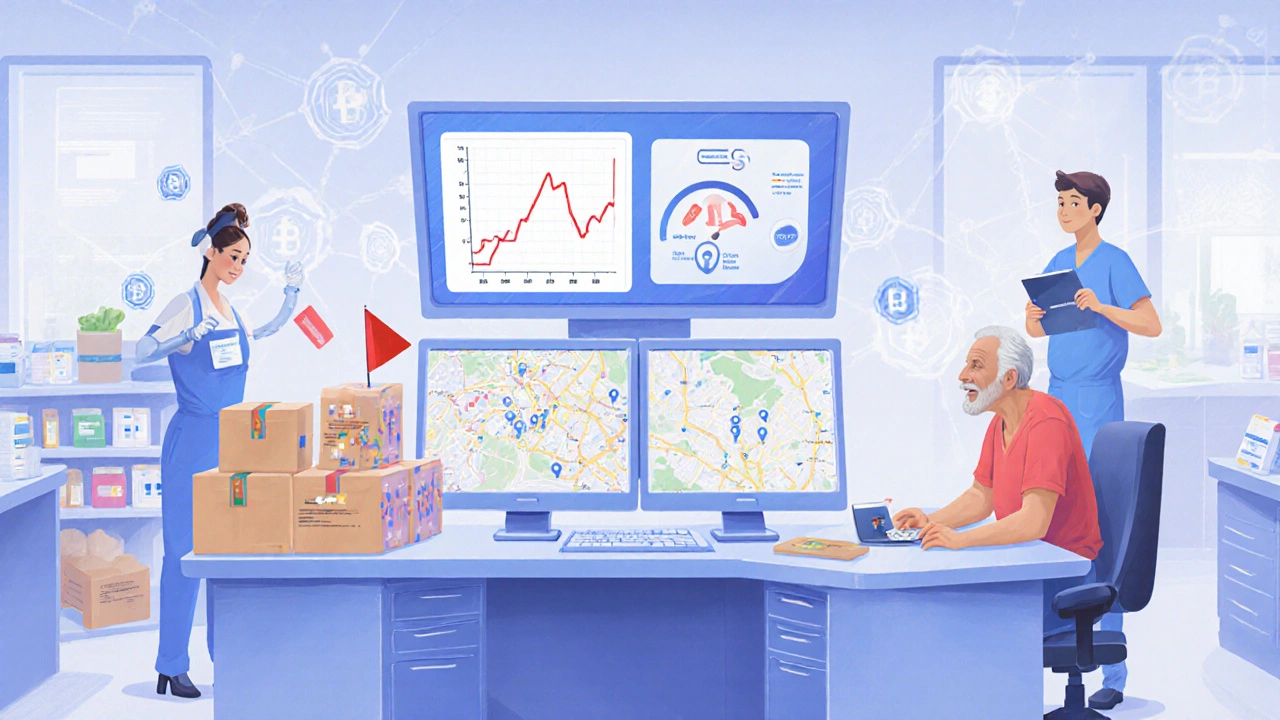
Running multiple pharmacies means juggling stock. One location runs out of a common senior medication like levothyroxine. Another has three months’ supply sitting on the shelf. Without a central inventory system, you’re guessing. You’re wasting money. And worse-you’re risking patient safety if someone can’t get their meds on time. Systems like Datarithm and PrimeRx Pro use automated balancing. They track usage patterns across all locations. If a certain drug is running low at three stores but overstocked at two others, the system recommends transfers before anyone runs out. It even suggests returns to wholesalers to avoid expired stock. One chain using this feature cut inventory-related errors by 28%. That’s not just cost savings. That’s lives saved. And it’s not just about drugs. Controlled substances like opioids need tight tracking. Systems like DocStation use FIDO2 security keys for central authorization of house accounts. That means no one at a local pharmacy can issue a controlled substance without approval from headquarters. Unauthorized access dropped by 94% in chains that adopted this.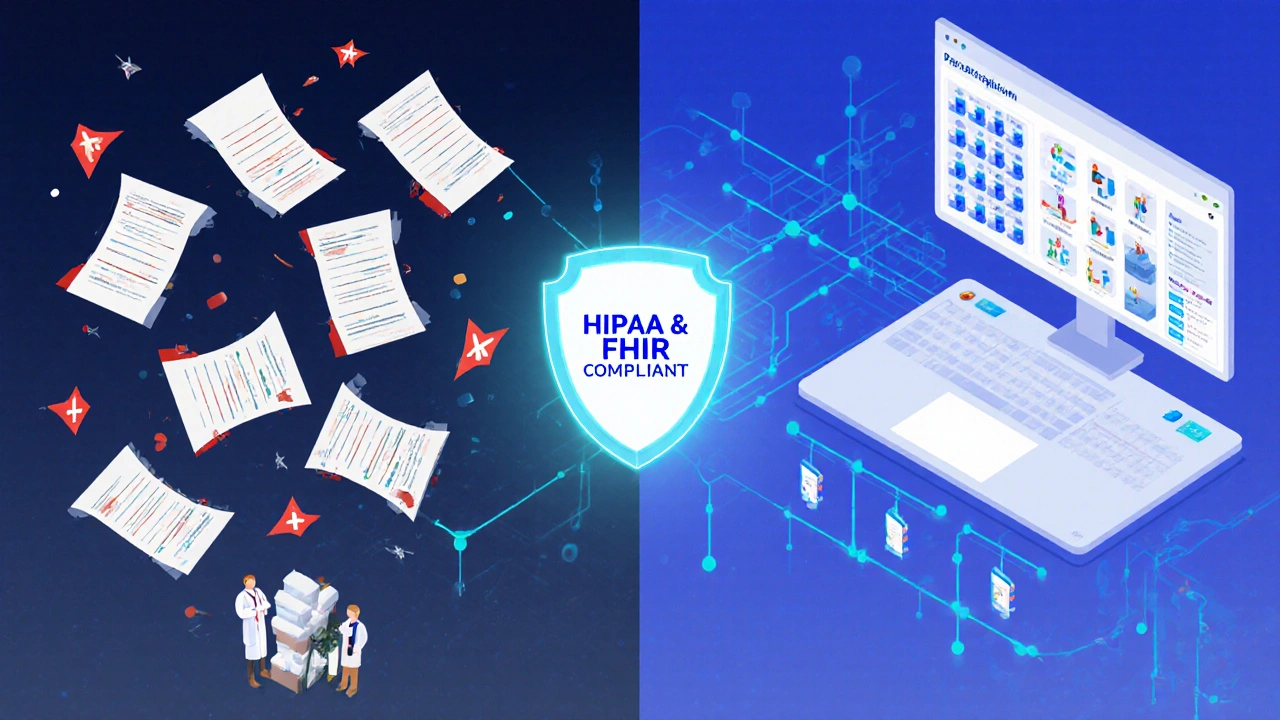
Security and Compliance Are Built In
HIPAA isn’t optional. Neither is Medicare Part D compliance. CMS now requires multi-location pharmacies to prove they can track prescription errors across all sites. If you can’t show audit trails, you risk losing your Medicare contract. All major systems use AES-256 encryption for data between locations. Patient records are never stored locally unless absolutely necessary. Even then, access is logged and monitored. Watchdog features-like Datascan’s AI Watchdog 2.0-analyze prescription patterns across all pharmacies. If one location suddenly starts filling 50% more oxycodone than others, the system flags it. In beta testing, it caught potential diversion with 92.4% accuracy. Audit trails are automatic. Every login, every refill, every transfer is recorded. You can pull a report showing who accessed a patient’s file, when, and why. That’s not just for regulators. It’s for accountability.Choosing the Right System for Your Chain
Not all systems are built the same. If you run 10+ pharmacies, you need more than just basic software. Here’s what to look for:- Unlimited locations: Some systems cap you at 10. If you’re growing, that’s a dead end.
- Real-time sync: Daily sync is okay. Real-time is better-especially for controlled substances.
- EHR integration: Can it talk to Epic, Cerner, or other systems your prescribers use?
- AI safety tools: Look for pattern recognition that flags duplicate therapy or dangerous combinations.
- Cloud-based: On-premise servers are outdated. Cloud means uptime above 99.99% and remote access from any device.
Implementation: What No One Tells You
Buying the software is easy. Getting it right is hard. Most chains underestimate the time and training needed. Deployment takes 8 to 12 weeks for a 5- to 10-location chain. Data migration is the biggest headache. In 27% of cases, prescription histories get mixed up during the switch. That means someone might lose 14.7% of their active patient records unless you manually verify them. Training matters. Technicians need 16 hours. Pharmacists need 24. Chains that use vendor-certified trainers see 12% higher adoption than those training internally. Don’t rush this. If staff don’t trust the system, they’ll go back to paper. Use the “hub-and-spoke” model. Let one central location manage drug files, pricing, and inventory. Let local pharmacists keep clinical control. That’s what the University of California study found: it cut medication errors by 38% compared to fully centralized decision-making. Seniors need local expertise. The system should support it-not replace it.The Future Is Here-and It’s Mandatory
By 2027, the Pharmacy Quality Alliance predicts that any chain with three or more pharmacies will be required to use a centralized system. Why? Because regulatory requirements are growing 22% a year. CMS is pushing for FHIR API compliance by 2025. That means systems must share data in a standard digital format. Right now, 63% of existing software can’t do it without a $200,000+ upgrade. AI is getting smarter. Blockchain trials are reducing prescription fraud by 67%. Real-time prescriber communication is cutting communication-related errors by 18%. The tools exist. The data proves they work. The question isn’t whether you can afford to upgrade. It’s whether you can afford not to.Can I manage multiple pharmacies without a centralized system?
Technically, yes-but it’s risky. Without a central system, you’re relying on manual communication, faxed records, and scattered databases. Medication errors increase by 1.3% in multi-location setups without standardized drug files. For seniors on multiple medications, that’s a dangerous gamble. Regulatory bodies like CMS now require cross-location error tracking for Medicare compliance. If you can’t prove you’re monitoring for errors, you risk losing your contract.
What’s the biggest mistake pharmacies make when switching systems?
Underestimating data migration. Many chains assume their patient records will transfer cleanly. But prescription histories, allergies, and prior authorizations often get lost or duplicated. In 27% of cases, staff had to manually verify nearly 15% of active patient profiles after the switch. Always plan for a 4-6 week verification period after go-live.
How do I ensure prescribers actually use the integrated system?
Integration only works if prescribers send e-prescriptions through the connected EHR. Start by working with the top 5 prescribers in your area. Offer them training or a demo. Show them how it reduces their call volume from pharmacies asking for clarifications. Once they see fewer follow-up calls and fewer errors, they’ll adopt it. Most doctors don’t resist tech-they resist extra work. Make it easier for them.
Are cloud-based systems secure enough for patient data?
Yes-more secure than local servers. Leading pharmacy systems use AES-256 encryption, multi-factor authentication, and FIDO2 security keys. Data is never stored on local devices. Cloud providers like AWS and Azure have security teams that far exceed what any single pharmacy can afford. Local servers are more vulnerable to theft, hardware failure, or ransomware. The real risk is using outdated software that doesn’t meet HIPAA or FHIR standards.
Can small chains with only 3 pharmacies benefit from this?
Absolutely. Even 3 pharmacies create enough complexity to cause errors. A senior might get a new prescription at one location, then refill it at another without the first pharmacy knowing. That’s how duplicate therapy happens. Systems like PharmacyOne Chain Management start at $299 per location-affordable for small chains. And with CMS pushing for mandatory compliance by 2027, starting now gives you time to adapt without panic.
What should I do if my current system doesn’t integrate with EHRs?
Start planning an upgrade now. Systems without EHR integration are becoming obsolete. By 2025, CMS will require FHIR API compliance. If your software can’t meet that, you’ll face compliance penalties and lost Medicare revenue. Talk to vendors about migration paths. Ask for a timeline and cost estimate. Don’t wait until you’re forced to switch.
Katy Bell
November 23, 2025 AT 22:16Just saw a grandma in my neighborhood get hospitalized because two pharmacies didn't talk. One gave her warfarin, the other gave her Coumadin. She didn't even know they were the same thing. This post? It's not tech talk. It's life or death.
And no, paper logs don't cut it anymore.
Ragini Sharma
November 25, 2025 AT 11:01bro i just tried to get my nana’s meds synced across 2 pharms in delhi and it was a nightmare. one said ‘atenolol’ other said ‘tenormin’ and no one knew the other filled it. we spent 3 days on the phone. this system sounds like magic. but does it work in india? 😅
Javier Rain
November 26, 2025 AT 01:03Stop treating this like a software upgrade. This is a survival tool. If your pharmacy chain still uses fax machines to communicate with prescribers, you’re not running a business-you’re running a liability factory. The cost of one error? $50k in fines, a lawsuit, and a dead patient. The cost of the software? A rounding error.
Get it done. Now.
Laurie Sala
November 26, 2025 AT 06:53Why does no one ever talk about the staff? The tech is great, but what about the 68-year-old tech who’s been doing this since 1998 and just wants to finish her shift without learning another app? You install this system and suddenly she’s quitting because ‘the computer doesn’t understand my patients.’
And then you’re back to paper. Again. And someone dies. Again.
Why is no one talking about the humans?
shreyas yashas
November 27, 2025 AT 21:47in india, we don’t have epic or cerner. most docs still write on paper. but even here, a simple barcode scanner + cloud-based med list (like what some startups are building) can cut errors by half. you don’t need enterprise rx to start. you just need to stop trusting memory.
small steps. one pharmacy at a time.
Demi-Louise Brown
November 28, 2025 AT 17:53Centralized systems are not optional. They are the baseline of ethical pharmacy practice. When a senior is on fifteen medications, their life depends on precision-not goodwill or luck. If your system can’t guarantee that, you’re not a pharmacy. You’re a gamble.
Choose the tool that protects patients, not the one that saves you $50 a month.
Suresh Ramaiyan
November 30, 2025 AT 12:29It’s funny how we treat technology as the solution, but the real issue is fragmentation of care. We’ve built systems to track pills, but not to track people. The patient isn’t a list of prescriptions. They’re someone’s mother, someone’s neighbor, someone who forgets to take her pills because the bottle says ‘take with food’ but she hasn’t eaten since breakfast.
The system should remind her. Not just the pharmacy.
That’s the next frontier.
Henrik Stacke
December 2, 2025 AT 12:28As someone who’s worked in UK community pharmacy for 22 years, I can confirm: the US system you describe is lightyears ahead. Here, we still rely on GP fax machines and handwritten scripts. A patient’s allergy history is often scribbled on a sticky note. The idea of real-time sync? We dream about it.
But the principle is universal: silence between systems kills. Communication saves lives.
Bravo for calling this out.
Matthew Mahar
December 2, 2025 AT 21:31one thing no one mentions: what if your system goes down? i work at a chain that went offline for 14 hours last month. every pharmacist started writing scripts by hand. we had 3 near-misses. no one had the full med list. no one knew what was filled where.
cloud is great, but you need a backup plan that doesn’t involve paper and prayer.
Brandy Walley
December 3, 2025 AT 14:30yeah right. another tech bro selling snake oil. you think this software magically makes doctors stop prescribing 15 drugs to a 78-year-old? the problem isn’t the system. it’s the doctors who think ‘more is better.’ fix the prescribers, not the software.
also, FHIR API? sounds like a buzzword salad. i’ll believe it when i see it.
Katy Bell
December 3, 2025 AT 19:36Actually, the system helps with that too. If a doctor tries to prescribe an NSAID to someone already on warfarin, the system flags it in real time. And it sends a note to the prescriber: ‘Patient on anticoagulant. Bleeding risk elevated.’
It doesn’t stop bad prescribing-but it makes it harder to ignore.
And that’s enough to save lives.