
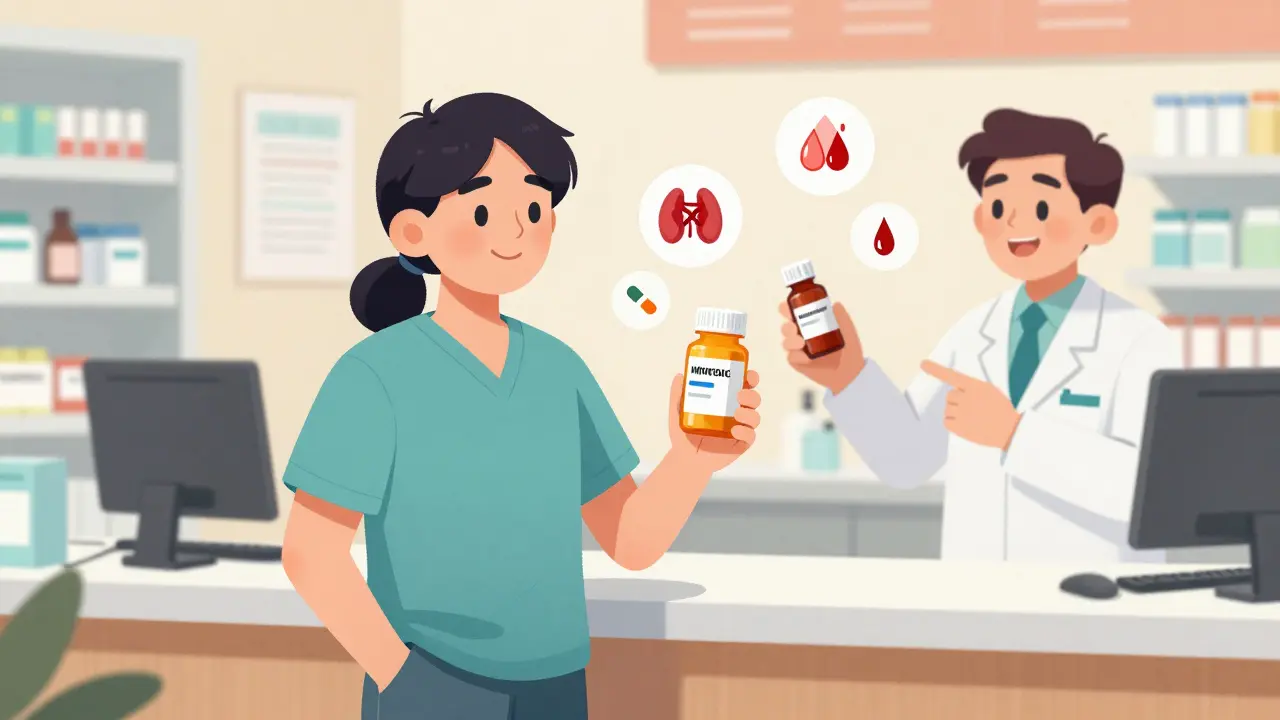
When your brand-name medication switches to a generic version, it’s not just a change on the prescription label-it’s a moment that needs your attention. You might not think twice about a pill looking different, but if you’re taking drugs for epilepsy, thyroid disease, or blood thinning, even small changes can matter. That’s why talking to your pharmacy before, during, and after a generic transition isn’t optional-it’s essential.
Why Generics Are Replacing Brand-Name Drugs
Generic drugs aren’t cheaper because they’re lower quality. They’re cheaper because they don’t need to repeat the 10- to 15-year development process that brand-name drugs go through. Once a patent expires, other manufacturers can make the same drug using the same active ingredient. The FDA requires these generics to match the brand in strength, dosage, and how quickly they work in your body. In fact, 90% of all prescriptions filled in the U.S. are now generics. And they’re saving patients and the healthcare system billions: $373 billion in 2023 alone.But here’s the catch: while generics are bioequivalent, they’re not always identical. The inactive ingredients-like dyes, fillers, or coatings-can vary. For most people, this doesn’t matter. But for those on medications with a narrow therapeutic index-like levothyroxine, warfarin, or antiepileptics-even slight differences in absorption can lead to problems.
What You Should Do Before the Switch
Don’t wait until your last bottle runs out. Start the conversation at least 30 days before your current supply ends. Here’s what to do:- Check your insurance plan. Many plans now require you to use the generic unless your doctor says otherwise. Some even block brand-name refills unless you go through a prior authorization process.
- Ask your pharmacist: “Will this generic be made by the same company as my brand?” Some manufacturers make both the brand and the generic (called authorized generics). These are often the closest match in how they work.
- Bring your full medication list to the pharmacy. Include dosages, why you take each one, and any side effects you’ve noticed. This helps the pharmacist spot potential interactions or red flags.
- Find out if your medication is one of the tricky ones. Drugs like levothyroxine, cyclosporine, or phenytoin have tight safety margins. If you’re on one of these, ask if your pharmacist recommends staying on the brand-or if they’ve seen issues with the generic version.
What Happens at the Pharmacy During the Transition
When your prescription is switched, your pharmacist doesn’t just fill it and hand it over. They follow a checklist:- Verify that the generic is covered by your insurance and that no prior authorization is needed.
- Check for any restrictions-some states or plans don’t allow automatic substitution for certain drugs.
- Review your medication history for past reactions or issues with generics.
- Explain the change to you in plain language: “This is the same active ingredient, but the pill looks different because it’s made by a different company.”
- Document any concerns you raise. If you say, “I felt dizzy after the last generic,” they’ll note it and alert your doctor if needed.
Thanks to a DEA rule updated in August 2023, you can now request electronic transfers of controlled substance prescriptions (like pain meds or ADHD drugs) directly between pharmacies-no doctor visit required. This makes switching pharmacies or filling at a new location much easier during a transition.
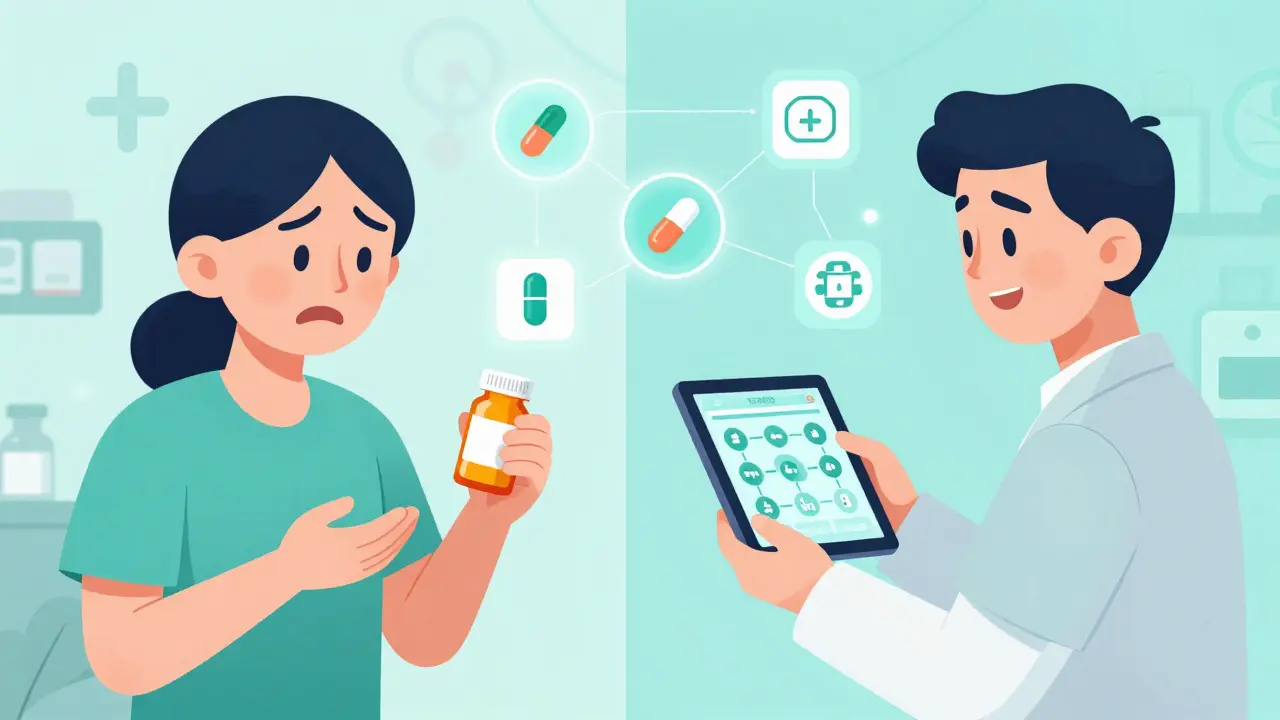
What to Watch For After the Switch
You might feel fine. Or you might notice something off. Here’s what to look out for in the first few weeks:- Changes in how you feel: Increased anxiety, fatigue, seizures, or mood swings. These aren’t normal side effects-they could signal a problem with absorption.
- Appearance changes: A pill that’s a different color, shape, or marking can cause confusion. If you’re unsure if it’s the right medicine, call the pharmacy. They can tell you what the generic should look like.
- Refill timing: Some generics have different refill schedules. Ask if you can get all your medications synchronized so you don’t run out unexpectedly.
A 2021 study in JAMA Internal Medicine found that 9.4% of patients on antiepileptic drugs had a seizure after switching to a generic, compared to 5.3% who stayed on brand. That’s not a huge number-but it’s enough to matter if you’re one of them.
How to Talk to Your Pharmacist
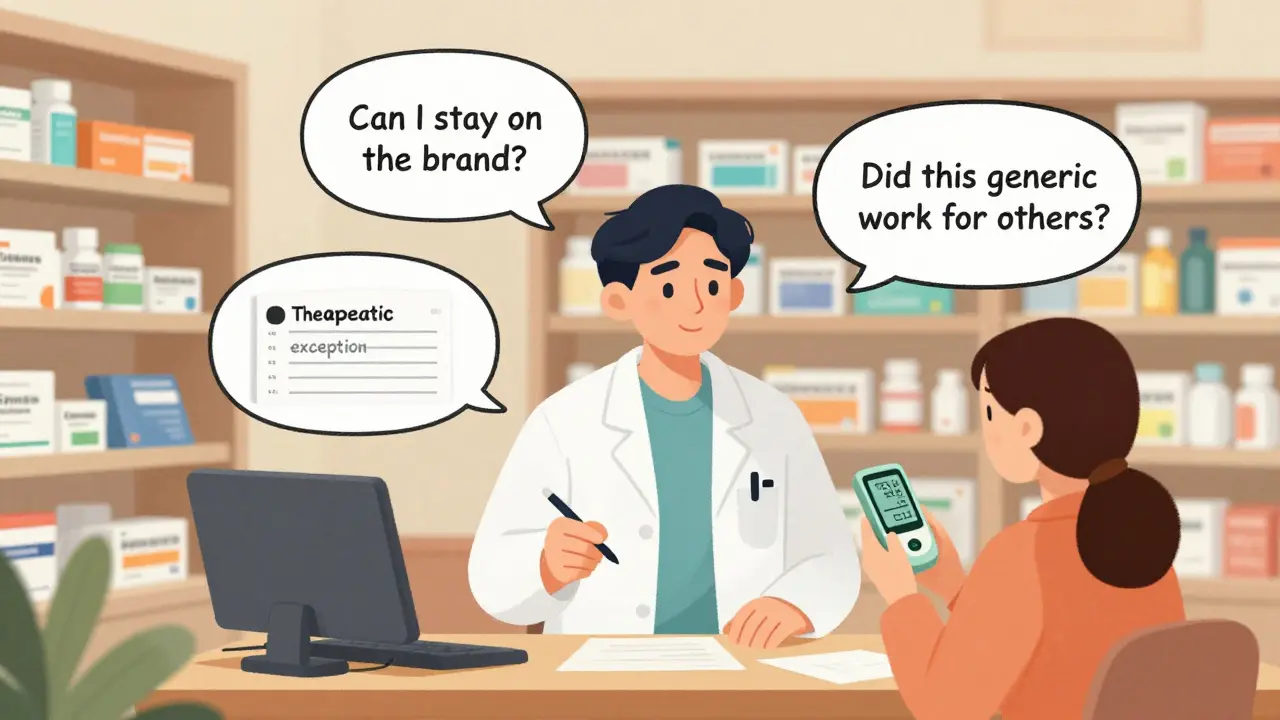
Pharmacists are the most accessible medication experts you have. They’re not just filling prescriptions-they’re monitoring your health. Don’t be shy:- Ask: “Have other patients had issues with this generic?”
- Say: “I had a bad reaction last time. Can we try a different manufacturer?”
- Request: “Can you call my doctor to see if I can stay on the brand if needed?”
- Use their medication therapy management (MTM) services. Many pharmacies offer free one-on-one reviews to go over all your meds-especially helpful during transitions.
Many patients hesitate because they think pharmacists won’t listen. But the American Association of Colleges of Pharmacy says pharmacists are trained specifically to help with these exact situations. Your concerns are valid. Your pharmacist wants to hear them.
What If the Generic Doesn’t Work for You?
If you notice changes in how you feel after switching, don’t just stop taking it. Call your pharmacist first. They can:- Check if the generic was made by a different manufacturer than before.
- Help you request a therapeutic exception from your insurance to stay on the brand.
- Work with your doctor to switch to a different generic brand-some manufacturers’ versions work better for certain people.
For Medicare Part D beneficiaries, there’s a 90-day window where plans must let you continue your current medication if you’re new to the plan. Even if you’ve been on the plan longer, your pharmacy can override a formulary block if your doctor supports it.
Some drugmakers even offer patient support programs. If you’re switching from Ravicti to a generic, for example, the manufacturer may help you with cost assistance or transition guides. Ask your pharmacist if one exists for your drug.
What’s Changing in 2026
Technology is making transitions smoother. Electronic health records now alert pharmacists when a patient is about to switch medications. By Q2 2023, 87% of U.S. hospitals using Epic Systems had automated alerts that flagged patients on narrow-therapeutic-index drugs. CVS and Walgreens are testing blockchain systems that track every generic switch a patient has made-helping pharmacists spot patterns and warn you before problems arise.Still, the biggest change isn’t tech-it’s attitude. More patients are speaking up. More pharmacists are listening. And more doctors are recognizing that switching isn’t always automatic. Your experience matters.
Key Takeaways
- Generics are safe and effective for most people, but not all-especially if you’re on a drug with a narrow therapeutic index.
- Start talking to your pharmacy at least 30 days before your brand runs out.
- Ask about the manufacturer, insurance coverage, and whether your drug has had issues with generics before.
- Watch for changes in how you feel, not just how the pill looks.
- Your pharmacist can help you stay on the brand if needed, or switch to a different generic that works better.
Can I ask my pharmacy to keep me on the brand-name drug instead of switching to generic?
Yes. You can ask your pharmacist to request a therapeutic exception from your insurance. This means your doctor would need to write a note saying the brand is medically necessary. Many insurers approve this for drugs like levothyroxine, warfarin, or epilepsy medications if there’s a history of problems with generics. Your pharmacist can help you start the process.
Why does the generic pill look different from the brand?
By law, generic drugs must have the same active ingredient but can differ in color, shape, size, and inactive ingredients like dyes or fillers. These differences don’t affect how well the drug works, but they can confuse patients. If you’re unsure, call your pharmacy-they can tell you what the generic version should look like and confirm it’s the right medication.
Is it safe to switch from brand to generic for thyroid medication like levothyroxine?
It can be, but it requires close monitoring. Even small changes in how levothyroxine is absorbed can affect your thyroid hormone levels. The FDA says generics are safe, but many endocrinologists recommend sticking with one manufacturer-whether brand or generic-once you’ve found what works. If you switch, ask your doctor to check your TSH level 6-8 weeks later to make sure it’s still in range.
What if I can’t afford the brand-name drug anymore?
Most generics cost 80-85% less than the brand. If your insurance forces you to switch and you can’t afford the brand, talk to your pharmacist about patient assistance programs. Many generic manufacturers offer discounts or free samples. Medicare Part D also has a coverage gap (donut hole) protection that may help reduce costs. Your pharmacy can connect you with these resources.
Can I switch back to the brand if the generic isn’t working?
Yes. If you notice changes in your symptoms-like increased seizures, mood swings, or unexplained fatigue-contact your pharmacist and doctor right away. They can help you request a therapeutic exception or switch to a different generic version. Don’t stop the medication on your own. Even if the generic isn’t working, stopping suddenly could be dangerous.
Next Steps
- Call your pharmacy today and ask: “Will my medication switch to generic soon?”
- Write down any concerns you’ve had with past generics.
- Ask if your pharmacy offers medication therapy management (MTM)-it’s free and can help you navigate transitions.
- If you’re on a critical medication, schedule a follow-up blood test 6-8 weeks after the switch.
Generic drugs are here to stay. But they’re not one-size-fits-all. Your voice matters. Your health matters. And your pharmacist is there to help you make the transition safely.
Steph Carr
February 17, 2026 AT 09:56So let me get this straight-we’re trusting our lives to pills that look like they were designed by a 12-year-old on MS Paint, but we’re supposed to just shrug and say 'it’s bioequivalent'? I’ve had generics that made me feel like I’d been hit by a truck wrapped in tinfoil. My thyroid meds switched to a generic that turned me into a zombie who cried during cereal commercials. The FDA says it’s fine. My body says otherwise. And no, I’m not exaggerating. I’ve got the lab results to prove it.
Prateek Nalwaya
February 17, 2026 AT 16:18Man, I love how this post breaks it down like a chai latte at 3 AM-warm, thoughtful, and just a little spicy. I’m from India, where generics are the backbone of healthcare. We don’t have the luxury of brand-name drugs, so we’ve learned to read labels like sacred texts. The color, the imprint, the size-it all matters. I’ve seen people panic because their pill went from white to blue. But here’s the thing: if you’ve got a good pharmacist who remembers your name and your history? That’s the real magic. Not the FDA, not the patent clock. The human in the white coat who asks, 'You okay with this one?'
Philip Blankenship
February 19, 2026 AT 14:18Okay, I’m gonna be real here-I’m the guy who forgets to take his meds unless there’s a little alarm that goes off like a tiny angry goose. But I’ve been on the same generic for six years now, and I’m still alive, so I guess it works? I don’t even know what the brand name looks like anymore. My pills are just… little orange things. I used to get paranoid when they changed shape, but then I started asking my pharmacist, 'Hey, is this the same stuff?' and they’d just say, 'Yep, same factory, different paint job.' That’s all I need. Honestly, I think we overthink this. If your doctor’s not freaking out, maybe you shouldn’t either. Just keep the receipts and the refills lined up. Easy.
Adam Short
February 20, 2026 AT 03:31Typical American overreaction. We’re so obsessed with branding that we treat medicine like a luxury sneaker. In the UK, we’ve been using generics for decades without anyone keeling over. The idea that a pill’s color or size can change your health? That’s not science-that’s fearmongering dressed up as caution. If you can’t trust the FDA, who can you trust? The guy on TikTok who says 'avoid generics because Big Pharma is hiding something'? Wake up. We’re not in the 1980s. The science is solid. Stop making this into a drama.
John Haberstroh
February 21, 2026 AT 11:40I switched from brand to generic for my epilepsy med last year. Felt fine for three weeks. Then one Tuesday, I had a seizure while making toast. Not a grand mal, just a little stare-down with the toaster-but enough to scare the hell out of me. Called my pharmacist. Turns out the new generic was made by a company that uses a different coating. My body didn’t absorb it right. They switched me to a different generic-same active ingredient, different filler-and boom, back to normal. The point? Not all generics are created equal. And your pharmacist? They’re the detective who notices the fingerprint on the glass. Don’t skip the chat.
Sam Pearlman
February 21, 2026 AT 19:06Wait, so you’re telling me we’re being forced into generics because they’re cheaper, but if they don’t work, we can ask to go back? That’s like being told to eat a banana because it’s cheaper than a steak, then crying because you’re still hungry. The whole system is rigged. Insurance companies don’t care if you’re stable-they care if the stock price goes up. And don’t even get me started on how they make you jump through hoops to stay on brand. It’s not about health. It’s about profit. We’re not patients. We’re line items.
Jonathan Ruth
February 22, 2026 AT 05:00Generics work. End of story. People who panic over pill color are the same ones who think 5G is a weapon. FDA approval means it’s safe. If you’re having issues, it’s probably because you’re anxious, not because the drug is faulty. I’ve been on 7 different generics for my blood thinner. All fine. Stop making this a thing. Also, the article says '9.4% of patients had seizures'-so what? That’s 1 in 10. The other 9 are fine. You’re not special. You’re statistically normal. Stop being a drama queen.
Liam Earney
February 22, 2026 AT 14:28…I just… I can’t… I’ve been on levothyroxine for 14 years. I’ve switched generics five times. Each time, I’ve felt… off. Not dramatically, not catastrophically-but like a fog had settled in my brain. I’ve cried at the pharmacy counter because I didn’t know if I was imagining it. I’ve called my doctor. I’ve called my pharmacist. I’ve called my sister. I’ve Googled every possible combination of 'generic thyroid pill side effects' at 3 a.m. And every time, they say, 'It’s bioequivalent.' But bioequivalent doesn’t mean *felt* equivalent. And if you’ve never felt the quiet terror of waking up and not recognizing yourself in the mirror… you don’t get it. I’m not asking for a miracle. I’m asking to be heard.
guy greenfeld
February 23, 2026 AT 05:39Did you know the FDA doesn’t require generics to be tested on humans before approval? They use bioequivalence studies-basically, they measure blood levels in 24 healthy volunteers and say, 'close enough.' But what about people with autoimmune disorders? Or gut issues? Or genetic variants that affect metabolism? No one’s studying that. And the blockchain tracking system CVS is testing? It’s not to help you-it’s to track you. They’re building a database of who’s 'non-compliant' with generics so insurance can deny coverage later. This isn’t healthcare. It’s a surveillance experiment. And you’re all just… letting it happen.