
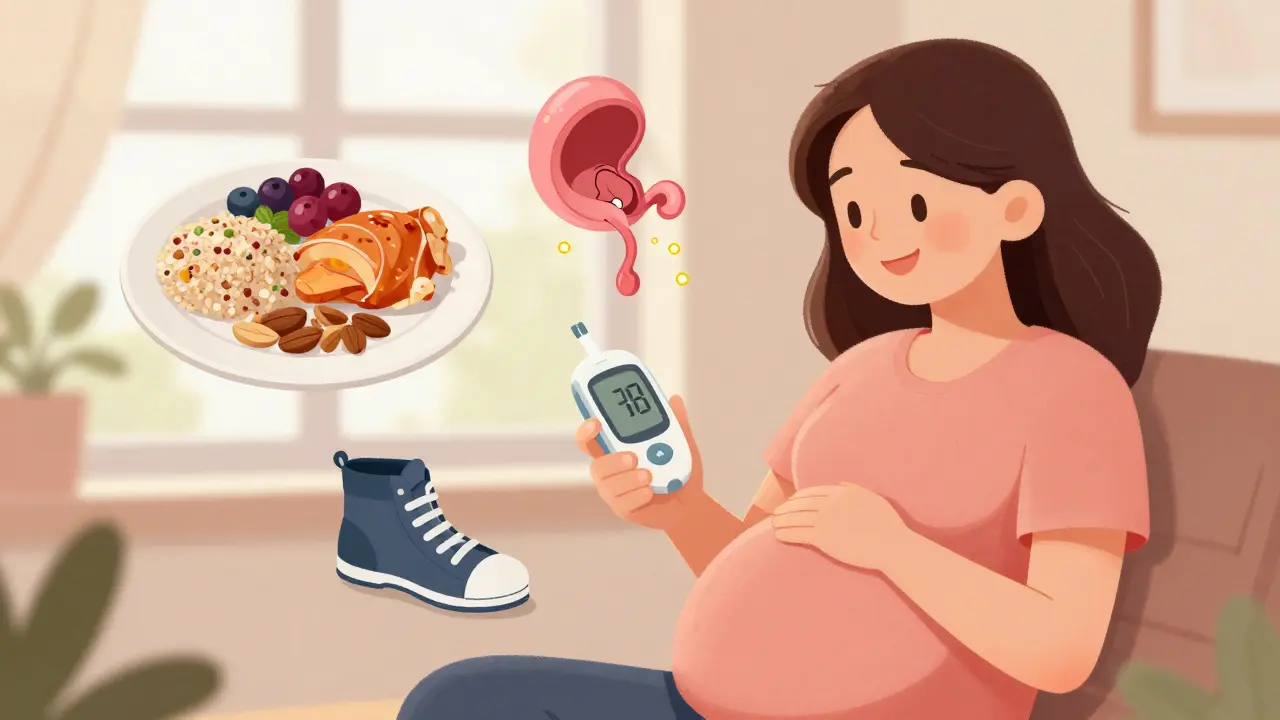
When you’re pregnant, your body changes in ways you never expected. One of the most surprising? Your pancreas suddenly has to work three times harder just to keep your blood sugar in check. That’s because the placenta produces hormones that block insulin - your body’s natural way of moving sugar from your blood into your cells. For most women, the pancreas rises to the challenge. But for about 1 in 10 pregnant women, it can’t keep up. That’s when gestational diabetes shows up.
It’s not your fault. It’s not because you ate too much sugar. It’s biology. And the good news? With the right plan, you can keep your blood sugar steady and protect both you and your baby from serious risks like large birth weight, shoulder injuries during delivery, and newborn low blood sugar. Many women with gestational diabetes go on to have perfectly healthy pregnancies - if they know what to do.
What Your Blood Sugar Numbers Should Be
If you’ve been diagnosed with gestational diabetes, you’re probably staring at a glucose meter wondering what numbers are “good.” Here’s what the American Diabetes Association says is safe:
- Fasting or before meals: under 95 mg/dL
- One hour after eating: under 140 mg/dL
- Two hours after eating: under 120 mg/dL
These aren’t suggestions - they’re targets. Going over them even once in a while can increase your baby’s risk of gaining too much weight. That doesn’t mean you have to be perfect. But consistency matters. Checking your blood sugar four to six times a day - before breakfast, after each meal, and sometimes at bedtime - gives you the data you need to adjust your meals and movement. Women who check less than four times daily are more than twice as likely to have a baby who ends up in the NICU.
Diet Is Your First Line of Defense
Most women - 70 to 85% - can manage gestational diabetes with food alone. No pills. No shots. Just smarter eating.
Carbohydrates are your biggest challenge. They turn into sugar fastest. But you still need them. The trick is choosing the right kind and spreading them out. Aim for 35-40% of your daily calories from complex carbs - think whole grains, beans, lentils, oats, and starchy vegetables - not white bread, rice, or pasta. You’ll need about 45 grams of carbs per meal and 15-30 grams per snack. That’s roughly:
- One cup of cooked quinoa or brown rice
- Two slices of whole grain bread
- One medium apple or banana
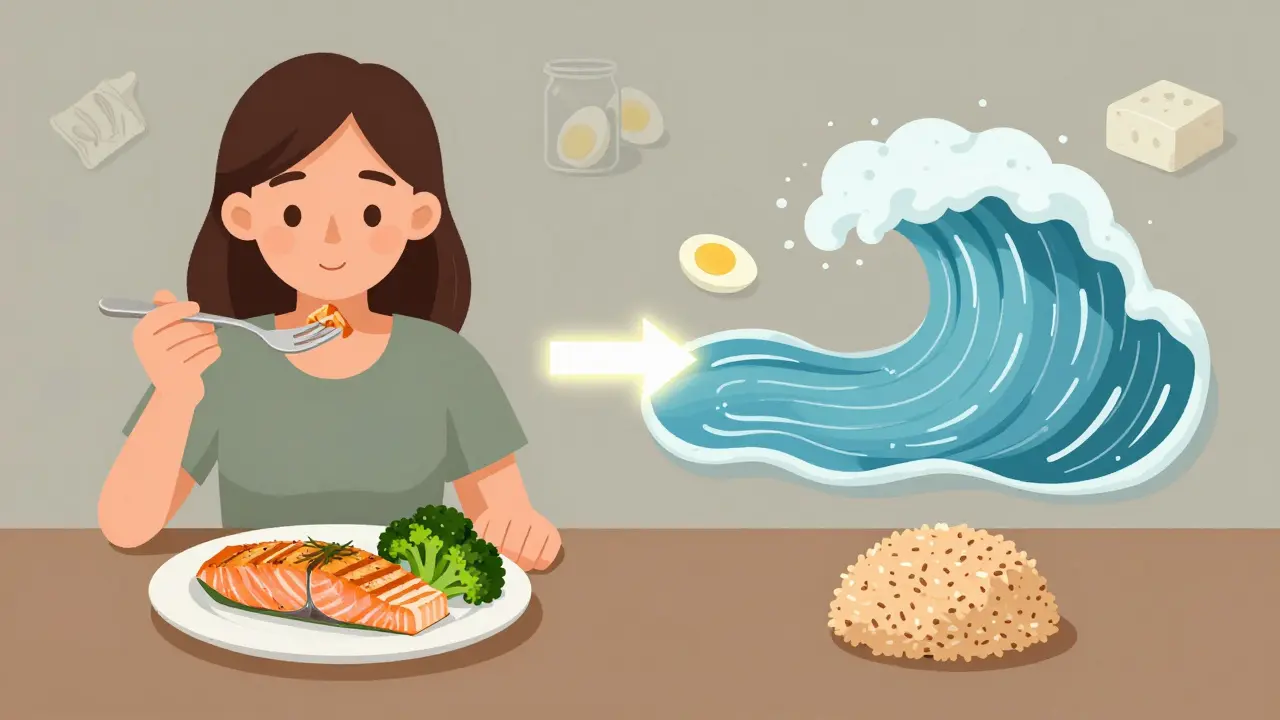
And here’s the secret most dietitians don’t tell you: eat protein and fat before carbs. Start your meal with chicken, fish, eggs, or cheese. Then add vegetables. Save the rice or potatoes for last. One study found this simple switch cut post-meal blood sugar spikes by 25-40 mg/dL. That’s like getting a free insulin boost.
Pairing carbs with protein or fat slows digestion. An apple alone might spike your sugar. An apple with a tablespoon of peanut butter? Much smoother ride. Same with Greek yogurt and berries, or cheese and whole grain crackers.
Don’t skip snacks. Going too long without eating can cause your liver to dump sugar into your blood, especially in the morning. Keep snacks handy: a hard-boiled egg, a handful of almonds, or a small container of cottage cheese. If your fasting blood sugar is high (a common issue), try a bedtime snack with 15 grams of carbs and a little protein - like 6 whole grain crackers with 1 ounce of cheese.
Move Your Body - Even Just a Little
Exercise isn’t optional. It’s medicine.
Thirty minutes of brisk walking, swimming, or prenatal yoga five days a week can drop your blood sugar by 20-30 mg/dL after meals. The best time? Right after eating. A 15-30 minute walk after dinner is one of the most effective tools you have.
Don’t think you need to run a marathon. Even 10 minutes after each meal helps. Many women on Reddit’s gestational diabetes community swear by morning walks - they say it cuts their fasting sugar by 15-25 mg/dL. And it’s free. No equipment needed.
Studies show women who stay active are less likely to need insulin. Movement helps your muscles soak up sugar without insulin. That’s huge when your body is already struggling to make enough.
When Diet and Exercise Aren’t Enough
Even with perfect meals and daily walks, 15-30% of women still need medication. That doesn’t mean you failed. It means your body needs extra help.
Insulin is the most common next step. It’s safe during pregnancy. It doesn’t cross the placenta. And it’s been used for decades with excellent results. Many women worry about shots - but the needles are tiny, and most get used to them within days. Insulin is often the fastest way to reach your targets and reduce risks to your baby.
Metformin is sometimes used too. But it’s not first choice. Studies show about 30% of women on metformin still end up needing insulin anyway. And while it’s generally safe, long-term data on babies is still limited. Your doctor will help you decide what’s best.
Some women use continuous glucose monitors (CGMs). These small sensors, worn on your arm or belly, track sugar levels 24/7. They’re especially helpful if you’ve had Type 1 diabetes before or if your numbers are all over the place. Research shows CGMs cut the risk of having a very large baby by 39% and severe newborn low blood sugar by 54%.
What to Expect After the Baby Is Born
Here’s the relief: for most women, gestational diabetes disappears after delivery. Your blood sugar usually returns to normal within days.
But here’s the warning: half of women who had gestational diabetes will develop Type 2 diabetes within 10 years. That’s not a guarantee - it’s a signal. Your body showed you it’s vulnerable. Now’s the time to act.
You’ll get a glucose test 6 to 12 weeks after birth. If it’s normal, you still need to be checked every two years. If it’s high, you may already have Type 2 diabetes - and you’ll need to start treatment.
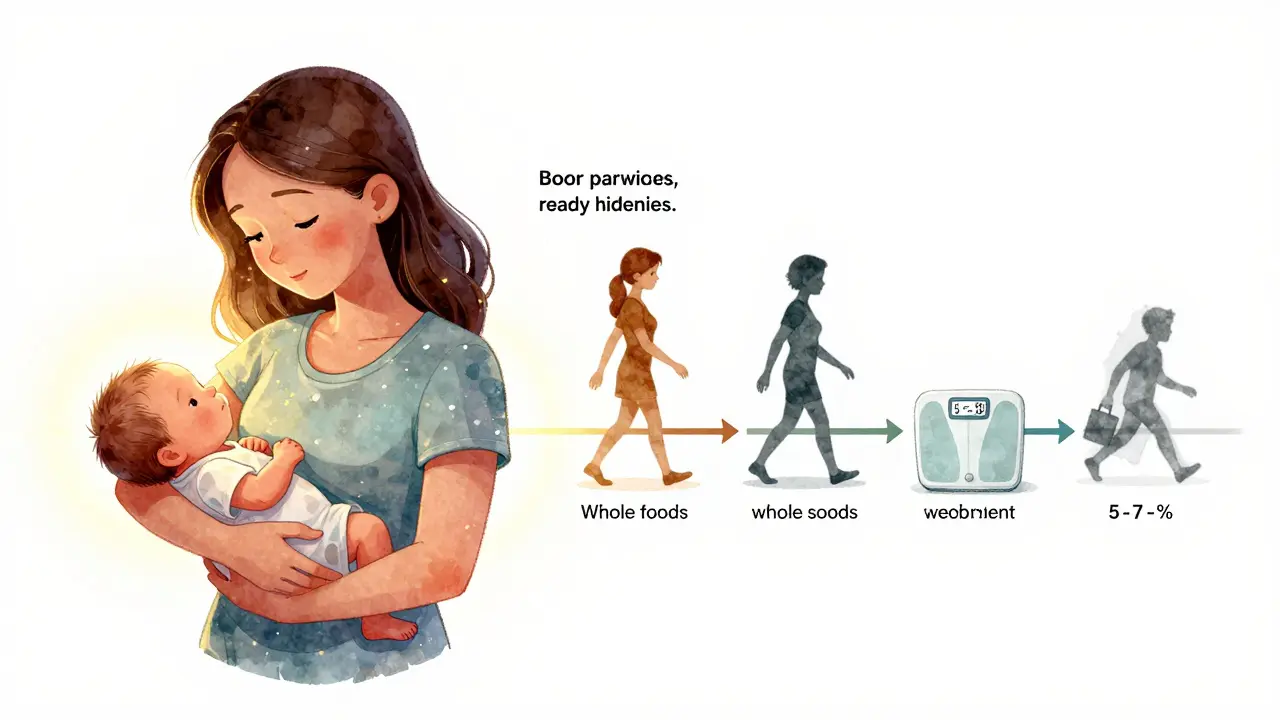
And here’s the best part: losing 5-7% of your body weight after pregnancy cuts your risk of Type 2 diabetes by 58%. That’s not about being thin. It’s about moving better, eating more whole foods, and keeping your body responsive to insulin. Even small changes make a big difference.
Emotional Support Matters Too
Getting diagnosed with gestational diabetes can feel overwhelming. Sixty-eight percent of women say the diagnosis triggered anxiety. Some fear insulin. Others feel guilty about their diet. You’re not alone.
Many hospitals offer free diabetes education with certified specialists. They’ll teach you how to count carbs, read labels, use your meter, and handle stress. Don’t skip this. It’s not just about numbers - it’s about confidence.
Online communities like Reddit’s r/GestationalDiabetes are full of real women sharing what works: using MyFitnessPal to track carbs, keeping a food log, finding a walking buddy, or just venting about cravings. You’ll find tips you won’t hear from your doctor - like how eating protein first cuts sugar spikes, or how a 10-minute walk after lunch makes all the difference.
And if your care team gives you conflicting advice - say, your OB says eat 45 grams of carbs per meal but your nutritionist says 30 - ask for clarification. Consistency matters. Don’t let confusion add to your stress.
What Not to Do
There are a few things that make gestational diabetes harder to control:
- Waiting too long to get tested. Screening happens between 24 and 28 weeks. If you’re high risk (overweight, family history, previous GDM), ask for earlier testing.
- Skipping blood sugar checks. You can’t manage what you don’t measure.
- Going on extreme low-carb diets. You need carbs for your baby’s brain. Just choose smart ones.
- Ignoring fasting highs. Morning sugar spikes are common - and fixable with bedtime snacks or adjusted evening meals.
- Thinking it’s “just a little high.” Even small, repeated spikes can affect your baby’s growth.
The goal isn’t perfection. It’s progress. One meal at a time. One walk at a time. One check at a time.
Tools and Resources to Help
You don’t have to figure this out alone.
- MyFitnessPal or Cronometer: Track carbs, protein, and fat. Set daily goals.
- ADA’s “Healthy Eating for Pregnancy” guide: Free downloadable meal plans and portion charts.
- Glucose meter with memory: Pick one that stores readings and syncs to your phone.
- Local CDCES (Certified Diabetes Care and Education Specialist): Ask your OB for a referral. They’re trained to help you navigate this.
- CDC’s “After the Baby is Born” plan: Guides you through postpartum testing and prevention.
Most insurance covers diabetes education and supplies. Call your provider - you’re entitled to support.
Can I eat fruit with gestational diabetes?
Yes - but choose wisely and control portions. Berries, apples, pears, and oranges are lower in sugar and high in fiber. Stick to one small serving per meal (like one small apple or 1 cup of berries). Pair it with protein or fat - like a handful of nuts or a spoon of Greek yogurt - to slow the sugar spike. Avoid juice, dried fruit, and tropical fruits like mango or pineapple in large amounts.
Will my baby have diabetes because of gestational diabetes?
Not directly. Babies born to mothers with gestational diabetes don’t have diabetes at birth. But they may have higher risks of obesity and Type 2 diabetes later in life - especially if they’re born large or if mom develops Type 2 diabetes after pregnancy. The good news? Breastfeeding and healthy feeding habits for your child can lower those risks significantly.
Do I need to test my blood sugar at night?
Usually not - unless your fasting numbers are high. Many women with gestational diabetes have elevated morning blood sugar due to hormones released overnight. If your fasting levels are above 95 mg/dL, your doctor may ask you to check at bedtime or during the night to see if your evening meal or snack needs adjusting. Most women only test fasting, before meals, and after meals.
Can I have a vaginal birth with gestational diabetes?
Absolutely. Most women with well-controlled gestational diabetes deliver vaginally without complications. The main concern is if the baby grows too large (over 9 pounds), which can make delivery harder. But if you’ve kept your sugar in range, your baby’s size will likely be normal. Your care team will monitor growth with ultrasounds, but GDM alone doesn’t mean you need a C-section.
Is gestational diabetes my fault?
No. It’s not caused by eating too much sugar or being lazy. It’s caused by hormonal changes during pregnancy that make your body resistant to insulin. Even women who eat perfectly and exercise regularly can get it. Risk factors like being overweight, over 25, or having a family history increase your chances - but it’s not a punishment. It’s a medical condition you can manage.
Managing gestational diabetes isn’t about restriction. It’s about empowerment. You’re learning how to feed your body, move it well, and protect your baby - skills that will last long after delivery. Every choice you make now is a step toward a healthier future - for you and your child.
Kathy McDaniel
January 26, 2026 AT 22:10Anjula Jyala
January 28, 2026 AT 16:08Patrick Merrell
January 29, 2026 AT 05:05Harry Henderson
January 30, 2026 AT 05:45suhail ahmed
January 30, 2026 AT 12:32Candice Hartley
January 30, 2026 AT 12:35Andrew Clausen
January 30, 2026 AT 14:05Conor Flannelly
January 30, 2026 AT 18:47Conor Murphy
January 31, 2026 AT 15:28Paul Taylor
January 31, 2026 AT 18:44Marian Gilan
February 1, 2026 AT 08:05Desaundrea Morton-Pusey
February 1, 2026 AT 19:49Kirstin Santiago
February 2, 2026 AT 16:50Patrick Merrell
February 4, 2026 AT 10:59