
Every year, millions of people accidentally take the wrong medicine, the wrong dose, or at the wrong time - and many of these mistakes could have been avoided. Medication errors aren’t just rare accidents; they’re a leading cause of preventable harm. In the U.S. alone, about 1.3 million emergency room visits each year are linked to bad drug reactions. The good news? Most of these errors happen because of simple oversights - not because people are careless. By following five clear, proven rules, you can dramatically reduce your risk and take your meds safely - whether you’re managing one pill or a whole medicine cabinet.
Rule 1: Know Exactly What You’re Taking
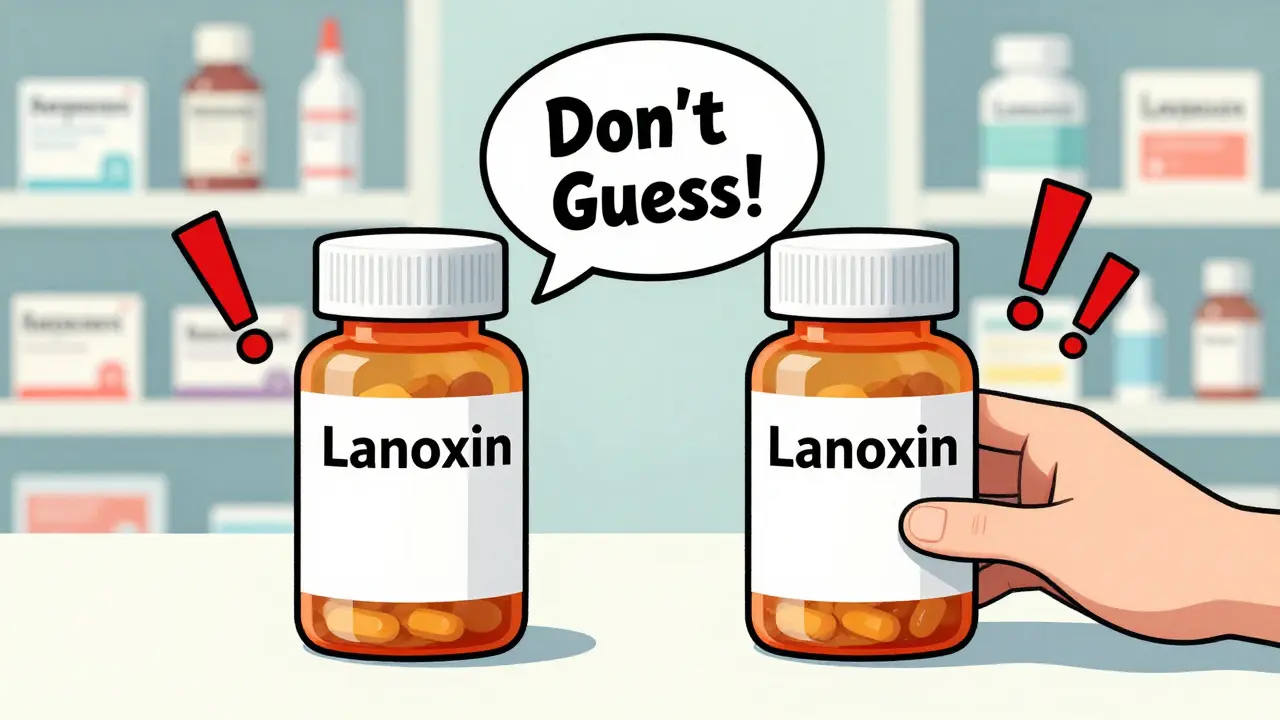
It sounds basic, but many people don’t actually know the name of their medication, let alone why they’re taking it. You might think, “I’ve been taking this for years,” but that’s exactly when mistakes creep in. A pill that looks like your old one could be a different drug entirely. Look-alike and sound-alike medications cause about 25% of all reported errors. Insulin and heparin? They’re often confused with other drugs. Even something as simple as mixing up “Lanoxin” (heart medicine) with “Lanoxin” (a similar-sounding drug) has led to deadly mistakes.
Here’s what to do: Always check the label. Don’t just rely on the bottle or the pill color. Read the generic name and the brand name. If you’re unsure, ask your pharmacist: “Is this the same as the one I took last month?” Keep a written or digital list of every medication you take - including vitamins, supplements, and over-the-counter drugs. Update it every time something changes. Many pharmacies now offer free medication reviews. Take advantage of them.
Rule 2: Take the Right Dose - Every Time
Dosing errors are one of the most common causes of hospital admissions due to medication problems. The difference between 5 mg and 50 mg can be life or death. This is especially true for older adults, children, and people with kidney or liver issues. Insulin, blood thinners, and seizure medications are high-alert drugs - meaning even a small mistake can cause serious harm.
Don’t guess. Don’t eyeball it. Use a dosing cup, syringe, or pill splitter if needed - never a kitchen spoon. A teaspoon from your kitchen can hold 20% more than a medical teaspoon. For children, weight-based dosing is critical. If your child’s prescription says “5 mg per kg,” make sure you know their exact weight. If you’re unsure, ask your doctor or pharmacist to calculate it for you. And if your medicine says “take with food,” don’t skip it - some drugs won’t work right without it. Others become dangerous on an empty stomach.
Rule 3: Use the Right Route
It might seem obvious, but people accidentally give pills intravenously, inject oral liquids, or swallow patches meant to be stuck on the skin. About 16% of medication errors involve the wrong route of administration. A pill meant to be swallowed could be crushed and snorted. A liquid meant for the eye could be taken by mouth. A patch meant for the arm could be put on the abdomen and cause an overdose.
Always check how your medicine is supposed to be taken. If it says “oral,” it’s for swallowing. “Topical” means on the skin. “Sublingual” means under the tongue. “Inhalation” means through the lungs. If you’re using an inhaler, nebulizer, or insulin pen, ask your pharmacist to show you how it works. Watch a video on the manufacturer’s website. Practice in front of a mirror. Many people think they know how to use these devices - until they’re asked to demonstrate. And never change the route on your own. If your doctor switches you from a pill to a liquid, don’t assume you can crush the pill and mix it in water. Some pills are designed to release slowly - crushing them can release the full dose at once.
Rule 4: Take It at the Right Time
Timing matters more than most people realize. Some medications need to be taken exactly 12 hours apart. Others work best in the morning, others at night. Blood pressure pills taken at night can lower nighttime pressure more effectively. Cholesterol drugs are most effective when taken at bedtime. Antibiotics must be taken at regular intervals to keep drug levels steady in your body.
If your medicine says “take every 8 hours,” that means every 8 hours - not three times a day when you wake up, eat, and go to bed. Use a pill organizer with alarms. Set phone reminders. Many free apps can do this. If you travel across time zones, talk to your doctor ahead of time. Don’t skip doses because you’re busy or forgetful. If you miss a dose, check the label or call your pharmacist - don’t just double up. Some drugs are dangerous if taken too close together. For example, taking two doses of a blood thinner too close together can cause internal bleeding.
Rule 5: Double-Check Before You Take It
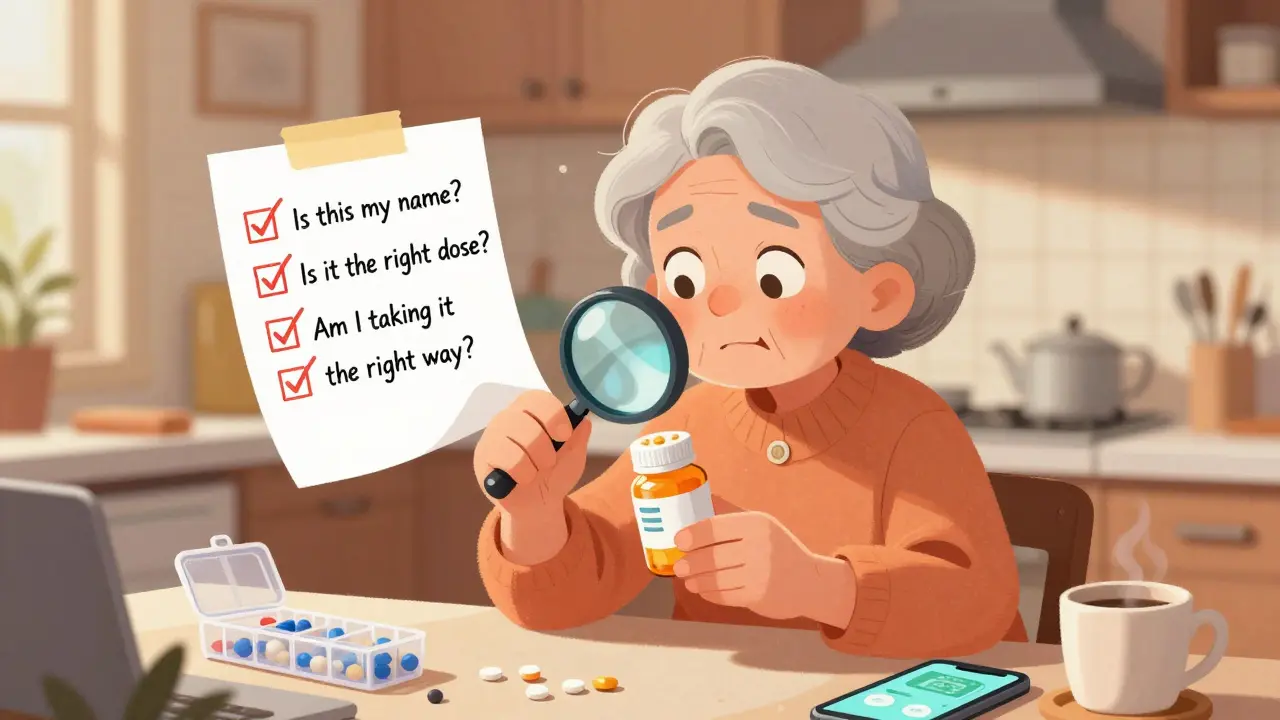
This is the rule that ties everything together. Before you swallow, inject, or apply any medication, pause. Ask yourself: Is this the right drug? Is it the right dose? Is it the right time? Is it for me? And am I using the right method?
Make this a habit. Even if you’ve taken the same pill for years. Even if the bottle looks familiar. Medication errors happen most often when people are rushing, tired, or distracted. A 2022 study found that seniors who used a simple “checklist” before taking their meds cut their risk of errors by nearly half. Write down your five questions and stick them on your medicine cabinet:
- Is this my name on the label?
- Does the color/shape match what I’m used to?
- Does the dose match what my doctor said?
- Is this the right time to take it?
- Am I taking it the right way - pill, liquid, patch?
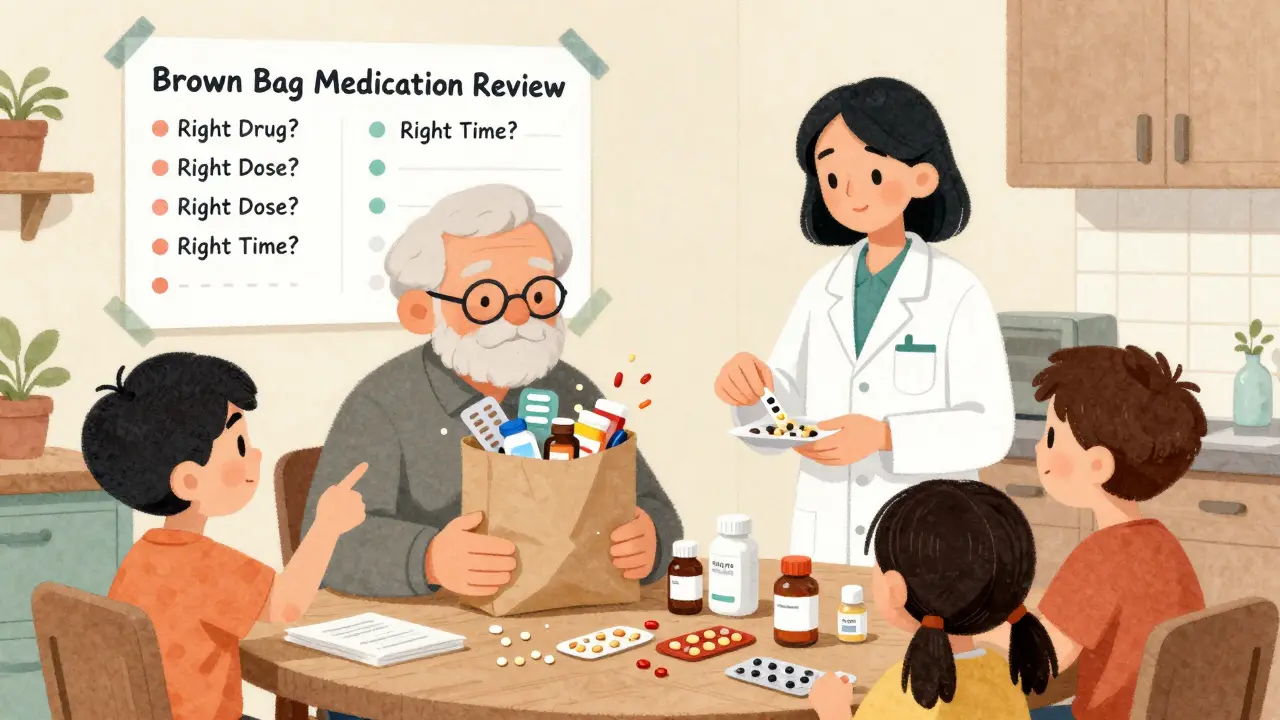
Use the “brown bag” method once a month: bring all your medications - including supplements and OTC drugs - to your doctor or pharmacist. They’ll spot duplicates, interactions, and expired pills you didn’t know about. Many pharmacies now offer free medication therapy management services. Take them up on it.
What About Newer Risks?
Today’s medication safety challenges go beyond the classic five rules. Telehealth visits mean you might get a prescription without seeing your doctor in person. Online pharmacies sometimes send the wrong drug. Smart pill dispensers can glitch. And with more people taking five or more medications (polypharmacy), interactions become harder to track.
Here’s what’s changed:
- Check for drug interactions using free tools like the FDA’s MedWatch or the WHO’s Medication Safety App.
- Ask your pharmacist about “high-alert” drugs - insulin, blood thinners, opioids - and whether you really need all of them.
- If you’re over 65, ask your doctor if you can reduce your number of prescriptions. Many older adults take drugs that are no longer needed.
- Store medicines properly. Heat, moisture, and light can ruin them. Don’t keep pills in the bathroom.
- Dispose of expired or unused meds safely. Many pharmacies have take-back boxes. Don’t flush them.
Real Stories, Real Mistakes
A 72-year-old woman in Manchester took her blood pressure pill at 7 a.m. every day. One week, her phone alarm didn’t go off. She took it at 10 a.m. - and then took another at 7 p.m. thinking she’d missed it. She ended up in the ER with dangerously low blood pressure.
A man in his 50s took his cholesterol pill with grapefruit juice - not knowing it made the drug 15 times stronger. He developed severe muscle pain and kidney damage.
A child’s caregiver crushed a time-release antibiotic and mixed it into applesauce. The child got the full dose at once - and had a seizure.
These aren’t rare. They happen every day. But they don’t have to.
Final Thought: Safety Is a Habit, Not a One-Time Fix
Medication safety isn’t about being perfect. It’s about being consistent. It’s about pausing before you take that pill. It’s about asking questions - even if you feel silly. It’s about keeping a list, checking labels, and never assuming. The five rules aren’t just for hospitals. They’re for your kitchen table, your bathroom counter, your purse, and your phone. Use them every time. Your body will thank you.
What should I do if I think I took the wrong medication?
Stop taking it immediately. Call your pharmacist or doctor. If you’re unsure whether it’s an emergency, call Poison Control at 1-800-222-1222 (U.S.) or your local emergency number. Don’t wait for symptoms. Even if you feel fine, some reactions take hours to show up. Keep the pill bottle and any packaging - you’ll need it for the doctor or poison control.
Can I split pills or crush them to make them easier to swallow?
Only if the label or your pharmacist says it’s safe. Many pills are designed to release slowly over time. Crushing or splitting them can release the full dose at once, which can be dangerous. Extended-release pills, capsules, and coated tablets often shouldn’t be altered. Ask before you do it. Some pills can be safely split - your pharmacist can show you how.
Why do some medicines need to be taken with food and others on an empty stomach?
Food can affect how your body absorbs medicine. Some drugs need food to work properly - like antibiotics that cause stomach upset. Others, like certain cholesterol pills, absorb better on an empty stomach. If food interferes, the drug might not work as well - or could become toxic. Always follow the label. If it’s unclear, ask your pharmacist for specifics.
Is it safe to take expired medication?
Most expired medications aren’t dangerous - but they might not work. Antibiotics, insulin, and epinephrine (EpiPens) lose effectiveness quickly and can be risky if used after expiration. For other drugs, potency fades over time. If it’s been more than a year past the expiration date, or if the pill looks discolored, smells strange, or is crumbling, throw it out. Use a drug take-back program - don’t flush or trash it.
How can I avoid mixing up my medications?
Use a pill organizer with labeled compartments (morning, afternoon, night). Keep different medications in separate containers. Never store pills in unmarked containers. Take a photo of your pill bottle and the label on your phone. Use smartphone apps like Medisafe or MyTherapy to track doses and send reminders. Ask your pharmacist to color-code your bottles if you have trouble reading small print.
Next Steps to Stay Safe
Start today. Grab your medicine cabinet. Write down every pill, capsule, and supplement you take. Check expiration dates. Compare your list to what your doctor has on file. Set one phone reminder for tomorrow to review your meds. Talk to your pharmacist - they’re trained for this. Don’t wait for a mistake to happen. Safety isn’t about luck. It’s about knowing the rules - and following them every single time.
James Roberts
February 19, 2026 AT 15:50So, you’re telling me I need to become a pharmacist just to not die from my blood pressure pill? I’ve been taking lisinopril for 12 years, and the bottle hasn’t changed color once. Until last Tuesday, when it did. And no, I didn’t check the generic name. Why? Because I’m not a robot. Also, why is the label in Comic Sans? That’s not a typo-it’s literally Comic Sans. I’m not trusting a font.
Anyway, I’ll start using the brown bag method. Probably after I finish this bag of chips. Priorities.
Danielle Gerrish
February 20, 2026 AT 13:32Oh my GOD, I just realized I’ve been taking my thyroid med with my coffee for three years. THREE YEARS. I thought it was fine because I’ve never thrown up… but what if my thyroid is just… quietly failing? Like a slow-motion horror movie where the monster is my own body? I’m going to cry. I’m going to call my pharmacist. I’m going to write this on my bathroom mirror in Sharpie. I’m going to buy a pill organizer with alarms and a tiny flag that says ‘DO NOT IGNORE.’ I’ve never felt so alive and terrified at the same time. Thank you for this post. And also, I’m sorry to my liver.
Liam Crean
February 21, 2026 AT 04:38I’ve been doing the checklist thing for a few months now. It’s not glamorous, but it works. I keep a sticky note on my fridge with the five questions. Sometimes I forget to look at it. Sometimes I look at it and still take the wrong pill. But now I catch myself before I swallow. That’s progress. Also, I started using Medisafe. It sends me a notification that says ‘Are you sure?’ with a picture of my pill. It’s weird. It’s helpful. I like it.
madison winter
February 23, 2026 AT 03:37Five rules? That’s cute. What about the rule where you don’t live in a country where your meds cost more than your rent? Or the rule where your doctor prescribes you six drugs because they don’t have time to figure out what’s actually wrong? Or the rule where the pharmacy gives you the wrong bottle because they’re understaffed and the barcode scanner broke? This feels like blaming the patient for a system designed to fail. Also, I don’t have a phone. Or a wallet. Or a consistent sense of self. So… good luck.
Ellen Spiers
February 24, 2026 AT 06:56While the intent of this article is laudable, its methodological approach lacks empirical rigor. The assertion that ‘simple oversights’ are the primary vector for medication error is statistically unsupported. According to the Institute of Medicine’s 2006 report, 44% of errors originate in prescribing, 28% in dispensing, and only 19% in administration. Furthermore, the ‘five rules’ framework fails to account for polypharmacy complexity in geriatric populations, where cognitive load exceeds executive function thresholds. A more robust solution would involve EHR-integrated clinical decision support systems with real-time pharmacokinetic modeling. But, of course, that requires funding. And political will. Neither of which exist.
Marie Crick
February 25, 2026 AT 23:53You’re not taking your meds right. You’re just lazy. Stop making excuses. People die because of this. You think you’re special? You’re not. Get your shit together.
Tommy Chapman
February 26, 2026 AT 19:30Y’all in the US are so soft. In my day, we took pills with a shot of whiskey and a prayer. No apps. No organizers. No ‘brown bag’ nonsense. You think you’re safe? Try living in a place where the only pharmacy is 40 miles away and the guy behind the counter is your cousin. You take what they give you. You don’t ask questions. You don’t check the label. You just hope. And guess what? We’re still here. Maybe you should stop overthinking and start living.
Freddy King
February 27, 2026 AT 18:34So let me get this straight: we’re supposed to trust a pill that looks like a Skittle, take it at a time dictated by a phone app that doesn’t know time zones, and then pray it’s not a counterfeit from a website that says ‘Medications4Less.com’? I’m not saying the rules are wrong. I’m saying the system is rigged. My last prescription came in a bag with a QR code that led to a YouTube video of a guy in a lab coat saying ‘trust the process.’ I didn’t trust the process. I threw it out. And I’m fine. Probably.
Jayanta Boruah
March 1, 2026 AT 13:53As a pharmacologist with 22 years of clinical experience, I must emphasize that the five rules presented are fundamentally flawed. Rule 1 ignores pharmacogenomic variability. Rule 2 assumes uniform bioavailability, which is false for CYP450 polymorphisms. Rule 3 neglects enteral vs. parenteral bioequivalence. Rule 4 fails to account for circadian rhythm-dependent absorption kinetics. Rule 5 is a behavioral heuristic with no validation in randomized controlled trials. The real solution? Automated dispensing systems with AI-driven drug interaction mapping. But no, let’s keep blaming patients. It’s easier.
Scott Dunne
March 1, 2026 AT 19:02Interesting. Very interesting. But let’s be honest-how many people actually read the fine print? Or have the literacy to understand ‘take on empty stomach’? Or the time to call their pharmacist? Or the money to afford a pill organizer? This isn’t about discipline. It’s about access. And access is broken. So yes, follow the rules. But also, fix the system. Otherwise, you’re just asking people to do yoga while their house is on fire.
Oana Iordachescu
March 2, 2026 AT 22:35Did you know that the FDA doesn’t require drug companies to test interactions with OTC supplements? Or that 78% of ‘natural’ supplements contain unlisted pharmaceuticals? I read a study. It was in a journal. I have screenshots. Your ‘five rules’ don’t mention this. Why? Because they don’t want you to know. They want you to keep taking pills. And trusting. And paying. And believing. Wake up. The pills are watching you. 🤔👁️
Irish Council
March 3, 2026 AT 13:58Rules? Nah. I just take what I need when I need it. If I feel better, I stop. If I feel worse, I take more. Simple. My granddad did it. My dad did it. I do it. We’re still here. The system wants you scared. Don’t be scared. Be free.
Jonathan Rutter
March 4, 2026 AT 18:46I’ve been on 11 different meds since 2018. I’ve lost count of how many times I’ve been given the wrong pill. Once, I got a bottle of Ambien labeled as my antidepressant. I took it. I slept for 14 hours. Woke up in a Walmart parking lot. Didn’t even remember how I got there. I didn’t report it. Why? Because I knew they’d just say ‘you didn’t check the label.’ So now I just carry a photo of my pill bottle on my phone. And I take selfies before I take anything. Just in case I wake up in a different body.
John Cena
March 6, 2026 AT 11:33Hey, I’ve been taking my meds for 8 years and I’ve never had a problem. But I still do the checklist. Just because. It’s like brushing your teeth. Doesn’t mean you’re gonna get cavities if you skip it. But why risk it? I don’t even like the pill organizer. I just use a Tupperware container with labels. Works fine. The point is: don’t overcomplicate it. Just be a little careful. That’s all.
Greg Scott
March 6, 2026 AT 12:42My grandma taught me to always read the label. She said, ‘If it doesn’t say ‘for you,’ don’t take it.’ I’ve never forgotten that. Even when I was drunk. Even when I was tired. Even when I was mad. I still read it. I still check. I still pause. I don’t do it because I’m scared. I do it because I care. And yeah, I know that sounds corny. But it works.