
Medication Flushing Risk Checker
Identify medications you're taking that may cause facial flushing and learn how to manage it.
Select Medications You Take
Your Flushing Risk Assessment
Recommended Management Strategies
Ever had your face suddenly turn bright red, feel hot, and wonder what just happened? If you’re on medication, you’re not alone. Facial flushing - that sudden rush of redness across your cheeks, neck, or chest - is one of the most common and unsettling side effects of many prescription drugs. It’s not just cosmetic. For some, it’s embarrassing. For others, it’s painful, dizzying, or even a sign something more serious is going on.
Why Does This Happen?
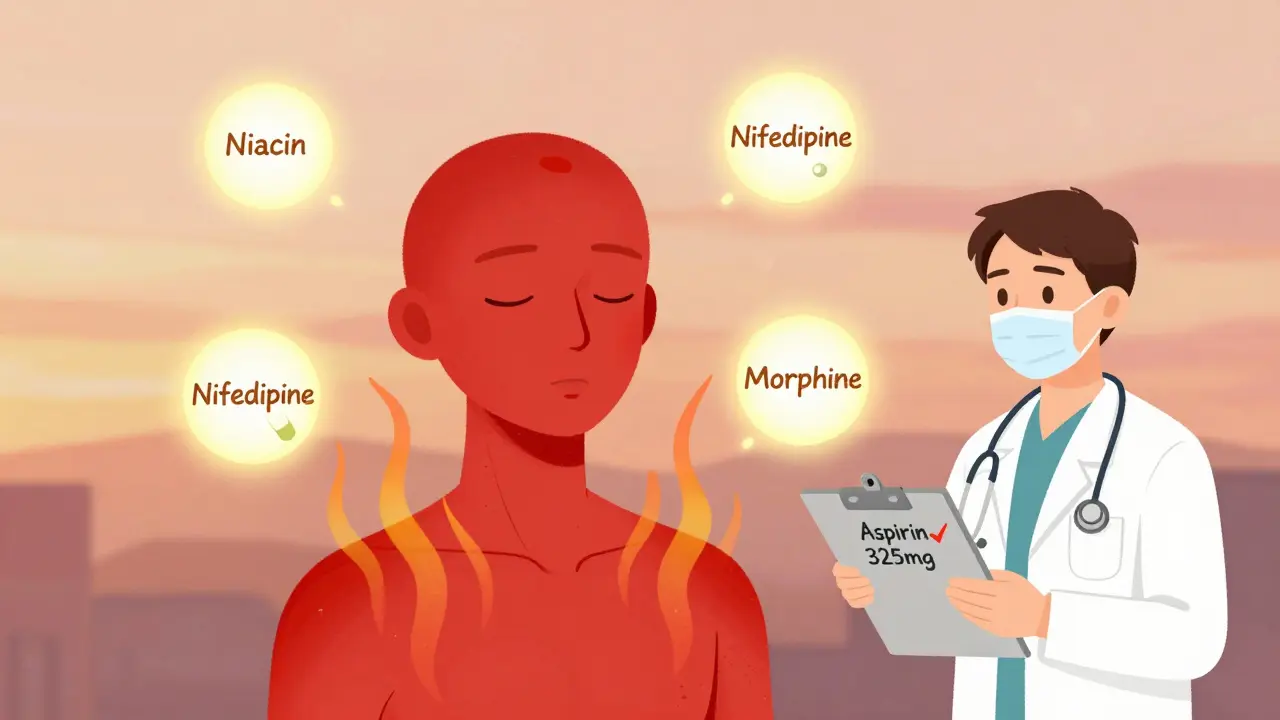
Facial flushing isn’t a rash or an allergic reaction in most cases. It’s your blood vessels opening up - wide - letting more blood flow to your skin. That’s called vasodilation. When certain medications trigger this, your face lights up like a spotlight. The warmth, the redness, sometimes even sweating - it’s all your body’s way of reacting to a drug’s effect on your vascular system. Some drugs do this on purpose. Blood pressure meds like nifedipine and amlodipine are designed to relax arteries. But they don’t pick and choose which arteries to relax. Your face gets the same treatment. Others, like niacin (vitamin B3), trigger flushing by releasing prostaglandins - chemicals that make blood vessels widen. Even morphine causes flushing by making your body release histamine, the same chemical that gives you hives.Medications That Commonly Cause Flushing
Not all flushing is the same. Different drugs cause it in different ways. Here are the most common culprits:- Calcium channel blockers - nifedipine, amlodipine, diltiazem: Used for high blood pressure and angina. Flushing happens in up to 10-20% of users.
- Niacin (vitamin B3) - Used to lower cholesterol. The flush is so common, it’s practically a rite of passage. Up to 80% of people get it, especially at higher doses.
- Nitrates - nitroglycerin, isosorbide: For chest pain. Flushing is expected, not rare.
- Opioids - morphine, hydromorphone: Trigger histamine release. Often comes with itching too.
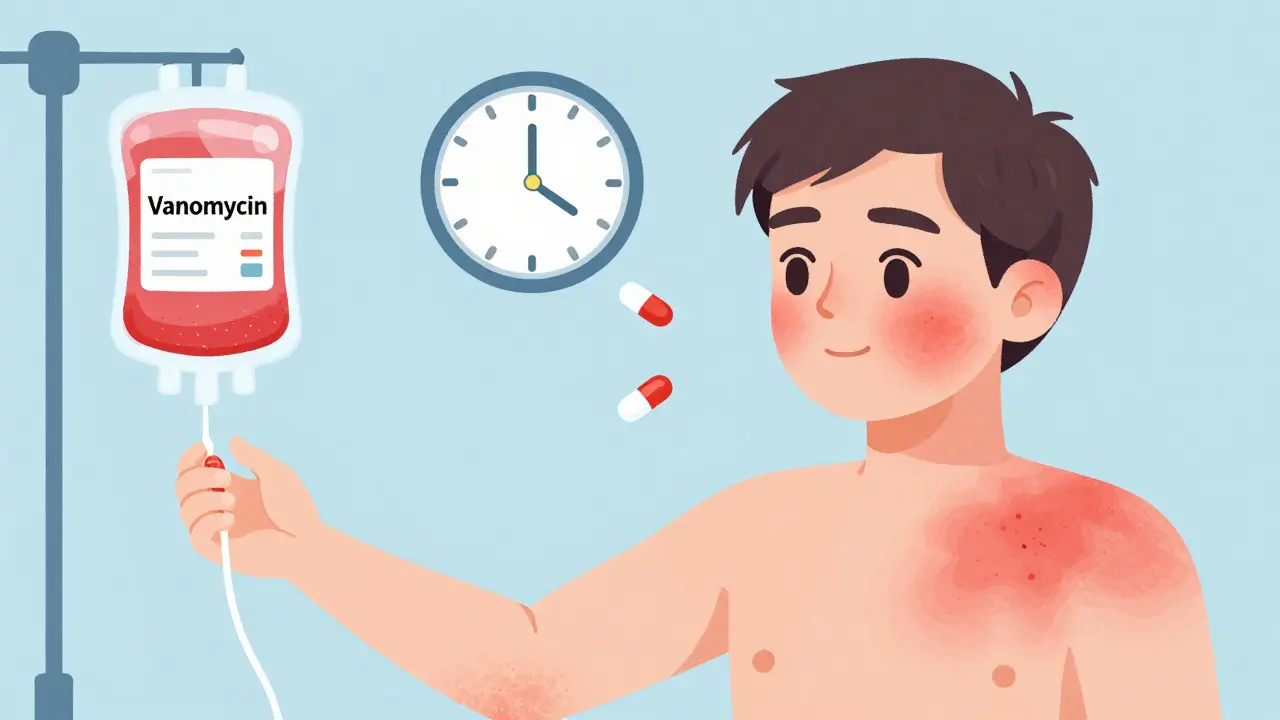
- Vancomycin - An antibiotic. Causes “red man syndrome” - a red rash on the face, neck, and upper body, usually during IV infusion.
- Corticosteroids - prednisone, triamcinolone: Can cause flushing as part of their wide-ranging effects on hormones and inflammation.
- Chemo drugs - doxorubicin: Known to cause flushing as a side effect.
- Hormone therapies - tamoxifen, leuprorelin, goserelin: Used for breast and prostate cancer. Flushing mimics menopause.
- Sildenafil (Viagra) - Works by dilating blood vessels. Flushing is one of the most common side effects.
Some people flush more than others. Genetics matter. For example, many people of East Asian descent have a genetic variation that makes them flush heavily after drinking alcohol - and that reaction gets worse if they’re also taking certain antibiotics like metronidazole or chlorpropamide.
When Is Flushing a Red Flag?
Most medication-induced flushing is harmless - annoying, yes, but not dangerous. But there are times you need to act fast:- Flushing comes with swelling of the lips, tongue, or throat - that’s anaphylaxis. Call 911.
- Flushing with dizziness, low blood pressure, or trouble breathing - especially with vancomycin. Slow the infusion or stop it.
- Flushing with fever, rash, or joint pain - could be a drug reaction or even a sign of carcinoid syndrome (a rare tumor that releases flushing chemicals).
- Flushing that gets worse over time or starts after a new medication - talk to your doctor before stopping anything.
If you’re unsure, don’t guess. Take a photo of the flush, note when it started, and what you took before it happened. That info helps your doctor figure out if it’s the drug - or something else.
How to Reduce or Stop the Flushing
There’s no one-size-fits-all fix. The best approach depends on what’s causing it.1. Talk to Your Doctor About Switching or Adjusting
If you’re on a calcium channel blocker and the flushing is unbearable, ask about switching to a different class of blood pressure medicine - like an ACE inhibitor or a beta-blocker - that doesn’t cause vasodilation. With niacin, your doctor might lower the dose or switch you to a slow-release version (though those come with their own risks).2. Take Aspirin or NSAIDs Before Dosing
For niacin flushing, taking 325 mg of aspirin 30 minutes before your dose can cut the flush by about 30%. It won’t stop it completely, but it makes it much more tolerable. The same goes for other prostaglandin-driven flushes. Avoid this if you’re allergic to aspirin or have stomach ulcers.3. Use Antihistamines for Histamine-Related Flushing
If opioids or vancomycin are the cause, antihistamines like loratadine or cetirizine can help. Some doctors even give a one-time dose of ranitidine (an H2 blocker) before vancomycin infusions to prevent red man syndrome.4. Slow Down the Infusion
For vancomycin, flushing happens mostly when it’s given too fast. Hospitals now routinely infuse it over at least 60 minutes. If you’re getting it at home, make sure your nurse knows this. Slower = less red.5. Avoid Triggers That Make It Worse
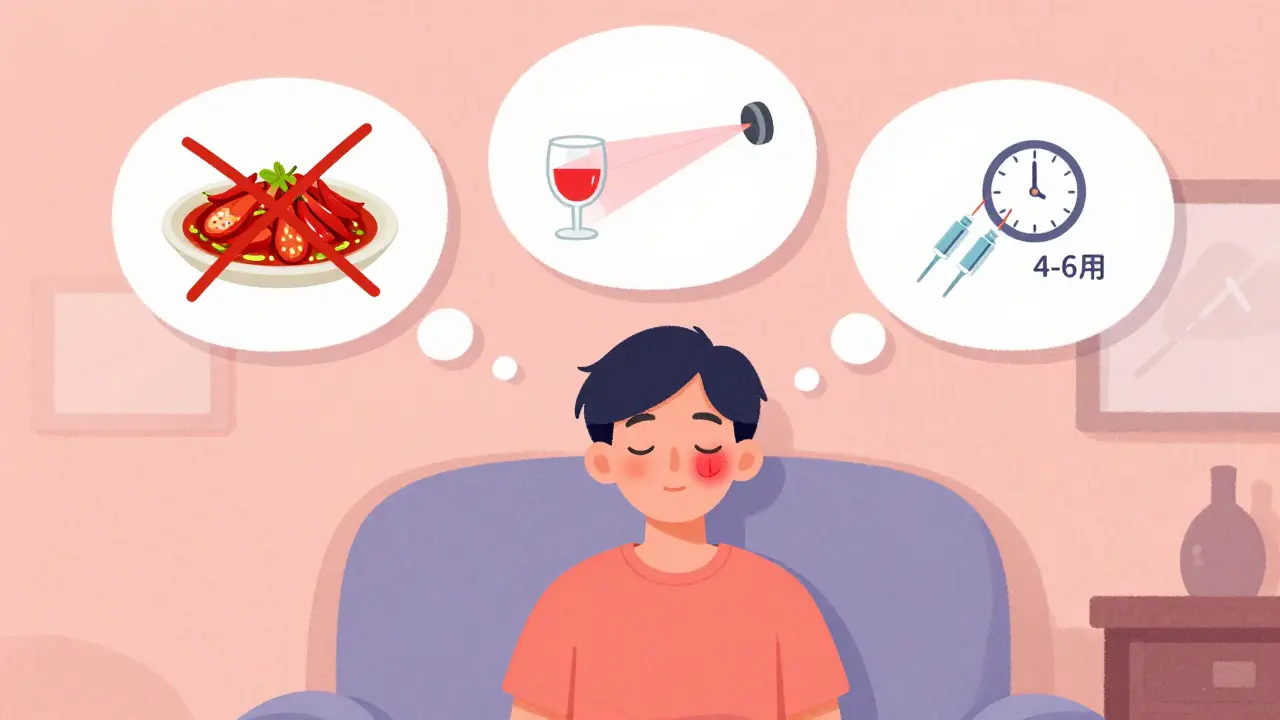
Even if the drug is the main cause, other things can turn a mild flush into a full-blown meltdown:- Hot drinks and spicy food
- Alcohol - especially if you’re Asian or on metronidazole
- Hot showers or saunas
- Stress and anxiety
- Monosodium glutamate (MSG)
- Direct sunlight
Keep a simple journal: What you ate, what you took, where you were, how you felt. Patterns show up fast.
Advanced Treatments for Stubborn Flushing
If lifestyle changes and meds don’t help, there are other options:- Clonidine - A blood pressure pill that also calms down the nerves controlling blood vessels. Often used off-label for severe flushing.
- Beta-blockers - Like propranolol or atenolol. They reduce heart rate and can calm the sympathetic nervous system, helping with anxiety-related flushing.
- Botox injections - Injected into the face, they block the nerves that trigger flushing. Effects last 4-6 months. Used for people with severe, disabling flushing.
- Laser therapy - For chronic redness from dilated capillaries, vascular lasers (like pulsed dye laser) can shrink the vessels. It’s not a cure, but it reduces the visible redness.
These aren’t first-line treatments. They’re for when the flushing is ruining your life - you can’t go out, you avoid social events, you’re constantly self-conscious. If that’s you, talk to a dermatologist or a specialist in medication side effects.
What About Hormone-Related Flushing?
If you’re on tamoxifen, leuprorelin, or going through menopause, your flushing might be tied to hormonal shifts. In those cases:- Non-hormonal options like paroxetine (an antidepressant) or venlafaxine can help reduce hot flashes and flushing.
- Some women find relief with gabapentin or clonidine for menopausal flushing.
- Never stop hormone therapy without talking to your oncologist or gynecologist - the benefits often outweigh the discomfort.
Bottom Line: You’re Not Alone, and It Can Get Better
Facial flushing from medications is common, but it’s not something you have to live with. Many people stop taking their meds because of it - and that’s dangerous. High blood pressure, high cholesterol, cancer - these conditions need treatment. The key is to identify the cause, then work with your doctor to find the right balance. Sometimes, it’s as simple as taking aspirin before your niacin. Other times, it’s switching drugs, avoiding triggers, or using a laser treatment to reduce the lasting redness. Don’t ignore it. Don’t suffer in silence. And don’t quit your meds without a plan. With the right approach, most people find relief - and get back to living without the heat and redness.Can facial flushing from medication be dangerous?
Most of the time, no. Facial flushing from medications like niacin, calcium channel blockers, or Viagra is a common side effect and not harmful. But if it’s accompanied by swelling of the face or throat, trouble breathing, dizziness, or a sudden drop in blood pressure, it could signal a serious reaction like anaphylaxis or red man syndrome. In those cases, seek emergency care immediately.
Does aspirin really help with niacin flushing?
Yes, but only partially. Taking 325 mg of aspirin 30 minutes before niacin can reduce flushing by about 30%. It works by blocking prostaglandins, which are chemicals that cause blood vessels to widen. It won’t stop the flush completely, but it makes it much more manageable. Avoid aspirin if you have ulcers, asthma triggered by NSAIDs, or are on blood thinners.
Why does my face flush when I take vancomycin?
Vancomycin can cause a reaction called "red man syndrome." It’s not an allergy - it’s caused by the drug triggering mast cells to release histamine too quickly, especially if infused too fast. Symptoms include redness on the face, neck, and chest, sometimes with itching or low blood pressure. Slowing the IV drip to at least 60 minutes and pre-treating with antihistamines usually prevents it.
Can stress make medication-induced flushing worse?
Absolutely. Stress activates your sympathetic nervous system, which can amplify blood vessel dilation. If you’re already flushing from a medication like niacin or a beta-blocker, being anxious or in a hot room can turn a mild flush into a full-blown episode. Managing stress through breathing techniques, avoiding triggers, or even using clonidine or beta-blockers for anxiety can help reduce the frequency and severity.
Is there a permanent cure for medication flushing?
There’s no permanent cure unless you stop the medication causing it - and that’s not always safe. But you can manage it effectively. For chronic redness from dilated capillaries, laser treatments can reduce visible redness for months. Botox can block nerve signals causing flushing for up to six months. For many, combining trigger avoidance, low-dose aspirin, antihistamines, or clonidine makes flushing tolerable enough to keep taking essential medications.
Alisa Silvia Bila
December 18, 2025 AT 22:01I used to get so embarrassed flushing after my niacin. Then I started taking a baby aspirin before bed. Game changer. Still a little warm, but now I can go out without looking like a boiled lobster. 🙌
Marsha Jentzsch
December 19, 2025 AT 05:02OMG I KNEW IT!! I told my doctor this was from the meds, but she said it was just "stress"-like I’m some kind of emotional mess?? 🤬 I’ve been on nifedipine for 3 years and my face looks like I’ve been sunburnt in a sauna!! I’m done with this BS!!
Janelle Moore
December 19, 2025 AT 15:34Wait wait wait… so you’re telling me Big Pharma knows this happens but they don’t warn people?? I think this is part of the vaccine agenda-flushing is just the first step to make us all look crazy so they can control our minds!! I read on a forum that the redness is actually a tracking chip being activated!!
Henry Marcus
December 20, 2025 AT 16:17Y’all are missing the REAL story. Vancomycin? That’s not red man syndrome-it’s the government’s secret bioweapon testing on hospital patients. They’ve been spiking IV bags since the 90s. The fact that it only happens with fast infusions? That’s not medical protocol-it’s a cover-up. I know a guy who works at the CDC-he says the redness is a visual marker for the RFID chip they implant during the infusion. 🤫💉
Andrew Kelly
December 21, 2025 AT 19:20It’s irresponsible to suggest aspirin as a blanket solution. Aspirin carries significant gastrointestinal and bleeding risks-especially in elderly patients or those on anticoagulants. The idea that you can casually self-medicate with NSAIDs to manage a drug side effect is dangerously naive. Medical decisions require clinical judgment, not Reddit hacks.
Dev Sawner
December 22, 2025 AT 18:53While the article presents a comprehensive overview, it lacks sufficient reference to peer-reviewed literature. For instance, the efficacy of clonidine in off-label flushing management is supported by only three randomized controlled trials, none of which are cited. Furthermore, the assertion regarding genetic predisposition in East Asian populations is oversimplified without addressing the CYP2D6 polymorphism’s role in drug metabolism. A more rigorous approach is warranted.
Moses Odumbe
December 24, 2025 AT 17:42Bro I had the vancomycin thing last year 😱 I thought I was dying. Then the nurse slowed it down and gave me Zyrtec before and boom-no red face. 🤓💉 Also, if you’re on Viagra and flush? Just chill. It’s not a heart attack, it’s just your blood vessels being extra friendly. 😎
Meenakshi Jaiswal
December 25, 2025 AT 03:13For anyone struggling with niacin flush-start with the lowest dose possible and increase slowly. I’ve helped dozens of patients transition to slow-release niacin with zero flushing. And yes, aspirin helps-but don’t skip the doctor’s advice. Your heart health matters more than temporary discomfort. You’ve got this 💪
bhushan telavane
December 26, 2025 AT 12:58In India, many people take niacin for cholesterol without knowing about flushing. We just call it "garam hua"-got hot. No big deal. But I’ve seen people stop meds because they think it’s an allergy. Please talk to your doctor first. Also, avoid spicy food after taking meds-our food makes it worse!
Mahammad Muradov
December 27, 2025 AT 05:53This article is dangerously misleading. Medications are not meant to cause visible side effects. If your face turns red, you are being poisoned. The pharmaceutical industry prioritizes profit over patient safety. You should not be taking any drug that alters your appearance. Natural remedies are superior and have been used for millennia.
Kitt Eliz
December 27, 2025 AT 09:50YESSSSS!! I’ve been living this!! 🚨 Botox for flushing? YES PLEASE!! I got mine done last month and now I can go to work without feeling like a tomato. Also, laser therapy? 10/10 would recommend. My cheeks look like they’ve been through a spa retreat, not a drug trial. You’re not broken-you’re just misunderstood. Go get that glow under control!! ✨💅
Alana Koerts
December 27, 2025 AT 22:32Why is this even an article? Everyone knows niacin flushes. It’s not a mystery. Just don’t take it. Or take less. Or take aspirin. Or don’t. Whatever. This is just common sense wrapped in jargon. Stop making it sound like a breakthrough.
Dikshita Mehta
December 28, 2025 AT 13:23For those on hormone therapy, paroxetine has been shown in multiple studies to reduce hot flashes by up to 60%. It’s FDA-approved for this use, even though it’s an antidepressant. Many women don’t know this option exists. Also, avoid caffeine after 2 PM-it worsens flushing. Small changes, big results.
pascal pantel
December 30, 2025 AT 09:18Let’s be real: this whole flushing thing is just a placebo-driven narrative. The vasodilation theory is outdated. Modern neurovascular imaging shows it’s actually a misfire in the autonomic nervous system triggered by corporate marketing. They design drugs to flush so patients feel "active"-it’s a psychological hook to increase adherence. The real solution? Stop trusting Big Pharma. And stop taking these drugs.