
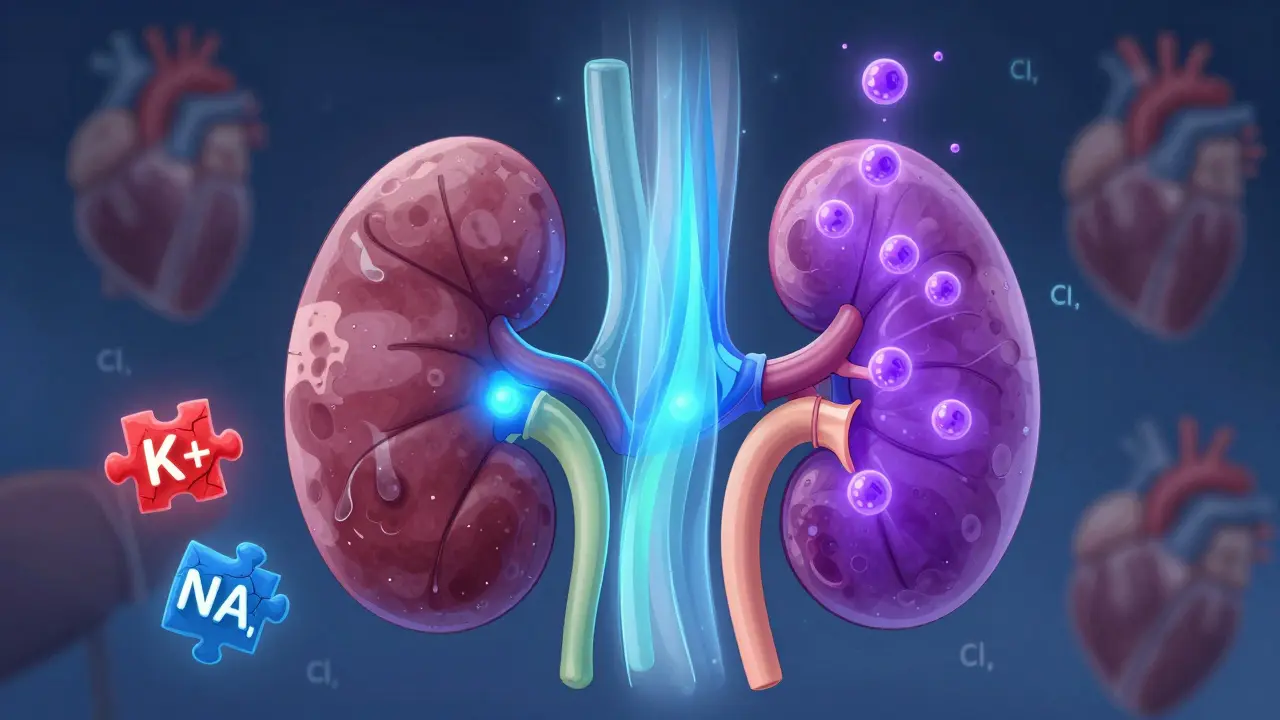
Diuretics are among the most commonly prescribed medications in the U.S., with over 30 million Americans taking them each year. They’re used for high blood pressure, heart failure, and fluid buildup from liver or kidney disease. But behind their effectiveness lies a hidden risk: electrolyte changes that can turn life-saving into life-threatening - especially when combined with other drugs.
How Diuretics Work - And Why They Disrupt Your Electrolytes
Diuretics don’t just make you pee more. They target specific parts of your kidneys to block sodium reabsorption. That pulls water out with it. But sodium doesn’t travel alone. It’s tied to potassium, chloride, and sometimes calcium and magnesium. When you mess with sodium, you mess with everything else. There are three main types:- Loop diuretics (like furosemide and bumetanide) act on the loop of Henle. They’re powerful - they can push out 20-25% of filtered sodium. That’s why they’re used in severe heart failure or kidney disease.
- Thiazide diuretics (like hydrochlorothiazide) work lower down, in the distal tubule. They’re milder, removing 5-7% of sodium. Often used for high blood pressure.
- Potassium-sparing diuretics (like spironolactone and amiloride) block aldosterone or sodium channels. They don’t flush out potassium - but they can let it build up dangerously.
Here’s the catch: each type causes different electrolyte shifts. Loop diuretics often cause low potassium (hypokalemia) and, surprisingly, high sodium (hypernatremia). Thiazides are notorious for low sodium (hyponatremia). Potassium-sparing drugs raise potassium (hyperkalemia) - which sounds good until it gets too high.
A 2013 study of 20,000 ER patients found that people on loop diuretics were over twice as likely to have dangerous low potassium. Thiazide users had more than three times the risk of dangerously low sodium. And those on spironolactone? Nearly four times more likely to have high potassium - a condition that can stop your heart.
Deadly Drug Interactions You Can’t Ignore
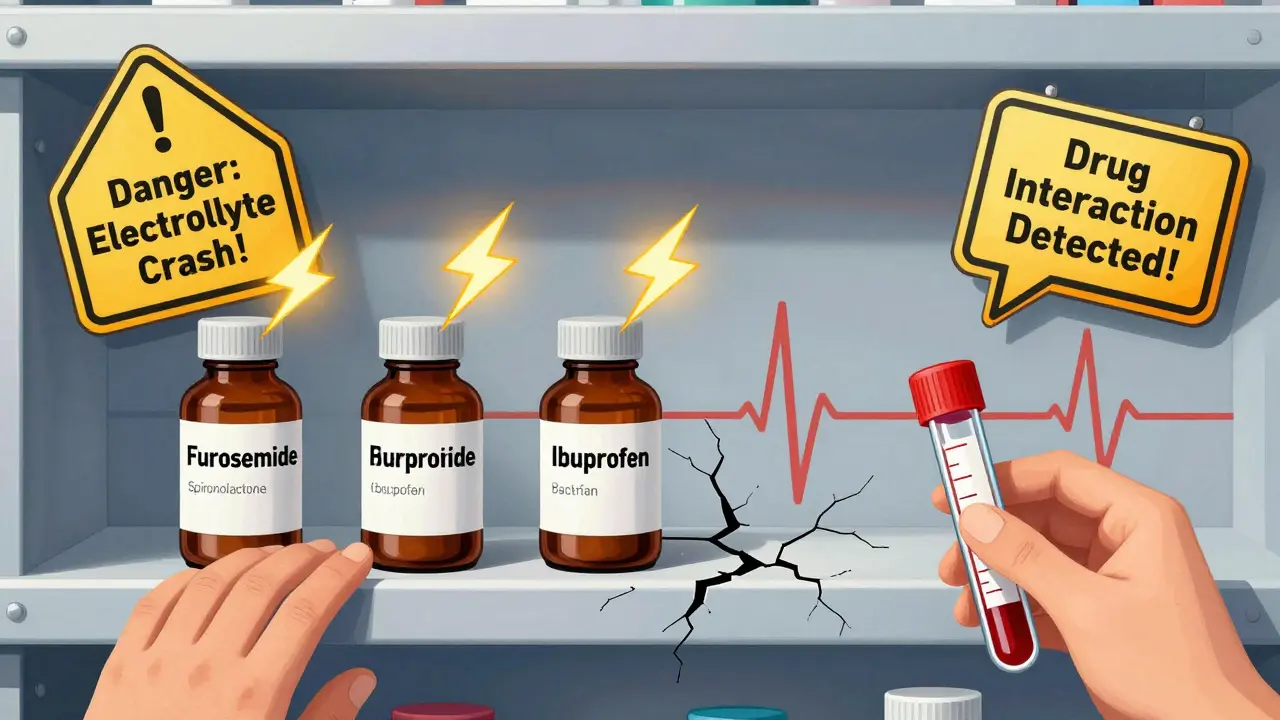
The real danger isn’t just the diuretic itself - it’s what you take with it.NSAIDs like ibuprofen or naproxen reduce blood flow to the kidneys. When you mix them with loop diuretics, the diuretic’s effect drops by 30-50%. You think you’re getting rid of fluid - but your body isn’t responding. That’s why heart failure patients on NSAIDs often end up back in the hospital.
ACE inhibitors and ARBs (like lisinopril or losartan) are great for heart and kidney protection. But when combined with potassium-sparing diuretics, they can push potassium levels into the danger zone. One study showed average potassium jumped 1.2 mmol/L - enough to trigger cardiac arrest in older adults or those with kidney disease.
Even common antibiotics like trimethoprim-sulfamethoxazole (Bactrim) can block potassium excretion. A Reddit case from 2023 described a 72-year-old with heart failure whose potassium spiked to 6.8 mmol/L after three days of Bactrim while on spironolactone. He needed emergency dialysis.
And then there’s the newer class: SGLT2 inhibitors like dapagliflozin. Originally for diabetes, they’re now used in heart failure. They work like a diuretic by pulling glucose and sodium out through the urine. When paired with loop diuretics, their effects multiply. One study showed bumetanide’s action jumped 36% after dapagliflozin. But that also means a higher risk of dehydration and low sodium - especially if you’re not drinking enough.
Combination Therapy: When More Is Better - And When It’s a Disaster
Doctors sometimes combine diuretics to fight resistance. If furosemide alone isn’t working, they add metolazone (a thiazide). This “sequential nephron blockade” can double fluid loss. The DOSE trial showed 68% of patients responded well - compared to just 32% on loop diuretics alone.But here’s the price: a 2017 study found 22% of patients on high-dose furosemide plus metolazone developed acute kidney injury. Fifteen percent got dangerously low sodium. It’s not just about pushing more fluid out - it’s about how your body handles the crash.
Even more dangerous? Triple therapy: loop + thiazide + potassium-sparing. A 2024 meta-analysis found this combo increased the risk of acute kidney injury by 2.3 times. It’s tempting to throw everything at the problem - but the data says: don’t.
The FDA-approved combo drug Diurex-Combo (furosemide + spironolactone) was designed to fix this. The DIURETIC-HF trial in early 2024 showed it cut 30-day hospital readmissions by 22% and halved electrolyte emergencies. But it’s not a free pass - it still requires close monitoring.
Who’s at Highest Risk?
Not everyone reacts the same.- Elderly patients are more sensitive to thiazide-induced hyponatremia. Women over 70 are at the highest risk.
- People with kidney disease (eGFR under 30) can’t clear potassium well. Spironolactone can be deadly here unless closely watched.
- Those with heart failure often take multiple drugs - increasing interaction risk.
- Patients on low-sodium diets may respond too well to diuretics, leading to dehydration and electrolyte crashes.
Even healthy people aren’t safe. A 2023 Johns Hopkins study found that patients on diuretics who didn’t get regular blood tests were 37% more likely to develop hyponatremia. That’s not just a lab result - it’s dizziness, confusion, seizures.
What You Need to Do - Practical Steps
If you’re on a diuretic, here’s what actually works:- Get blood tests within 3-7 days of starting or changing your dose. Check potassium, sodium, creatinine, and magnesium.
- Test every 1-3 months if you’re stable. More often if you’re elderly, have kidney disease, or take other meds.
- Never start a new drug - even OTC painkillers or antibiotics - without checking with your doctor or pharmacist.
- Know your symptoms: Muscle cramps, weakness, irregular heartbeat, confusion, or swelling that won’t go down? Call your provider.
- Stay hydrated - but don’t overdo it. Drinking too much water with thiazides can make hyponatremia worse. Drink when you’re thirsty, not by the gallon.
- Ask about alternatives. SGLT2 inhibitors like dapagliflozin are now recommended alongside diuretics for heart failure. They reduce fluid overload without the same electrolyte chaos.
For doctors: Start low, go slow. Use 12.5 mg of hydrochlorothiazide in older adults - not 25 mg. Dose furosemide based on kidney function: 1 mg/kg for moderate kidney disease, 1.5 mg/kg for severe. And always check urine aldosterone or chloride levels if resistance develops - that’s how you pick the right next drug.

The Future: Smarter Diuretic Use
The days of guessing with diuretics are ending. New tools are emerging:- Biomarker-guided dosing - measuring urinary aldosterone tells you if you need spironolactone. High chloride? That’s a sign you need a thiazide.
- AI-driven dosing algorithms - Mayo Clinic’s pilot study showed AI could predict electrolyte crashes 48 hours in advance, cutting emergencies by 40%.
- New drugs like TRV027 - designed to promote diuresis without disturbing potassium. Still in trials, but promising.
Diuretics aren’t going away. They’re too essential. But the future is precision - not guesswork. It’s not about using more drugs. It’s about using the right ones, at the right time, with the right monitoring.
Can diuretics cause permanent kidney damage?
Diuretics themselves don’t cause permanent kidney damage. But if they lead to severe dehydration, low blood pressure, or acute kidney injury - especially when combined with NSAIDs or in people with existing kidney disease - that can cause lasting harm. The key is monitoring. Regular blood tests and avoiding dangerous drug combos prevent this.
Why do I feel dizzy when I start a diuretic?
Dizziness is often a sign of low blood pressure or low sodium. Diuretics reduce fluid volume, which drops blood pressure. If sodium drops too fast (common with thiazides), it affects brain function. This usually improves within a few days as your body adjusts. But if dizziness is severe, get your electrolytes checked.
Is it safe to take potassium supplements with a diuretic?
Only if your doctor says so. If you’re on a loop or thiazide diuretic, low potassium is common - and supplements may help. But if you’re on a potassium-sparing diuretic like spironolactone, extra potassium can cause life-threatening hyperkalemia. Never take potassium pills without a blood test and medical approval.
Can I drink alcohol while on diuretics?
It’s risky. Alcohol dehydrates you and lowers blood pressure. Combined with diuretics, it increases the chance of fainting, falls, or electrolyte crashes. If you drink, do so in very small amounts and only if your doctor says it’s okay.
What’s the safest diuretic for older adults?
For high blood pressure, low-dose thiazides (12.5 mg hydrochlorothiazide) are often safest - but only with close monitoring for sodium levels. For fluid overload, loop diuretics like furosemide are preferred, but dosing must be adjusted for kidney function. Potassium-sparing diuretics are usually avoided in elderly patients unless absolutely necessary and closely tracked.
How do I know if my diuretic isn’t working anymore?
If you’re still swollen, gaining weight, or feeling short of breath despite taking your dose, you may have diuretic resistance. This often happens after 5-7 days of continuous use. Your kidneys start reabsorbing sodium again. The fix isn’t just increasing the dose - it’s adding a second type of diuretic or switching to a different strategy, like adding an SGLT2 inhibitor.
What to Do Next
If you’re on a diuretic, schedule a blood test within the next week - even if you feel fine. Ask your doctor: “What electrolytes should I be checking, and how often?” Review every medication you take - including vitamins and OTC painkillers. And if you’re not sure about a new drug, don’t guess. Call your pharmacist. They’re trained to catch these interactions.Diuretics save lives. But they’re not harmless. The difference between safe use and a medical emergency often comes down to one simple thing: awareness.
Erika Putri Aldana
December 21, 2025 AT 11:56Swapneel Mehta
December 22, 2025 AT 10:04Hannah Taylor
December 23, 2025 AT 04:22Jason Silva
December 24, 2025 AT 16:54Theo Newbold
December 26, 2025 AT 09:33Jay lawch
December 26, 2025 AT 16:07Christina Weber
December 28, 2025 AT 06:38Cara C
December 28, 2025 AT 08:36Michael Ochieng
December 29, 2025 AT 01:50Brian Furnell
December 30, 2025 AT 17:35Southern NH Pagan Pride
December 31, 2025 AT 10:24Orlando Marquez Jr
January 1, 2026 AT 16:07Dan Adkins
January 3, 2026 AT 06:22