
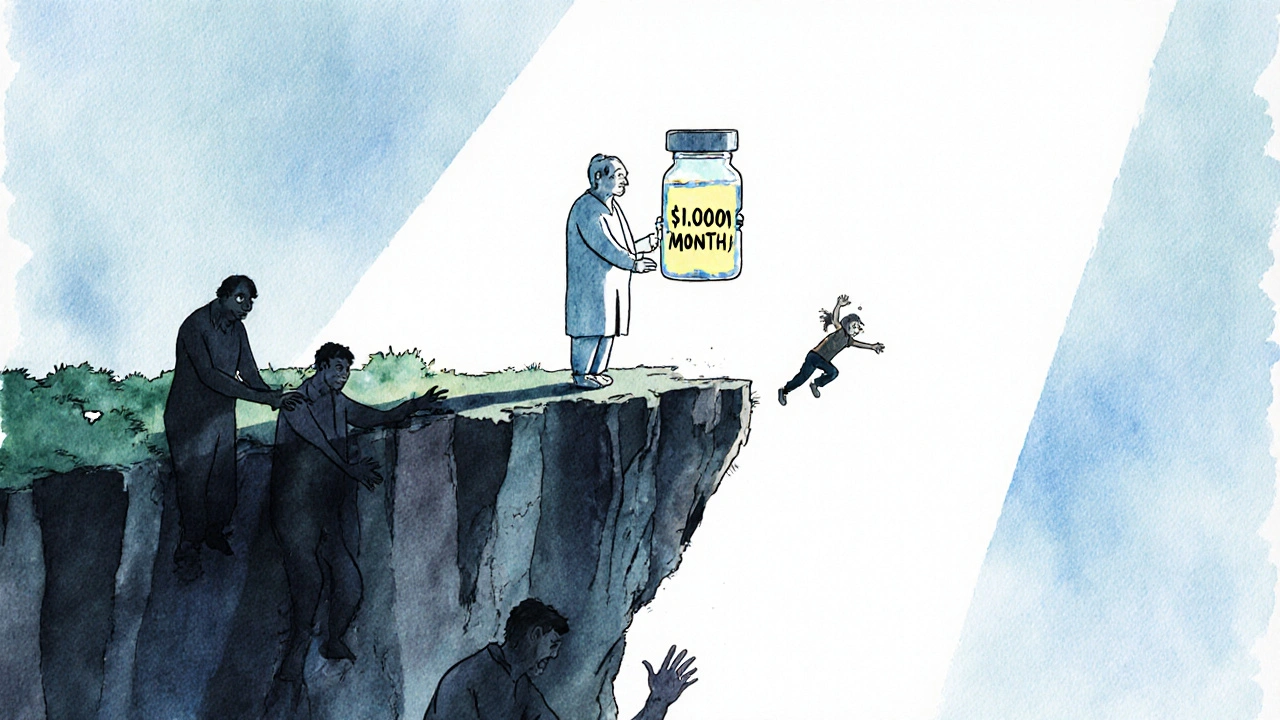
Why Do Some People Pay Thousands for Medications That Make Them Sick?
Imagine taking a drug that costs $10,000 a month - and still feels terrible. You’re nauseous, exhausted, and your insurance won’t cover it all. So why do it? For many, the answer isn’t about being rich or reckless. It’s about survival. When every other option has failed, even a drug with brutal side effects can be the only thing standing between you and death.
In the U.S., some medications cost more than a car. A single dose of a gene therapy can hit $2 million. Cancer drugs, rare disease treatments, and biologics dominate the top of the price list. According to a 2024 NIH study, the median cost of the 50 most expensive drugs covered by Medicare was over $16,000 per dose. And 72% of them were for rare conditions - diseases so uncommon that drugmakers have almost no competition.
But here’s the real question: when does the price make sense?
It’s Not Just About Price - It’s About What the Drug Does
Cost alone doesn’t tell the whole story. A $50,000 drug might seem insane - until you compare it to the alternative. Take hepatitis C. Before Harvoni came along, treatment meant weekly injections, severe flu-like symptoms, and only a 50% cure rate. Harvoni cost $7,153 out-of-pocket in 2016 - but it cured 95% of patients in 12 weeks. No more injections. No more vomiting. No more liver failure. For many, that trade-off was obvious.
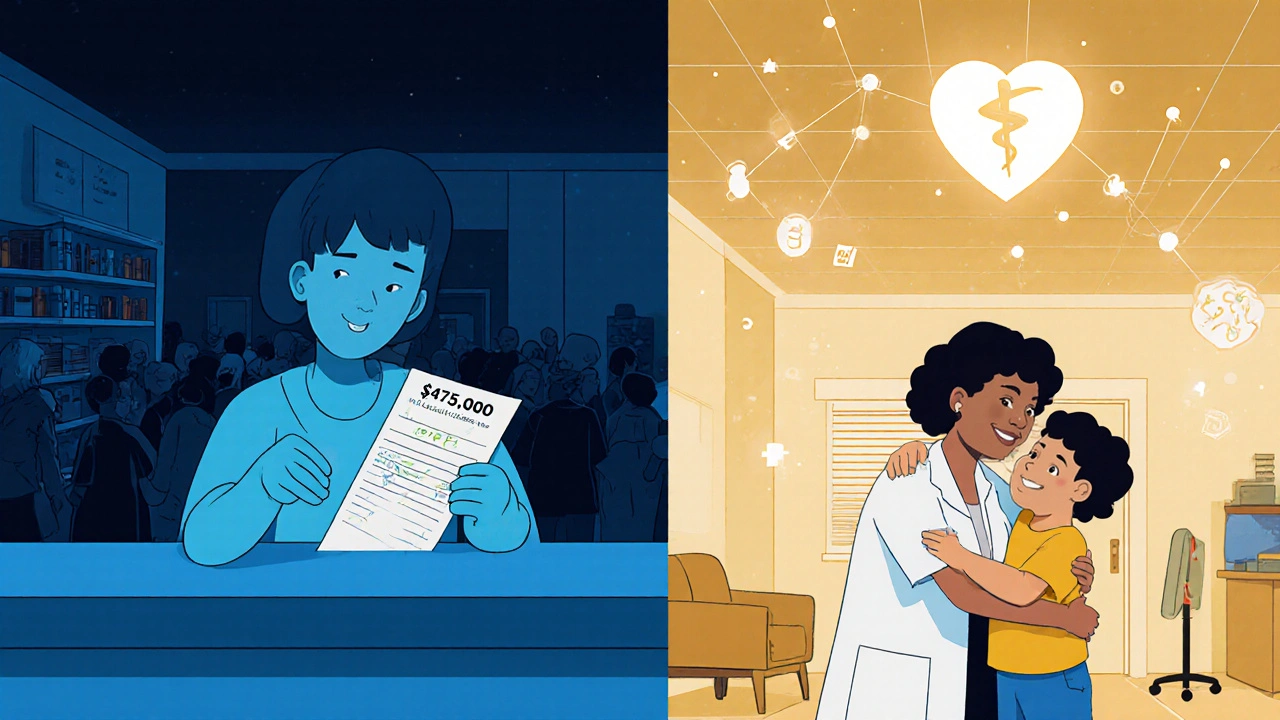
Same goes for CAR-T cell therapy, like tisagenlecleucel. It costs $475,000. It causes cytokine release syndrome - a dangerous immune reaction that requires hospitalization. But for kids with relapsed leukemia who’ve run out of chemo options, it’s often the only shot at remission. A 2023 ASCO patient survey found 78% of families said it was worth it. Not because they liked the side effects. But because they had no better choice.
These aren’t luxury treatments. They’re last-resort lifelines.
Side Effects Aren’t the Dealbreaker - Lack of Alternatives Is
Most people assume side effects are the main reason to avoid expensive drugs. But in reality, it’s not the side effects that stop people - it’s the lack of anything else that works.
Take hemophilia. Before emicizumab, patients needed infusions two to three times a week just to prevent bleeding. Many still ended up with joint damage, chronic pain, and disability. Emicizumab cuts infusions to once a month. It’s $15,000 a month out-of-pocket for some. It causes headaches and joint pain. But it stops spontaneous bleeding. One Reddit user wrote: “I used to miss work every week. Now I can play with my kids without worrying if I’ll bleed out.”
Compare that to a cheaper drug that doesn’t work at all. Or one that requires daily shots and still leaves you vulnerable. The side effects of the expensive drug? Manageable. The side effects of doing nothing? Life-altering.
That’s the real calculus: not “Is this drug safe?” but “Is this drug better than what I’ve already tried - and what happens if I don’t take it?”
The U.S. System Makes It Harder Than It Should Be
Here’s the catch: the U.S. doesn’t have a system to decide if these drugs are worth it. In Europe, countries like Germany and France use formal health technology assessments. They look at how much extra life or quality of life a drug gives you - and whether it’s worth the cost. If the price is too high for the benefit, they say no - or force the company to lower it.
In the U.S.? No such rule. Drugmakers set prices, and insurers scramble to cover them. A 2024 NIH study found 96% of the most expensive drugs are exempt from Medicare’s new price negotiation rules. Why? Because they’re for rare diseases, or they’re biologics, or they were approved before 2022. The system is broken.
That means patients are stuck playing financial roulette. A 2022 survey found 68% of people taking drugs over $10,000 a month skipped doses because they couldn’t afford them. 42% chose between buying medicine and buying food. And that’s not just poor people - even those with insurance face catastrophic out-of-pocket costs.
Take Revlimid, a multiple myeloma drug. In 2016, patients paid $11,538 out-of-pocket - 76% of that came after they hit the Medicare “donut hole.” That’s not a glitch. That’s how the system is designed.
Who Gets Access - And Who Doesn’t
It’s not just about whether a drug works. It’s about who can get it.
Medicare beneficiaries with incomes below 150% of the federal poverty level were more than three times as likely to skip doses of expensive drugs compared to higher-income patients. That’s not a coincidence. It’s a flaw.
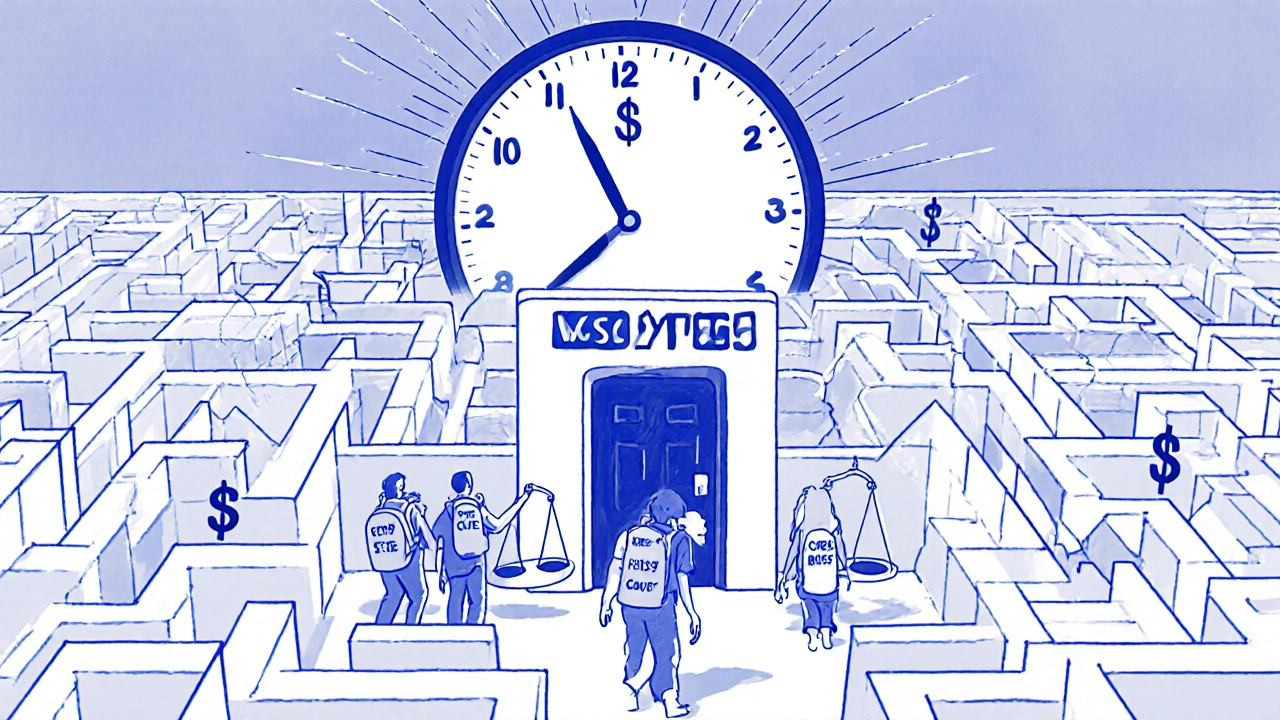
Even when financial help exists - manufacturer coupons, nonprofit foundations, pharmacy assistance programs - the process is a maze. You need to fill out forms, prove income, wait weeks for approval. Many patients give up. A 2023 study found specialty pharmacy case managers spend over 3 hours per patient just navigating insurance.
And here’s the irony: the drugs that cost the most are often the ones with the clearest benefit. But the people who need them the most - low-income, elderly, disabled - are the ones least able to fight for access.
When Does a Drug Actually Deliver Value?
Not every expensive drug is worth it. A 2024 study in PMC found that 56% of the top 50 most expensive drugs were rated as having low or no added benefit by European health agencies. Independent reviewers at Prescrire International found only 7 out of 100 new drugs in 2023 offered real progress.
So how do you tell the difference?
Look at the data:
- Is it a cure? Like hepatitis C drugs - yes, they’re expensive, but they eliminate the disease.
- Does it prevent hospitalization? A drug that cuts ER visits by 60% saves the system money, even if it costs $20,000 a year.
- Does it restore function? A drug that lets someone walk again, work again, care for their kids again? That’s not just medical - it’s human.
- Is there a cheaper alternative that works just as well? If yes, then the expensive option isn’t justified.
Dr. Peter Bach’s DrugAbacus tool analyzes cancer drugs across six value factors - and found that 4 out of 10 new ones in 2018 didn’t match their price tag. That’s a red flag. But it’s not the rule. It’s the exception.
The real winners? Drugs that replace something worse. That’s where the value lies.
What You Can Do If You’re Facing a High-Cost Drug
If you’re being prescribed a drug that costs more than your rent, here’s what actually works:
- Ask your doctor: “Is there a generic? A biosimilar? A cheaper alternative?” Even if the answer is no, asking starts the conversation.
- Check the manufacturer’s patient assistance program. Most big pharma companies have them. They often cover 40% or more of out-of-pocket costs.
- Contact a nonprofit foundation. The Chronic Disease Fund, Patient Access Network Foundation, and HealthWell Foundation have given over $2 billion in aid since 2020.
- Get a specialty pharmacy case manager. They’re paid by insurers - ask your doctor to connect you. They’ll handle prior authorizations, appeals, and paperwork.
- Appeal your denial. Insurance companies deny 1 in 3 claims for high-cost drugs. But 70% of appeals are overturned if you submit medical records and a doctor’s letter.
And if you’re on Medicare? Know your Part D phases. The “donut hole” isn’t a trap - it’s a phase. Once you hit catastrophic coverage, your out-of-pocket costs drop to 5%. You just have to survive the first few months.
The Bigger Picture: Why This Isn’t Just About You
This isn’t just a personal struggle. It’s a system failure. The U.S. spends more on prescription drugs than any other country - and gets worse outcomes in many cases. Specialty drugs make up only 3% of prescriptions but 54% of pharmacy spending. That’s unsustainable.
But change is coming. Medicare’s first drug price negotiations start in 2026. The EU is launching joint drug assessments by 2025. More insurers are demanding proof of value before covering new drugs.
For now, though, the burden falls on patients. And the truth is, sometimes the most expensive drug is the only one that gives you back your life. Not a perfect life. Not an easy life. But a life worth living.
That’s when the cost makes sense.
Are expensive medications always worth the side effects?
No - but they’re worth it when no other treatment works. Side effects matter, but so does survival. For patients with rare diseases, terminal cancer, or conditions that cause constant pain or disability, a drug with tough side effects may be the only option that restores function or extends life meaningfully.
Why are some drugs so expensive in the U.S.?
Drugmakers set prices without government limits. High costs are often justified by R&D expenses, especially for rare diseases where few patients will use the drug. But many drugs have no real innovation - they’re just repackaged versions of older drugs with little added benefit. The U.S. is the only major country that doesn’t negotiate prices or set value-based thresholds.
Can I get help paying for expensive medications?
Yes. Most drugmakers offer patient assistance programs that cover 40% or more of costs. Nonprofits like the Chronic Disease Fund and Patient Access Network Foundation provide grants. Specialty pharmacies also assign case managers to help navigate insurance and appeals. You don’t have to pay full price - you just have to ask for help.
Do cheaper drugs work just as well?
Sometimes - but not always. A 2023 review found only 7 out of 100 new drugs offered major progress over existing treatments. Many expensive drugs are better because they’re more effective, require fewer doses, or avoid severe side effects of older options. But some are priced far above their value. Ask your doctor: “Is this drug significantly better than what’s already available?”
How do I know if a drug is worth the cost?
Look at three things: Does it cure or significantly improve your condition? Does it prevent hospitalizations or loss of function? And is there a cheaper alternative with similar results? If the answer is yes to the first two and no to the third, the cost may be justified - even if it’s high.
Final Thought: It’s Not About Money - It’s About What You Can Still Do
People don’t pay $500,000 for a drug because they like the price tag. They do it because they can finally hold their grandchild without pain. Because they can go to work again. Because they’re not waiting for the next bleed, the next seizure, the next tumor.
Expensive drugs aren’t perfect. Side effects are real. Insurance battles are exhausting. But for some, they’re the only thing that turns a life of limits into a life of possibility.
James Allen
December 1, 2025 AT 21:19Kenny Leow
December 1, 2025 AT 21:35Kelly Essenpreis
December 2, 2025 AT 15:23Alexander Williams
December 3, 2025 AT 16:20Suzanne Mollaneda Padin
December 4, 2025 AT 00:03Erin Nemo
December 4, 2025 AT 09:09ariel nicholas
December 4, 2025 AT 18:39Rachel Stanton
December 5, 2025 AT 17:17Amber-Lynn Quinata
December 6, 2025 AT 04:05Lauryn Smith
December 6, 2025 AT 11:55Bonnie Youn
December 7, 2025 AT 05:06Edward Hyde
December 8, 2025 AT 05:38Charlotte Collins
December 8, 2025 AT 21:55Bonnie Youn
December 9, 2025 AT 10:43