

Carpal tunnel syndrome isn’t just a tingling hand-it’s a sign your median nerve is being squeezed. Every year, over half a million people in the U.S. undergo surgery for it. But most don’t need to. The key is catching it early and knowing what actually works.
What Exactly Is Carpal Tunnel Syndrome?
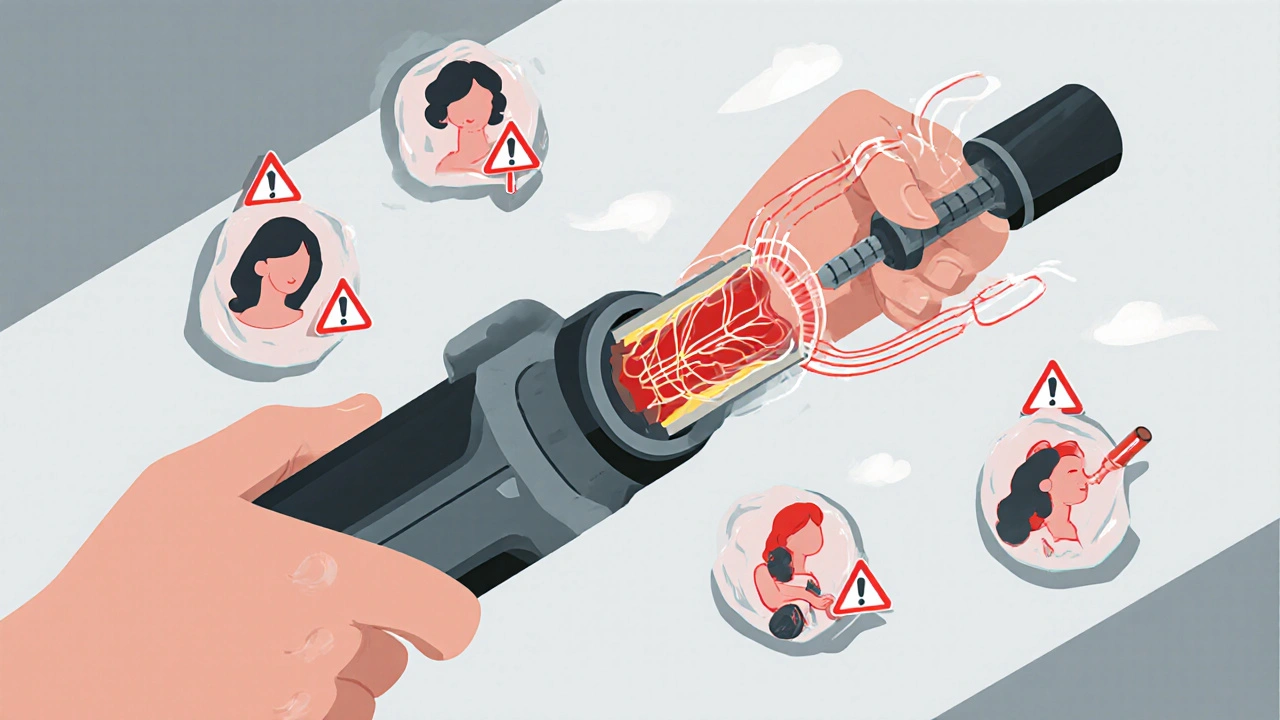
Carpal tunnel syndrome happens when the median nerve, which runs from your forearm into your palm, gets pressed down inside a narrow passage in your wrist called the carpal tunnel. This tunnel isn’t just empty space-it’s packed with nine tendons that bend your fingers and thumb, plus the nerve itself. When swelling happens inside that tight space, the nerve gets squished. You’ll feel it in your thumb, index, middle, and half of your ring finger. The rest of your hand? Usually fine. That’s because the median nerve doesn’t serve your pinky. The classic signs: numbness, tingling, or a burning feeling-often worse at night. Many people wake up shaking their hand like they’re trying to甩掉水珠. That’s because movement temporarily relieves the pressure. It’s not just a hand problem. The pain can travel up your arm, sometimes all the way to your shoulder. Over time, you might start dropping things, struggling to button shirts, or find it hard to open jars. If it gets bad enough, the muscles at the base of your thumb can start to waste away. That’s a red flag: permanent nerve damage is setting in.Who Gets It-and Why?
About 10% of Americans will develop carpal tunnel syndrome in their lifetime. Women are three times more likely than men to get it, especially between ages 45 and 60. Why? Hormones, anatomy, and repetitive motion all play a role. It’s not just typing. While computer use gets blamed, the real culprits are jobs that involve forceful or repetitive hand motions: assembly line workers, healthcare staff, meatpackers, hairstylists, and even people who use vibrating tools. A 2022 survey found 73% of healthcare workers and 68% of assembly line workers linked their symptoms directly to their work tasks. Pregnancy, thyroid issues, diabetes, and arthritis also raise your risk. But even without any of those, if you’re doing the same hand motion over and over, you’re building pressure inside the carpal tunnel. Fluid builds up. The nerve gets squeezed. And if you ignore it, the damage becomes permanent.How Doctors Diagnose It
There’s no single blood test or X-ray that confirms carpal tunnel. Diagnosis starts with your symptoms and a physical exam. Doctors look for three classic signs:- Phalen’s test: You hold your wrists bent forward for a minute. If your fingers tingle or go numb, it’s a sign.
- Tinel’s sign: The doctor taps over the nerve in your wrist. A shock-like feeling in your fingers means the nerve is irritated.
- Carpal compression test: Pressure is applied directly over the tunnel. If symptoms flare up within 30 seconds, it’s likely CTS.
Non-Surgical Treatments That Actually Work
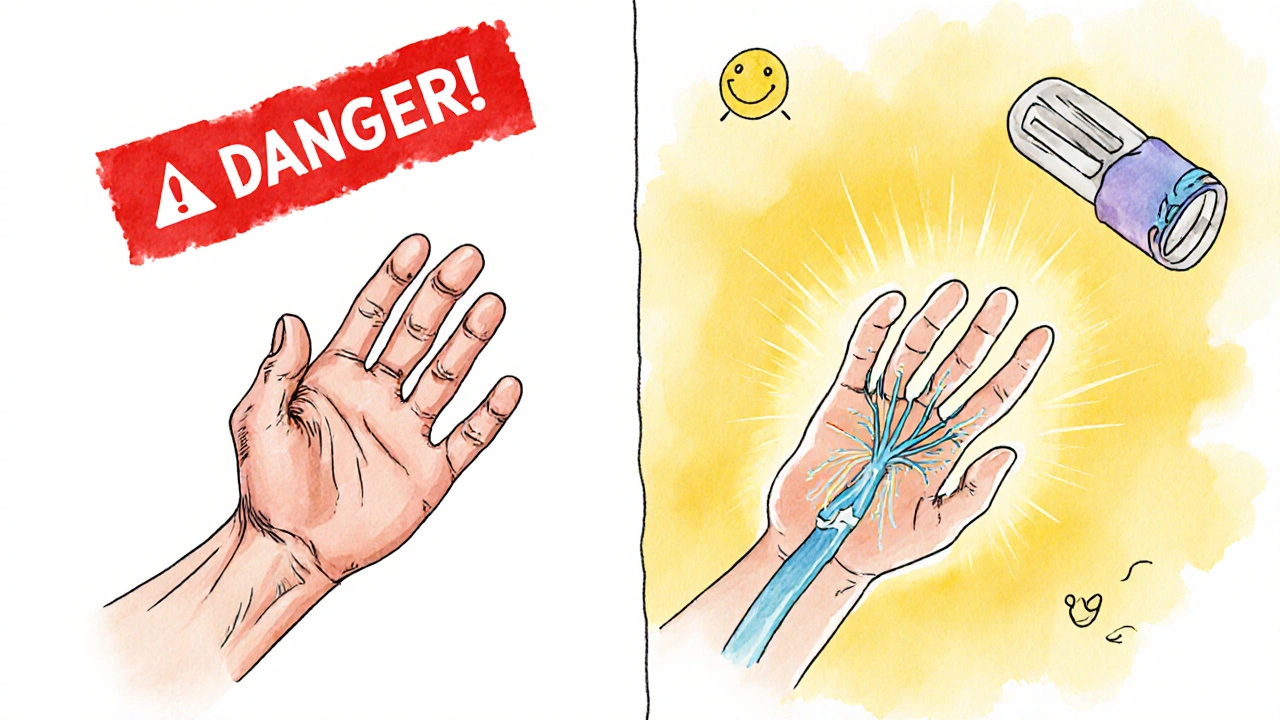
If you’re in the early or moderate stage, you have a good shot at avoiding surgery. The most effective first step? Wearing a wrist splint at night. A 2019 clinical guideline from the Journal of Orthopaedic & Sports Physical Therapy found that 60-70% of people with mild to moderate CTS see big improvement after wearing a splint for just 4-6 weeks. The key is keeping your wrist straight-not bent. Most people sleep with their wrists curled, which squeezes the nerve. A splint holds it in a neutral position, reducing pressure while you sleep. You don’t need a fancy one. A basic, adjustable splint from the drugstore works fine. Just make sure it keeps your wrist from bending more than 10 degrees. Wear it every night for at least 8 weeks. Don’t skip nights. Consistency is what makes it work. Next up: nerve gliding exercises. These aren’t stretches for your muscles-they’re gentle movements designed to help the nerve slide more easily through the tunnel. A physical therapist can teach you the right ones in 2-4 sessions. Do them daily. They reduce adhesions and improve nerve mobility. Activity changes matter too. Avoid bending your wrist past 30 degrees. If you’re typing, raise your keyboard so your wrists stay flat. Use your whole hand to grip, not just your fingers. Take breaks every 20 minutes. Shake out your hands. These small shifts add up. Corticosteroid injections are another option. They reduce swelling around the nerve. About 70% of people get relief for 3 to 6 months. But it’s not a cure. The symptoms come back. Still, it can buy you time to try other methods or delay surgery.When Surgery Is the Right Choice
Surgery is recommended if:- Conservative treatments haven’t helped after 6-8 weeks
- You have constant numbness or muscle weakness
- You see visible wasting of the thumb muscles
- Open release: A 2-inch cut on the palm. The surgeon sees everything directly. Recovery takes longer, but it’s reliable.
- Endoscopic release: One or two tiny cuts. A camera guides the cut. Less pain, faster return to light work.
Costs and Recovery
Conservative care-splints, therapy, injections-typically costs $450 to $750 out of pocket. Custom splints run $150-$250. Physical therapy sessions are $100-$200 each. Steroid injections cost $300-$500. Surgery? With insurance, expect $1,200 to $2,500 out of pocket. Endoscopic tends to be 15-20% more than open, but you get back to daily life faster. Recovery looks like this:- Weeks 1-2: Bandages on, light activity only. No lifting over 1 pound.
- Weeks 3-6: Start gentle motion. Begin physical therapy if recommended.
- Weeks 6-8: Most people return to light work. Full strength takes 3-4 months.
- Manual labor jobs? Plan for 10-12 weeks before heavy lifting or gripping.
What Doesn’t Work (And Why)
You’ll see ads for magnets, acupuncture, or “nerve decompression” devices. None have strong evidence. A 2023 review in JAMA Neurology found that people who stuck with splinting, activity changes, and exercises were 45% less likely to need surgery within two years. Those who tried unproven methods? No difference. Also, don’t wait. If your symptoms have lasted over 12 months, conservative treatments only work about 35% of the time. After 10 months, the chance of success drops sharply. The longer you wait, the more nerve damage builds up-and that’s irreversible.What to Do Now
If you’re waking up with numb hands:- Buy a wrist splint. Wear it every night.
- Stop sleeping with your wrists bent. Try sleeping on your back with your arms at your sides.
- Modify your work setup. Keep your wrists neutral when typing or using tools.
- Start doing nerve glides. Search for “median nerve glide exercises” and do them twice a day.
- If no improvement in 4 weeks, see a doctor. Get a proper exam-not just an EMG.
Can carpal tunnel go away on its own?
Rarely. Mild symptoms might improve with rest and splinting, especially if caught early. But without intervention, carpal tunnel almost always gets worse over time. Nerve damage can become permanent if left untreated for over a year.
Is carpal tunnel caused by typing?
Not usually. While repetitive hand motions contribute, studies show keyboard use alone isn’t a major cause. More common triggers are forceful gripping, vibration, or prolonged wrist flexion-like holding tools, lifting heavy objects, or working in assembly lines. Office workers get it too, but it’s often linked to poor ergonomics, not typing speed.
Do wrist braces help during the day?
They can, but night splinting is far more important. During the day, you need to move. Wearing a brace all day can weaken your muscles and make you rely on it. Use a brace only during aggravating tasks, like lifting or gripping. For long-term relief, focus on changing how you use your hands, not just bracing them.
How do I know if my carpal tunnel is severe?
Signs of severe carpal tunnel include constant numbness (not just at night), weakness in your thumb, trouble holding objects, and visible shrinking of the muscle at the base of your thumb. If you notice any of these, see a doctor immediately. These are signs of nerve damage that may not fully reverse.
Can carpal tunnel come back after surgery?
It’s uncommon, but possible. Most people get lasting relief. Recurrence usually happens only if there’s another injury, new swelling, or if you return to the same high-risk activity without changes. In rare cases, scar tissue can form around the nerve. But the success rate stays above 90% long-term when surgery is done correctly.
Stephanie Deschenes
November 26, 2025 AT 09:32I've been wearing a night splint for 6 weeks now, and honestly? My fingers don't wake me up anymore. I was skeptical at first-thought it was just a gimmick. But consistency is everything. No fancy gear, just a $20 one from CVS. Don't skip nights. It's not sexy, but it works.
Also, started doing those median nerve glides twice a day. Feels weird at first, like your arm is doing yoga. But after a week, the tingling dropped off. No surgery needed. Just patience and a little discipline.
Don't let anyone tell you it's 'just carpal tunnel.' It's nerve compression. Treat it like one.
Cynthia Boen
November 26, 2025 AT 14:06Ugh. I hate when people act like this is some miracle cure. I've been doing splints, exercises, and 'nerve glides' for 18 months. I still can't open jars. I work in a kitchen. I'm not typing on a keyboard-I'm gripping knives, lifting pots, chopping for 10 hours straight. No amount of wrist braces is gonna fix that.
They just want you to waste time and money so they can sell you more splints. Surgery wasn't my first choice-but it was my only one. And I'm glad I did it. Stop pretending this is a lifestyle tweak.
Douglas Fisher
November 28, 2025 AT 02:45I just want to say-thank you for writing this with such clarity. I’m 57, had this for 2 years, and thought it was just ‘getting old.’ I didn’t realize the muscle wasting was a red flag. I’ve been ignoring it because I didn’t want to ‘make a fuss.’
But now I’ve ordered a splint. I’m going to start the glides tomorrow. I’m scared-but not anymore because I finally understand what’s happening. You didn’t just explain the condition-you gave me back control. Thank you.
And to the person who said ‘it’s just a gimmick’-I get it. I was you. But I’m here now. And I’m trying.
For anyone reading this: if you’re reading this, you’re already ahead of where I was. Don’t wait.
Amanda Meyer
November 29, 2025 AT 20:07While I appreciate the practical advice, I must note that the data on steroid injections is often overstated. The 70% relief rate is based on short-term outcomes; long-term recurrence is nearly universal without structural change. Also, the claim that '15-20% of people over 60 show abnormal EMGs without symptoms' is accurate-but this is precisely why clinical correlation is essential. Nerve conduction studies are tools, not diagnoses.
Additionally, the cost breakdown is helpful, but it ignores geographic and insurance variability. In rural areas, physical therapy may be inaccessible. And for undocumented workers? They pay full price-no insurance, no safety net. This isn't just a medical issue. It's a labor issue.
Still, the advice on splinting and ergonomics? Spot on. Just don't pretend it's a level playing field.
Jesús Vásquez pino
November 30, 2025 AT 13:03Wait-so you’re telling me I don’t need to buy that $300 ‘nerve decompression’ wristband I got off Amazon? I’ve been using it for 4 months. I thought it was magic. Now I feel like a fool.
And why didn’t my doctor tell me about the ultrasound-guided release? My cousin got it last month and went back to work in 10 days. Why is this not mainstream yet? Is it because big hospitals make more money off open surgery?
Also, I’m a mechanic. I’ve been gripping wrenches since I was 16. I’ve got the muscle wasting. I’m not waiting another 4 weeks. I’m booking surgery next week. You’re right-I should’ve done this sooner.
hannah mitchell
December 1, 2025 AT 21:10Just wanted to say I started the splint last night. Didn’t sleep well. It felt weird. But I didn’t wake up with numb fingers. That’s the first time in 6 months. I’m gonna keep going.
Thanks for the push.
vikas kumar
December 2, 2025 AT 22:41As someone from India who works in a textile factory-this is real. We don’t have splints here. We don’t have physical therapists. We have pain, and we have silence.
I showed this to my coworkers. One woman, 52, has been shaking her hands awake every night for 8 years. She thought it was normal. Now she’s asking her son to buy her a $15 splint from the local pharmacy.
This isn’t just a post. It’s a lifeline for people who don’t even know they’re sick. Thank you.
And yes-nerve glides work. I did them at lunch. Felt like I was waving at my own wrist. But my thumb stopped aching after 3 days.
We need more of this. Not just in the U.S.
Keep sharing.
Vanessa Carpenter
December 4, 2025 AT 14:17My mom had carpal tunnel. She waited 3 years. By the time she went to the doctor, her thumb muscle was gone. Surgery helped-but she lost the ability to pinch things properly. She still can’t hold a coffee mug without both hands.
I’m 29. I type for work. I’ve been having nighttime tingling for 4 months. I bought the splint today. I’m doing the glides. I’m not waiting. I’m not hoping it’ll go away.
This isn’t about being ‘productive.’ It’s about keeping your body intact.
Thank you for saying it plainly.