
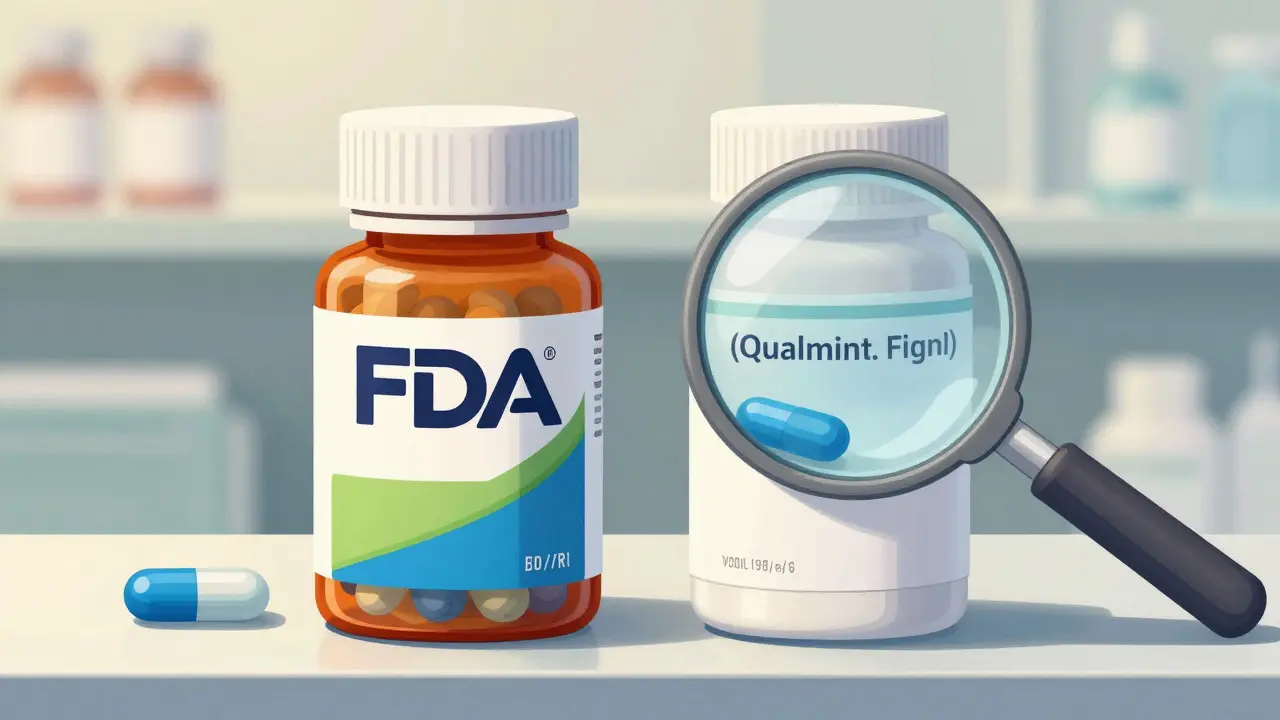
When you pick up a prescription, you might see two bottles on the counter: one with a well-known brand name, another with no brand at all. They look different, but here’s the truth - authorized generics are not just similar to brand-name drugs. They are the exact same medicine, made in the same factory, with the same ingredients, down to the last inactive component. The only difference? One has a fancy label, and the other doesn’t.
What Exactly Is an Authorized Generic?
An authorized generic is a brand-name drug that’s sold without the brand name on the bottle. It’s not a copy. It’s not a knockoff. It’s the real thing - produced by the same company that makes the brand, using the same formula, same equipment, same quality control. The U.S. Food and Drug Administration (FDA) defines it clearly: an authorized generic is identical to the brand-name version except for the absence of the brand name on the packaging. These drugs don’t go through the usual generic approval process. Instead, they’re made under the original brand’s New Drug Application (NDA). That means no separate FDA review is needed. The brand company simply decides to sell the same pill under a different label. This isn’t a loophole. It’s a legal, regulated path built into U.S. drug laws since the Hatch-Waxman Act of 1984.How Are Authorized Generics Different From Regular Generics?
This is where things get confusing. Most people think all generics are the same. They’re not. Traditional generics - the kind you see most often - must prove they’re bioequivalent to the brand. That means the active ingredient works the same way in your body. But they can have different fillers, dyes, or preservatives. Those inactive ingredients? They don’t affect how the drug works, but they can affect how your body reacts to it. For some people, especially those with allergies or sensitivities, even small changes in these additives can cause issues like rashes, stomach upset, or headaches. Authorized generics don’t have that problem. They use the exact same inactive ingredients as the brand. If your body reacts poorly to the brand, it will react the same way to the authorized generic - because it’s the same product. That’s why patients with chronic conditions like epilepsy, thyroid disease, or severe allergies often prefer them.Why Do Brand Companies Sell Authorized Generics?
It sounds odd. Why would a company that spends millions marketing a brand name turn around and sell the same drug cheaper? The answer is competition. When a brand drug’s patent expires, other companies can make their own generics. To protect their market share, brand manufacturers often launch their own authorized generic right away. It’s a smart business move: they keep some of the revenue from the generic market instead of losing it all to competitors. But here’s the catch. Because authorized generics come from the brand company, they’re often priced higher than traditional generics - sometimes only 15-20% cheaper than the brand, not the 80-85% discount you’d expect from a regular generic. That’s why some experts call them a “strategic delay” tactic. They don’t always save you the most money, but they do guarantee you’re getting the exact same formula.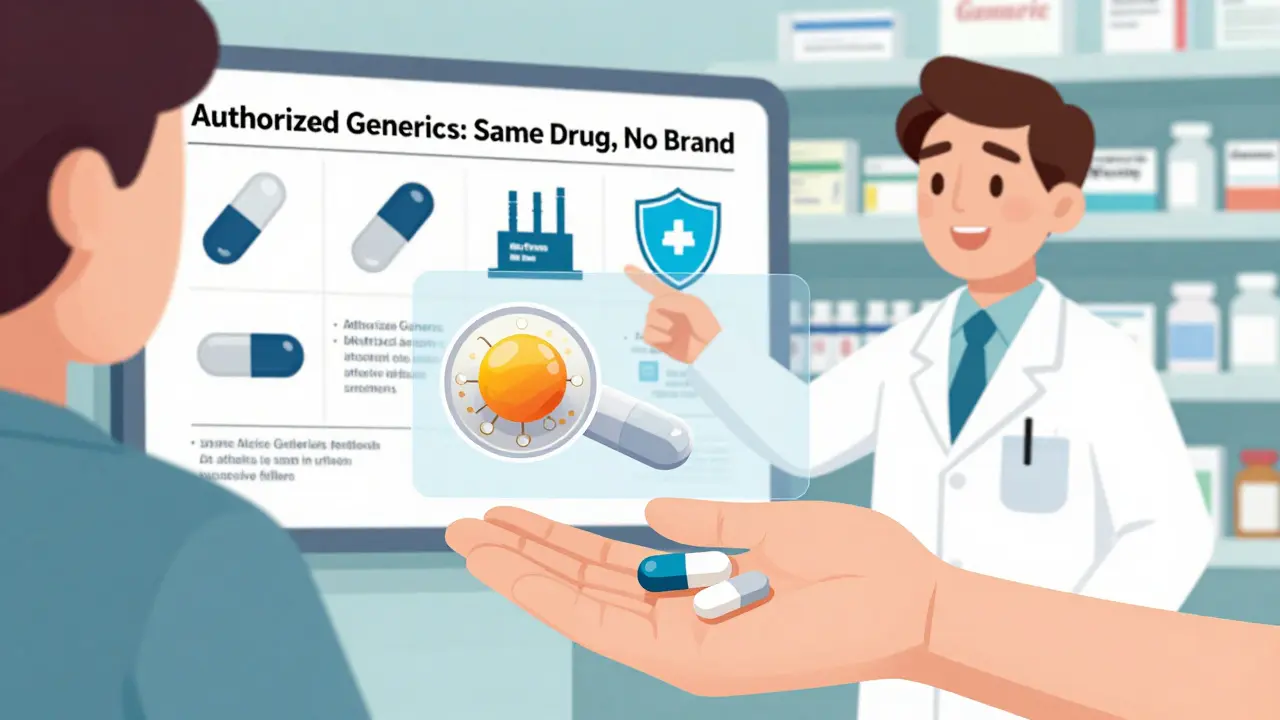
Are Authorized Generics Safe and Effective?
Absolutely. The FDA says they’re therapeutically equivalent - meaning they work the same way, in the same way, for the same amount of time. A 2018 study of over 5,000 patients across seven drugs found no meaningful difference in hospital visits, emergency room trips, or medication adherence between those taking brand drugs and those taking authorized generics. Even better, because they’re made under the same NDA, there’s zero variation in active ingredient levels. Traditional generics are allowed up to a 20% difference in active ingredient concentration. In reality, most stay within 4%, but authorized generics? They’re 100% identical. No wiggle room. No guesswork. If you’ve ever switched to a regular generic and felt “off,” it might not have been the drug - it might have been the fillers. Authorized generics eliminate that variable.Why Don’t More People Know About Them?
Because pharmacies don’t always tell you. When your doctor writes a prescription, the pharmacist is usually allowed to substitute a generic unless the doctor writes “dispense as written” (DAW). Most of the time, they pick the cheapest option - which is often a traditional generic. But if you ask, you might get an authorized generic instead. Pharmacists report that about 30% of patients are confused or worried when they see a different-looking pill. They assume it’s lower quality. That’s not true. But without clear communication, patients are left guessing. The FDA has simple, free materials explaining the difference. Ask your pharmacist for them. Or check the FDA’s website - they have a list of authorized generics updated through 2023.How to Get an Authorized Generic
You don’t need a special prescription. Here’s how to make sure you get one:- Ask your doctor if an authorized generic is available for your medication.
- Call your pharmacy and ask: “Do you carry the authorized generic for [drug name]?”
- Check the label. Authorized generics won’t have the brand name - but they’ll list the same manufacturer as the brand. For example, if your brand is made by Pfizer, the authorized generic might say “Pfizer Inc.” on the bottle.
- Compare prices. Sometimes the authorized generic costs more than the traditional generic. If cost is your main concern, go with the cheaper one. If consistency matters more, ask for the authorized version.
Who Benefits Most From Authorized Generics?
Not everyone needs them. But for certain people, the difference matters:- People with allergies or sensitivities to dyes, gluten, or lactose - traditional generics sometimes use different fillers that trigger reactions.
- Patients on narrow-therapeutic-index drugs like warfarin, levothyroxine, or seizure medications - where tiny changes can have big effects.
- Those who’ve had bad experiences switching to traditional generics - even if they can’t explain why.
- Anyone who values consistency over cost.
What’s Changing in 2026?
The FDA is looking at making authorized generics more transparent. Right now, they don’t show up in the Orange Book - the official list of approved drugs and their equivalence ratings. That means insurers and pharmacists sometimes don’t even know they exist. New proposals suggest listing authorized generics in the Orange Book with clear labels. That could make them easier to find and more likely to be covered by insurance at lower tiers. Meanwhile, lawmakers are watching. Some are pushing bills to stop brand companies from using authorized generics to block competition. But for now, they’re legal, available, and safe.Bottom Line
Authorized generics aren’t a trick. They’re not a downgrade. They’re the exact same drug you’ve been taking - just without the brand name. If you want the same medicine, same ingredients, same results, but at a lower price, ask for one. You might be surprised how easy it is to get.And if you’ve ever wondered why your pill looked different after a refill - now you know. It might not be a change in quality. It might just be a change in label.
Are authorized generics as safe as brand-name drugs?
Yes. Authorized generics are made under the same New Drug Application (NDA) as the brand-name drug, using the exact same ingredients, manufacturing process, and quality controls. The FDA confirms they are therapeutically equivalent and pose the same risks and benefits as the brand.
Do authorized generics cost less than brand-name drugs?
Yes, but not always as much as traditional generics. Authorized generics are usually cheaper than the brand - often by 15-20% - but they may cost more than regular generics, which can be 80-85% cheaper. Price depends on the drug, manufacturer, and your insurance plan.
Can I ask my pharmacist for an authorized generic?
Absolutely. You have the right to request any FDA-approved version of your medication. Just ask: “Do you have the authorized generic for [drug name]?” They can check their inventory or order it for you. Many pharmacies stock them, especially for high-demand medications.
Why do some people say they feel different on authorized generics?
They shouldn’t - because the drug is identical. If someone feels different, it’s likely due to psychological factors, changes in pill size or color, or confusion with traditional generics. Authorized generics contain the same active and inactive ingredients as the brand, so physical reactions should be the same.
Are authorized generics listed in the FDA’s Orange Book?
No, they are not. Because they’re sold under the brand’s NDA, they don’t appear in the Orange Book, which only lists drugs approved through the Abbreviated New Drug Application (ANDA) process. This can make them harder to find, but the FDA maintains a separate list of authorized generics.
Can insurance companies cover authorized generics?
Yes. Many insurance plans cover authorized generics at the same tier as traditional generics, even though they’re identical to the brand. Some plans may require prior authorization, so always check your formulary or call your insurer.
Do authorized generics have the same side effects as brand drugs?
Yes. Since they contain the exact same active and inactive ingredients, side effects are identical. If you’ve experienced side effects with the brand, you’ll experience the same ones with the authorized generic - and vice versa.
Andy Thompson
January 20, 2026 AT 03:45Shane McGriff
January 20, 2026 AT 23:40Manoj Kumar Billigunta
January 21, 2026 AT 17:22Thomas Varner
January 22, 2026 AT 23:08Art Gar
January 23, 2026 AT 18:35Edith Brederode
January 25, 2026 AT 11:51clifford hoang
January 26, 2026 AT 19:31Arlene Mathison
January 28, 2026 AT 18:08Renee Stringer
January 29, 2026 AT 02:10Crystal August
January 29, 2026 AT 15:32